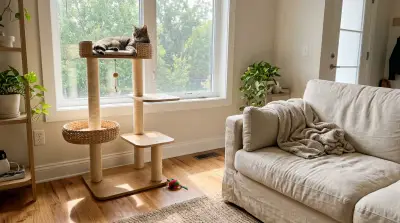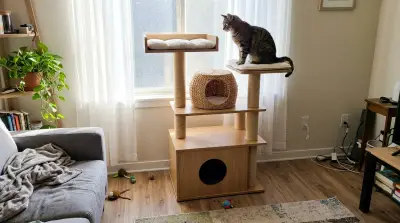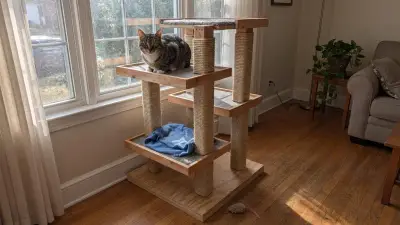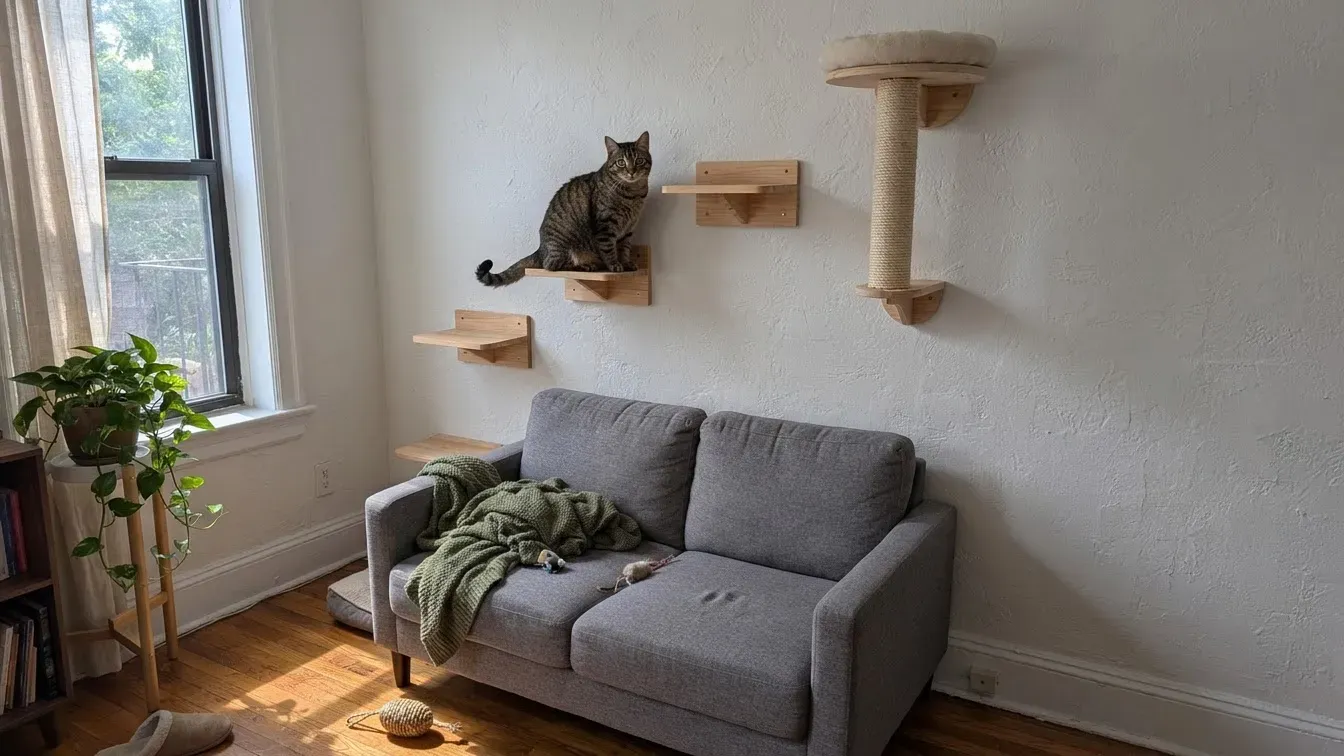
Wall mounted cat trees for apartments let you give your cat a full climbing, scratching, and napping territory without sacrificing a single square foot of floor space. In a compact studio where your bed, desk, and sofa already claim every corner, traditional carpet towers block walkways and make the room feel cramped.
Indoor cats still need vertical territory to feel secure, burn energy, and watch the room from above. Below are 17 wall-mounted cat tree setups and zero-floor-footprint ideas—from single stud-mounted pillars to modular shelf bridges—along with practical mounting tips for renters.
1Vertical Sisal Scratching Pillar With Top Perch
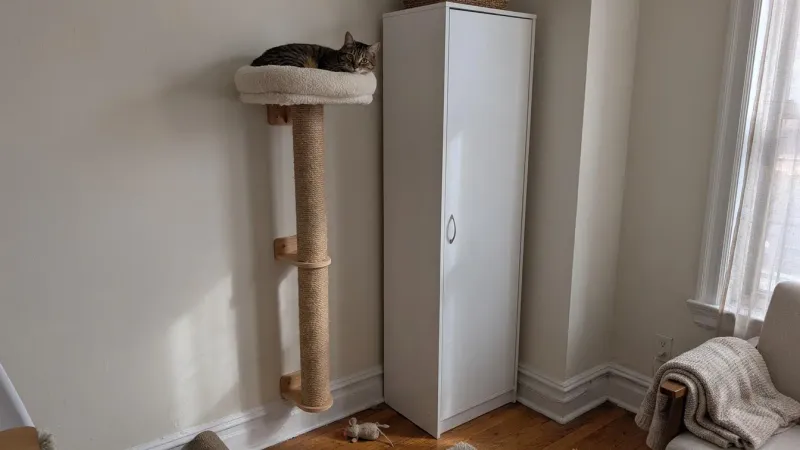
A tall, wall-anchored sisal post topped with a padded lounging platform gives your cat a full-body stretch and a high lookout in a footprint barely 10 inches wide. Mount the brackets directly into a single wall stud so the post stays rock-solid when your cat leaps onto the top bed. This vertical column works well tucked beside a wardrobe or bookshelf where a freestanding tower would never fit.
2Staggered Floating Step Ladder
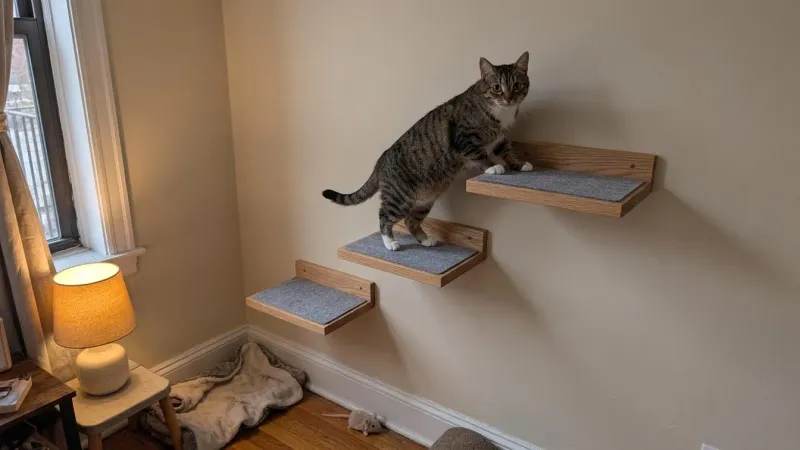
Three or four compact wooden steps arranged diagonally up an empty wall create an easy staircase from bed height to near the ceiling. Space each step 12 to 16 inches apart vertically and 10 to 14 inches horizontally so healthy adult cats can climb smoothly without awkward leaps. Choose steps wrapped in carpet or felt grip pads so claws catch securely on every ascent and descent.
3Corner-Mounted Curved Lounging Shelves
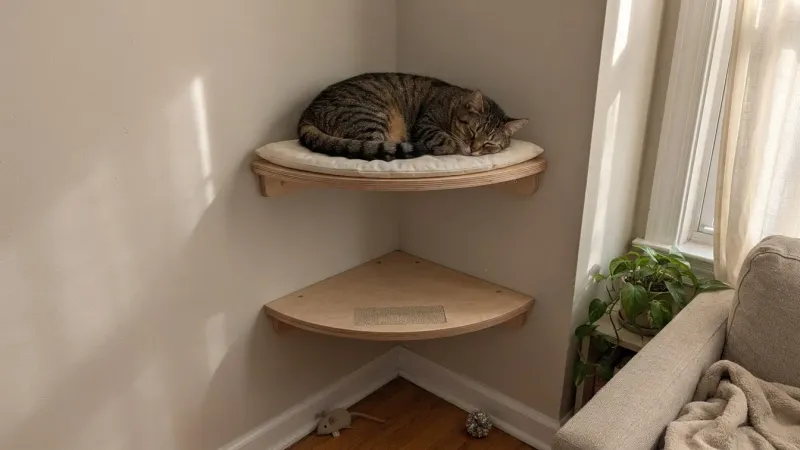
Two walls meeting in an unused studio corner provide natural structural support for curved quarter-circle cat perches. Mounting brackets into studs on both adjacent walls distributes weight evenly and eliminates tipping or wobble. Corners naturally feel sheltered to cats, making this layout ideal for shy pets who want to observe the whole studio without feeling exposed.
4Wall-Mounted Cylindrical Felt Tunnel Perch
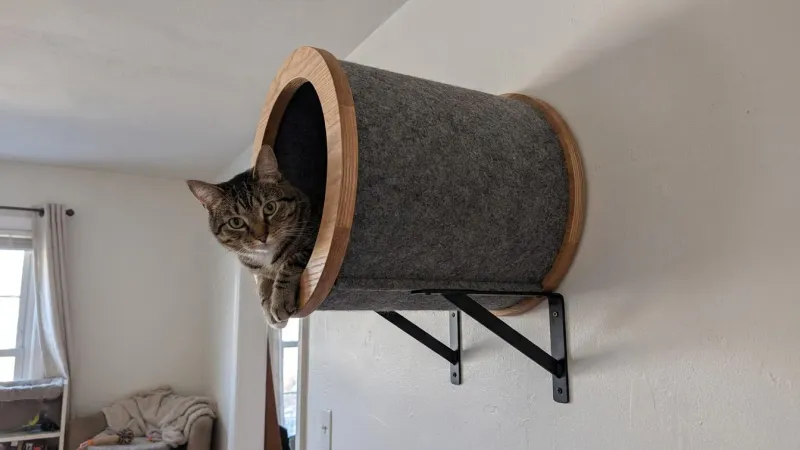
A rigid, wall-mounted felt or plywood barrel secured on heavy steel brackets gives your cat an elevated crawl-through tunnel and a flat lounging deck on top without using a single inch of floor space. Open at both ends, this horizontal cylinder lets cats pass through freely while keeping sightlines across a compact studio. Anchor the mounting plate into wall studs so the tunnel stays steady during energetic sprints.
5Wall-Mounted Canvas Hammock Between Shelves
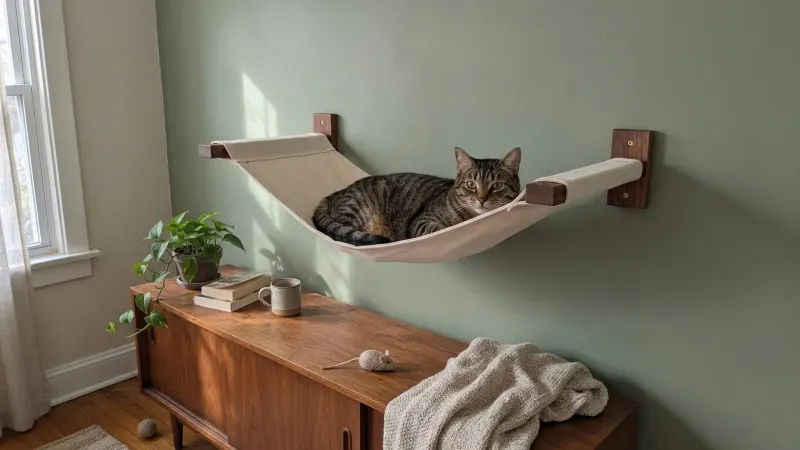
A heavy-duty cotton canvas sling suspended between two wood brackets cradles your cat's body while taking up less visual bulk than a boxy condo. Machine-washable fabric liners make fur and dander cleanup effortless in a small room. Position a sturdy step shelf slightly below one side so your cat can step into the hammock without scrambling.
6Above-Desk Overhead Cat Bridge
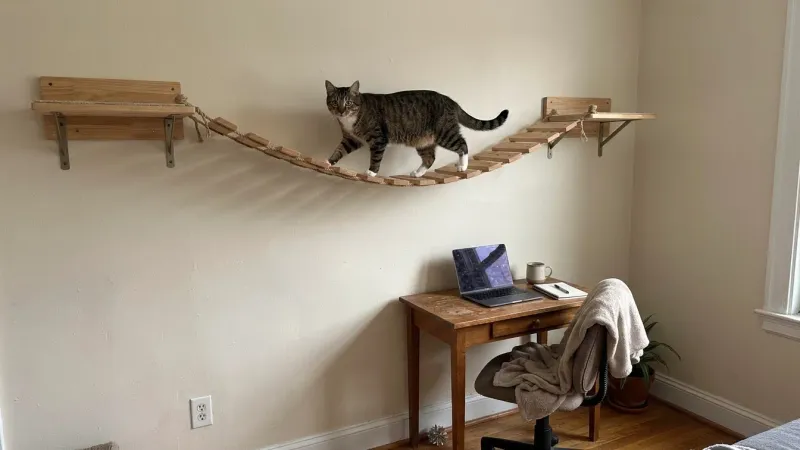
Mounting a narrow suspension bridge high above your work desk keeps your cat close to you during remote workdays without paws walking across your keyboard. Anchor the end platforms into wall studs on either side of the desk and leave at least 24 inches of headroom above your monitor. Your cat gets a front-row seat while you keep your workspace clear.
7Compact Wall Condo Cubby With Top Pad
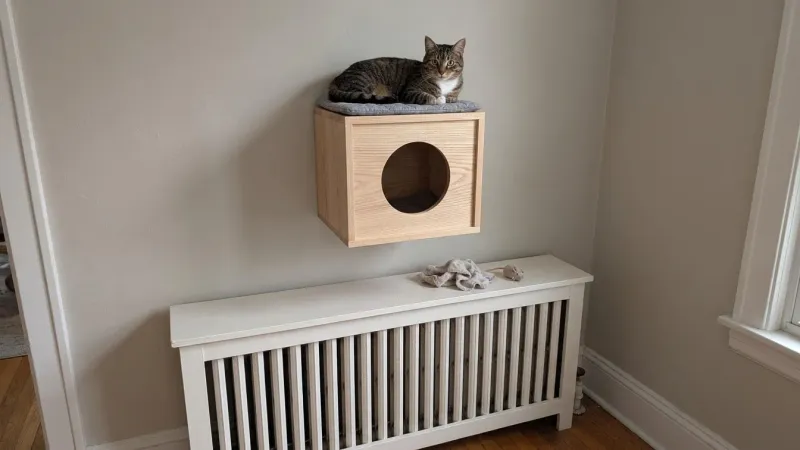
A wall-mounted wooden box with a circular entry hole doubles as a dark daytime hideaway and an elevated sunbathing deck on its flat roof. In a single-room studio, having an enclosed retreat helps cats decompress when guests visit or vacuuming starts. Pick a cubby with a removable top cushion so you can wash out loose hair regularly.
8Window-Adjacent Step and Suction Perch Combo
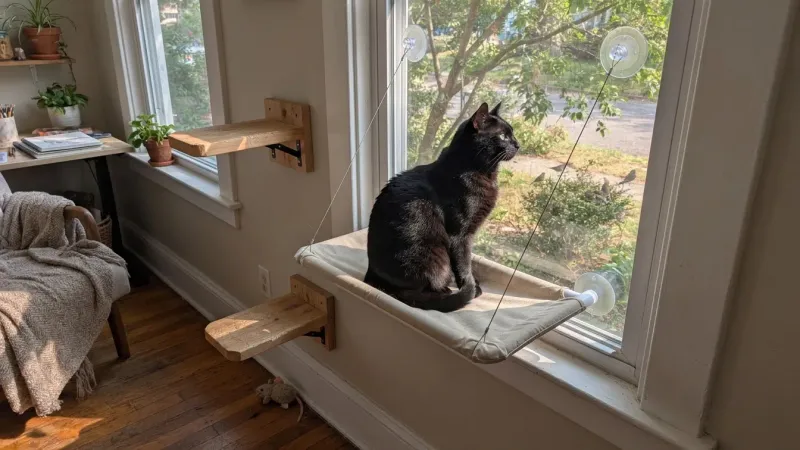
Pairing two wall-mounted wooden steps with a heavy-duty suction-cup window hammock creates a bird-watching station without blocking floor vents or radiators. Wipe the window glass and rubber suction cups clean with warm soapy water and dry them completely before pressing them on, then test the hold with firm downward pressure. If your lease allows window modifications, you can even explore insulated window cat accessories for year-round comfort.
9Wall-Mounted Multi-Platform Sisal Climbing Tower
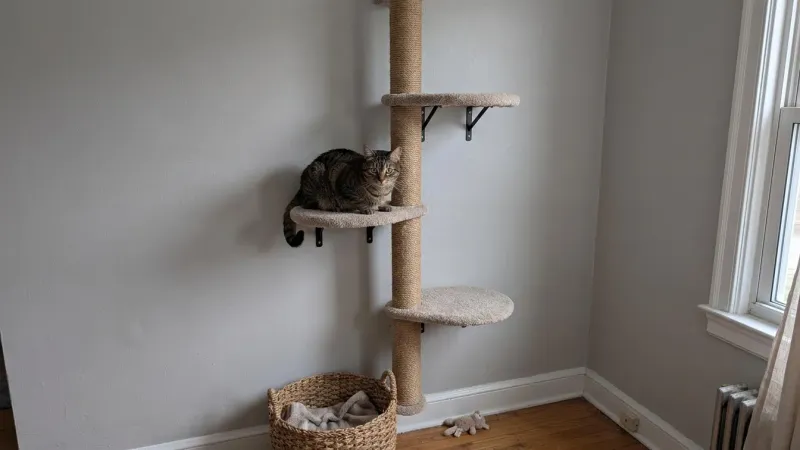
A wall-anchored vertical column fitted with three staggered round perches and thick sisal-wrapped sections delivers the full vertical climb of a classic pole without touching the floor or ceiling. Heavy-duty L-brackets bolt directly into a single wall stud, leaving room underneath for a hamper, plant stand, or pet bed. Check the bracket screws periodically to keep every tier tight.
10Modular Pegboard Cat Climbing Wall
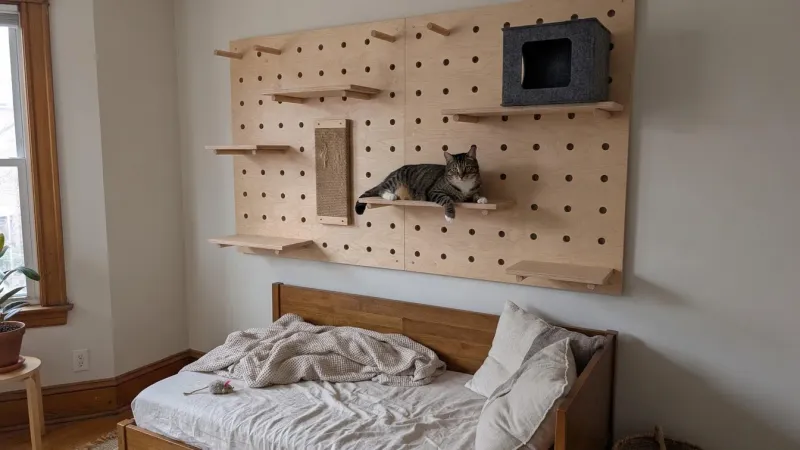
Installing a heavy-duty wooden pegboard panel across two wall studs lets you rearrange shelves, scratching boards, and small beds whenever your studio layout changes. Because the main panel carries the structural load into the studs, moving individual pegs takes seconds. This flexibility works especially well if you adopt a kitten and need closer step spacing as they grow.
11Bookshelf-Integrated Wall Step Extension
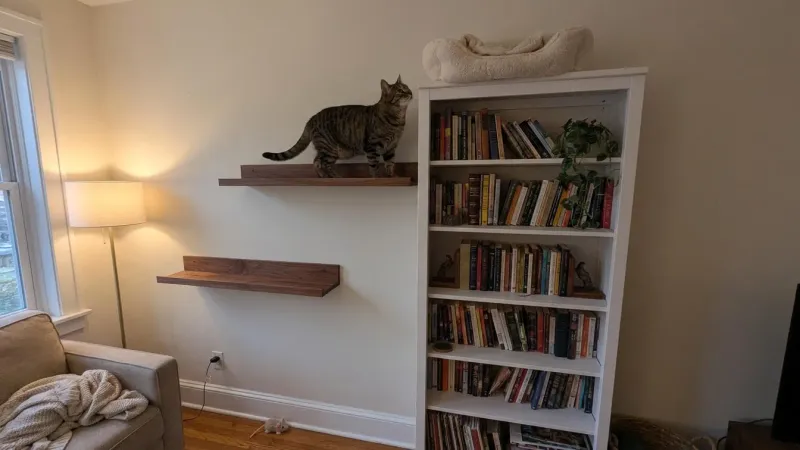
Bridge the gap between a tall studio bookcase and the wall by mounting two short floating ledges beside the top shelf. Clearance-tested space on top of a sturdy bookcase becomes an instant penthouse bed once you clear off breakables and secure the bookcase to the wall with anti-tip straps. Your cat gains high territory using furniture you already own.
12Slim Hallway Entryway Vertical Run
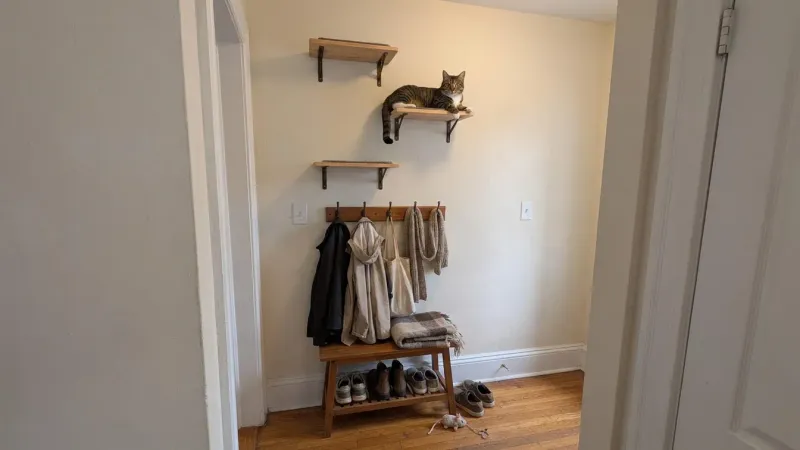
The narrow wall strip beside your studio front door is usually dead space, yet it holds a vertical ladder of three compact perches easily. Keep the lowest shelf at least 48 inches off the floor so coats, bags, and shoulders pass underneath without bumping into wood edges. Cats love greeting you at eye level the moment you walk inside.
13Wall-Mounted Sisal Scratching Ramp
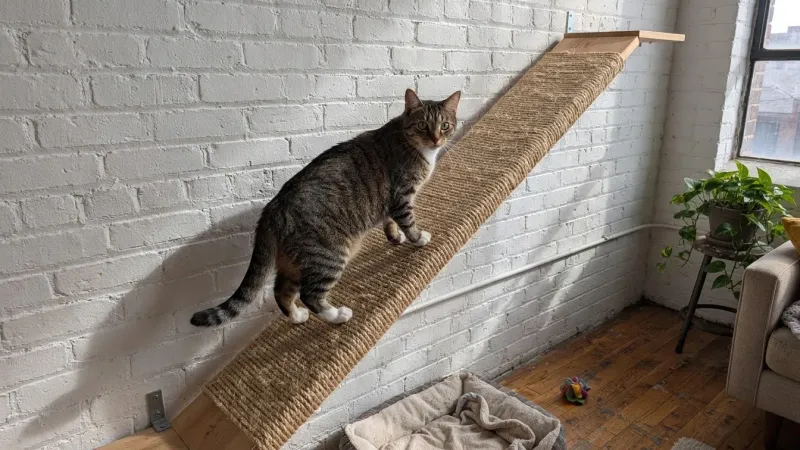
An angled wooden board wrapped in woven sisal rope and mounted at a 35-to-45-degree incline serves as both a climbing ramp and a durable claw-conditioning surface. Inclined ramps are much gentler on joints than vertical leaps, making them smart choices for older cats, heavy breeds, or small studio cat breeds that prefer steady footing.
14Floating Bed Shelf Above the Headboard
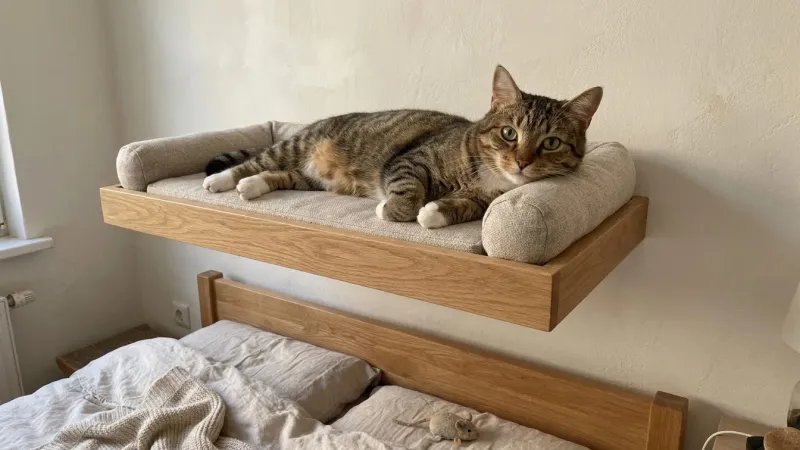
Mounting a wide, lipped cat bed shelf 18 to 24 inches above the side of your bed lets your cat sleep near you without crowding your pillows. Choose a shelf with a raised wooden rim or bolster cushion so a deeply sleeping cat never rolls off in the night, and anchor both brackets firmly into wall studs.
15Wall-Mounted Sisal Scratching Arch and Top Perch
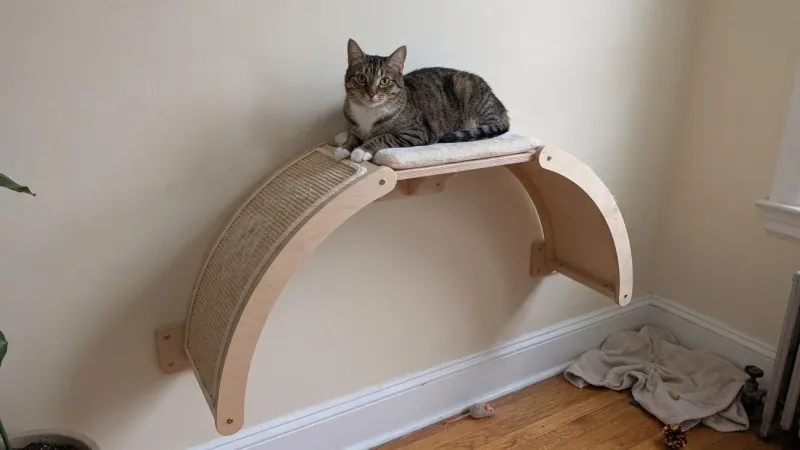
A curved wooden arch lined with thick sisal carpet and mounted to the wall creates both a vertical scratching curve and a sheltered lookout ledge on top. Cats can hook their claws into the contoured surface to stretch their backs before hopping onto the cushioned upper deck. Anchor the rear mounting cleats directly into wall studs for wobble-free support.
16Clear Acrylic Bowl Perch
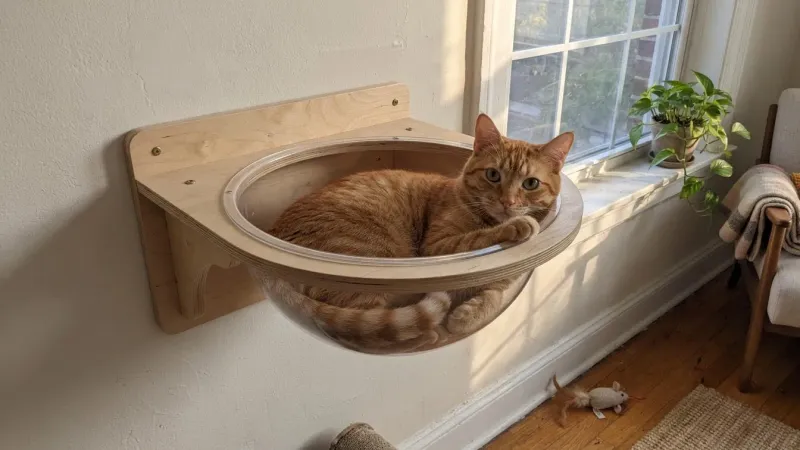
A wall-mounted wooden frame holding a transparent acrylic dome lets your cat curl up in a snug nest while letting natural window light pass straight through. In a small studio, clear acrylic keeps sightlines open so the wall feels airy rather than crowded. Line the bottom with a thin fleece circle if your cat prefers extra warmth.
17Multi-Tier Sisal Tree With Built-In Condo
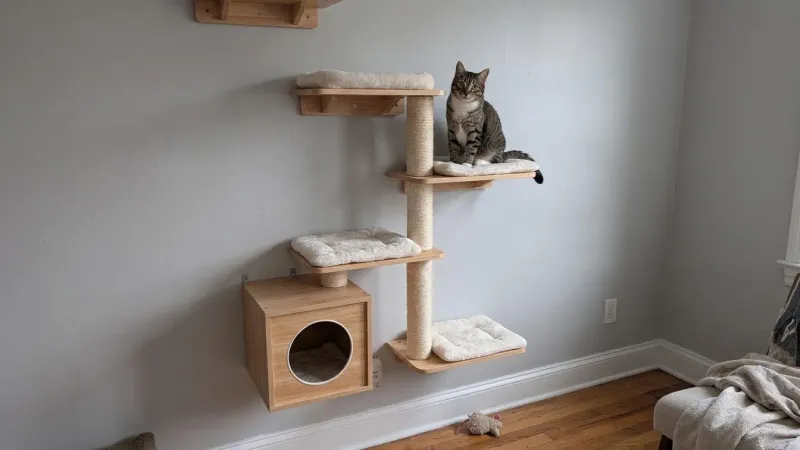
If you want the full experience of a classic cat tower off the floor, choose a pre-assembled 45-to-55-inch wall-mounted tree combining a hideaway box, sisal scratching columns, and two top perches. These all-in-one units align their mounting brackets to standard 16-inch stud spacing and compare well with compact floor cat trees for apartments when every inch of carpet matters.
How to Mount Wall Cat Trees Safely in a Studio Apartment
Safety starts behind the drywall. Active cats generate force up to three times their body weight when leaping onto a shelf, so plastic drywall anchors alone will pull loose over time. Always use an electronic stud finder to locate wooden or metal wall studs—typically spaced 16 inches apart on center. For wooden studs only, drive heavy-duty lag screws or structural wood screws directly into the wood; if your apartment has thin-gauge metal studs, use rated heavy-duty toggle bolts or snap toggles instead so the hardware does not strip the steel.
If a shelf bracket does not align with two studs, mount a solid wood ledger board across two studs first, then attach your cat shelf to the board. For renters worried about deposit deductions, patch holes cleanly at move-out using lightweight spackle, a putty knife, and matching touch-up paint. Check hardware every few months for wobble, especially if you have large or energetic cats, and consult your veterinarian if a senior or arthritic cat suddenly hesitates to jump.
Common Vertical Layout Mistakes to Avoid
Even sturdy shelves fail if your cat cannot navigate them comfortably. Keep vertical spacing between steps around 12 to 16 inches for adult cats, and closer to 8 to 10 inches for kittens, short-legged breeds, or older cats with stiff joints. Never create dead-end tunnels high on the wall in a multi-cat studio, as one cat can trap another without an escape route.
Pay attention to surroundings as well. Keep wall steps well clear of ceiling fans, hot radiator pipes, open blinds with dangling cords, and shelves holding toxic houseplants such as lilies, pothos, or sago palms. Adding a removable non-slip carpet pad or sisal mat to smooth wood planks prevents paws from slipping during fast leaps.
Building upward turns even the smallest studio apartment into an enriching vertical playground without stealing space from your furniture. Start with three or four well-anchored shelves leading to a sunny window or cozy high perch, verify every bracket sits securely in a wall stud, and watch your cat claim their new aerial territory.
Sources: International Cat Care · ASPCA · Cornell Feline Health Center
Frequently asked questions
Can you install wall mounted cat trees in drywall without studs?
Standard plastic expansion drywall anchors are unsafe for active cats because jumping creates dynamic force that pulls screws loose. Heavy-duty metal toggle bolts or snap toggles can support moderate loads in drywall or metal studs when properly rated, though anchoring into wooden studs or a stud-mounted solid wood ledger board remains the best choice for active jumping.
How far apart should wall mounted cat shelves be spaced?
Place shelves 12 to 16 inches apart vertically and 10 to 14 inches apart horizontally for healthy adult cats. For kittens, senior cats, or breeds with shorter legs, tighten the vertical spacing to 8 to 10 inches so climbing feels effortless and safe.
What is the best alternative to a wall mounted cat tree for strict renters?
If your lease prohibits drilling holes, choose an over-the-door hanging cat tree, a spring-loaded floor-to-ceiling tension pole, or heavy-duty suction-cup window perches. Clearing off the top of a sturdy bookcase and adding a non-slip bed also creates high territory with zero wall damage.
How much weight can a wall mounted cat tree hold?
When mounted directly into wall studs with structural lag screws, quality wood cat shelves typically support 30 to 50 pounds or more. Always check the manufacturer's weight rating and test each shelf firmly by hand before letting large or multiple cats climb.

Nathan Brooks
Nathan Brooks runs Farmingzoom to help loving pet owners create safe, enriching homes for their animals. He cares deeply about responsible pet care and focuses on making everyday decisions simpler for fellow owners.…