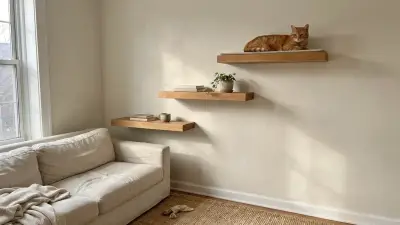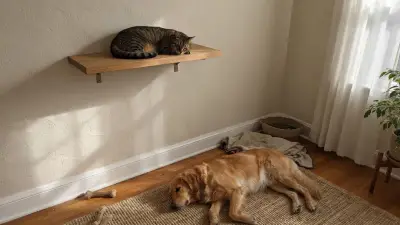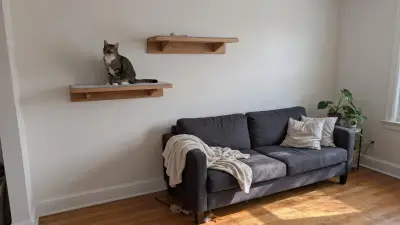
Wall mounted cat trees for senior cats eliminate wobbling and replace painful 18-inch leaps with closely spaced, carpeted steps and gentle ramps. Cats generally enter their senior years around age 11, and many develop osteoarthritis in their hips, spine, or elbows that makes jumping onto traditional tall towers uncomfortable.
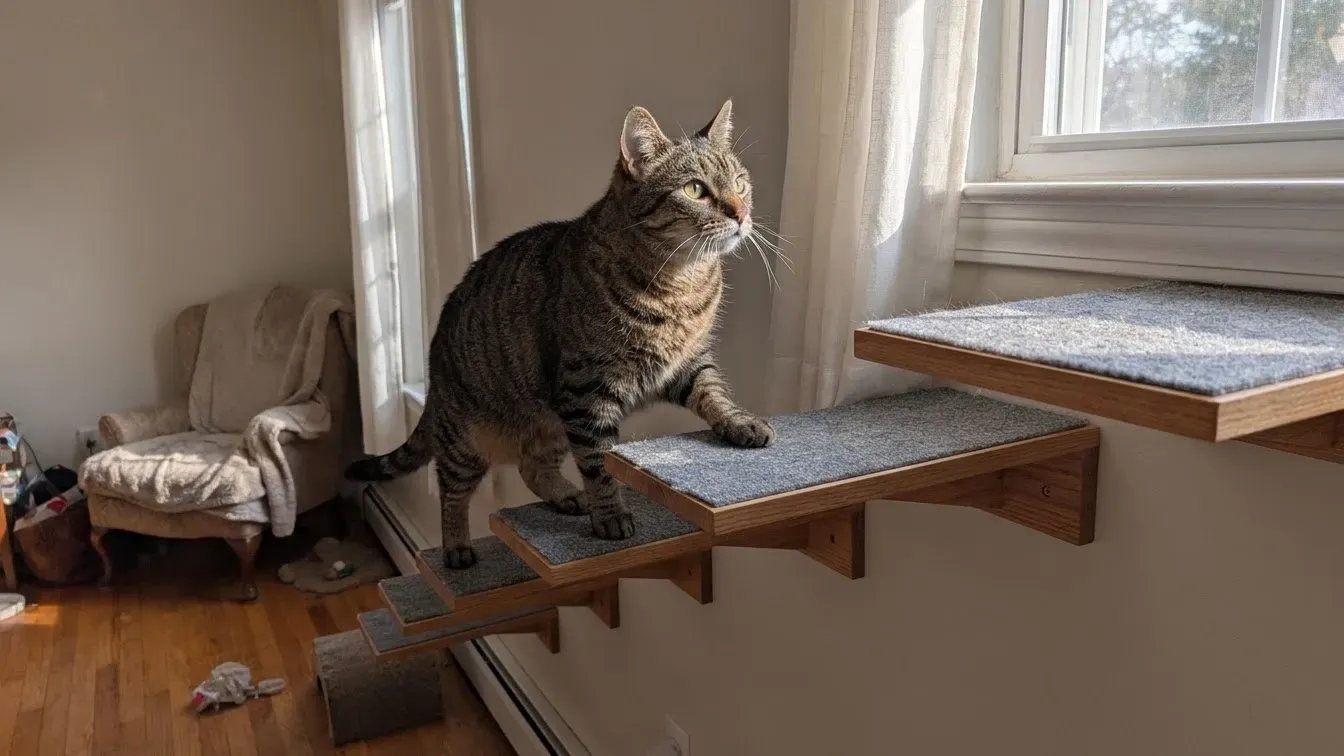
By anchoring wide, grippy shelves directly into wall studs at 6-to-8-inch vertical intervals, you give an aging companion a predictable, low-impact path to favorite sunny windows. The 17 layout ideas below prioritize non-slip traction, low-angle inclines, and cushioned resting spots tailored for stiff joints.
1Six-Inch Vertical Staircase to a Sunny Window
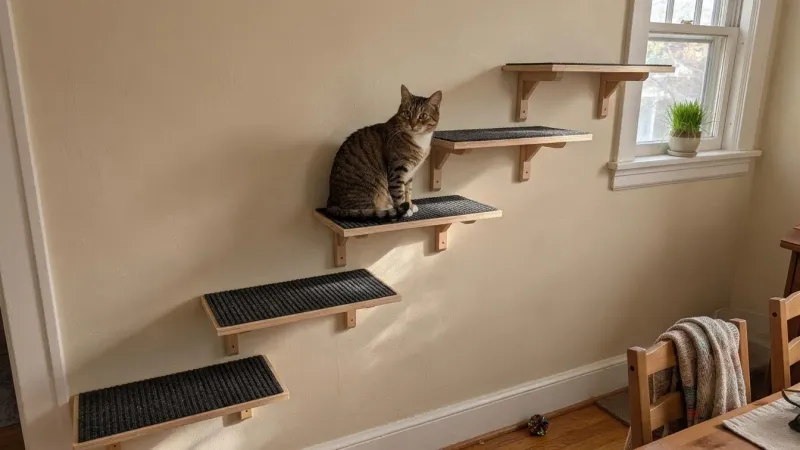
Mount a diagonal row of wide wooden steps spaced exactly 6 inches apart vertically and 8 inches horizontally, leading straight to a bright windowsill. Cover every tread with dense, low-pile carpet tiles so aging claws get immediate grip without snagging. Because older cats struggle with climbs over 18 inches in a single bound, this shallow staircase turns a high window into an effortless walk, letting stiff hips ascend one small paw-step at a time.
2Gentle Carpeted Ramp From Sofa to Wall Perch
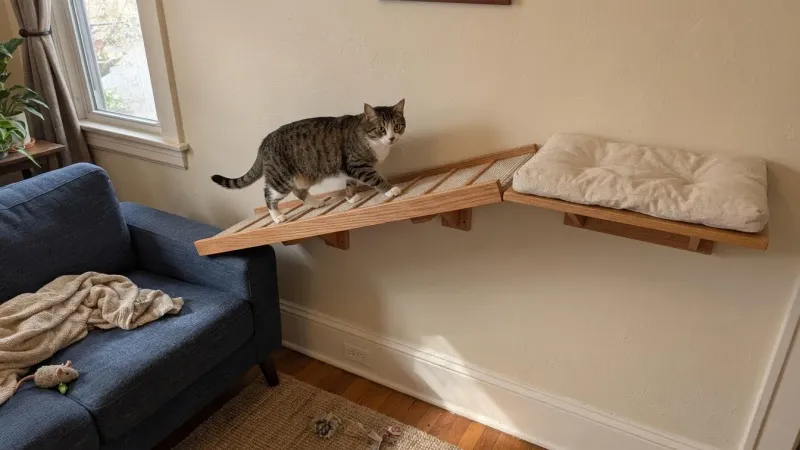
Start your vertical route from a sturdy couch arm instead of the floor, then bridge the remaining height with a 36-inch carpeted ramp angled below 25 degrees. Staple ribbed indoor-outdoor carpeting across the board and add thin wooden cleats every 5 inches for extra foothold. Starting from existing furniture cuts the total climb in half while giving an arthritic cat a continuous, non-slip incline that eliminates jarring downward jumps.
3Wide Memory-Foam Window Lounge Shelf
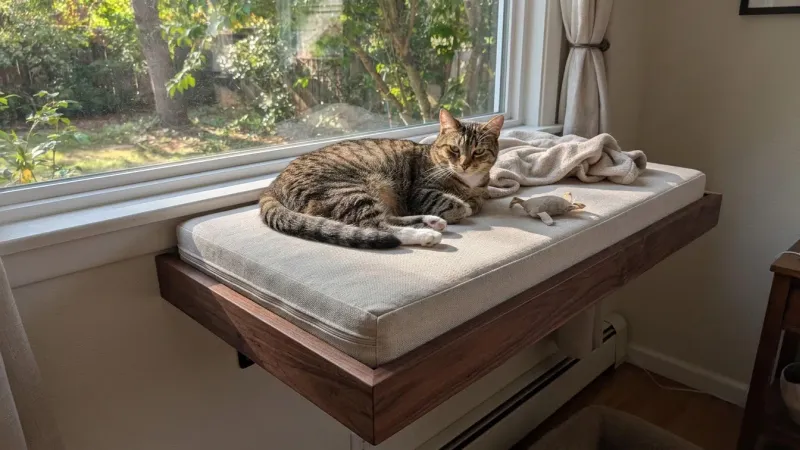
Install an extra-deep 14-by-24-inch wall platform flush with your sunniest window frame and top it with a washable, zippered memory-foam cushion. Warm sunlight soothes stiff joints, while thick orthopedic padding relieves pressure on bony hips and elbows during long afternoon naps. Add a low 2-inch wooden lip along the outer edge so a deeply sleeping senior cat feels securely cradled without having to step over a tall barrier.
4Zigzag Switchback Steps for Narrow Walls
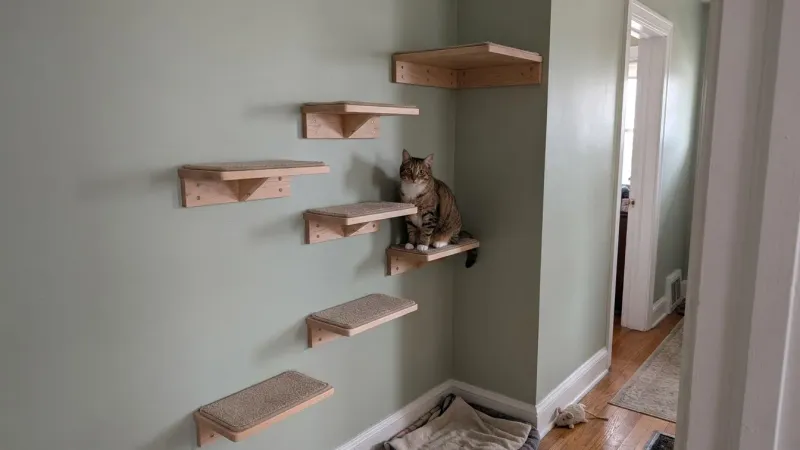
When wall width is limited, build a switchback path using 12-inch-deep corner landings connected by short 7-inch vertical step-ups. A zigzag layout keeps the incline gentle without requiring a long horizontal wall span, and the wide corner platforms allow a stiff cat to turn around comfortably without twisting their spine. Wrap every surface in short-loop carpet to prevent slipping during slow, deliberate pivots.
5Low-Entry Ottoman-to-Wall Step System
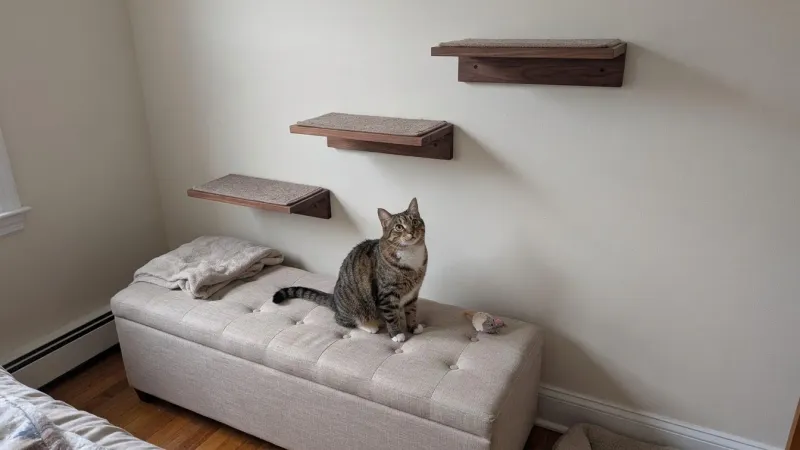
Place a heavy, flat-topped storage ottoman directly beneath your lowest wall shelf so your cat steps onto a 15-inch cushioned base before touching the wall. From the ottoman, mount three staggered carpeted ledges at 6-inch vertical intervals. This hybrid setup creates a forgiving landing zone if your senior misjudges a step on the way down and removes the strain of launching off slick hardwood or tile floors.
6Dual-Rail Guarded Catwalk Bridge
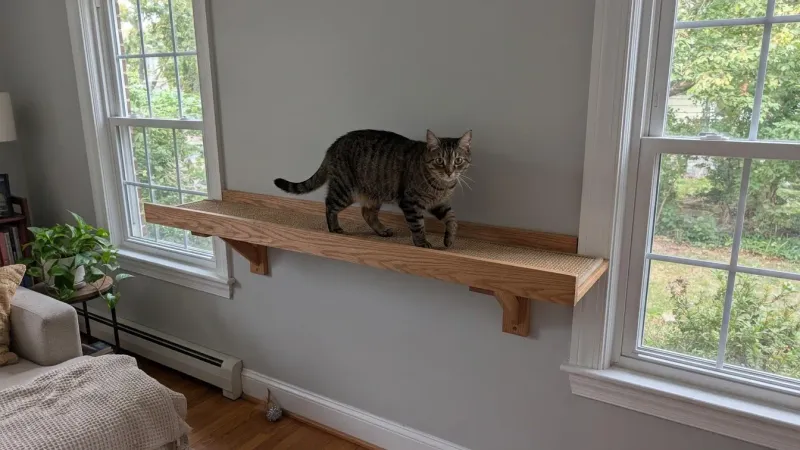
Connect two window perches across an empty wall with a solid 10-inch-wide wooden plank lined with sisal or ribbed carpet, flanked by 3-inch side rails. Unlike swinging rope bridges that wobble and strain arthritic limbs, a rigid plank anchored to wall studs feels completely solid underfoot. The low side rails offer visual security and physical balance for older cats experiencing mild age-related vision loss or balance changes.
7Heated Wall Corner Lounger With Step Access
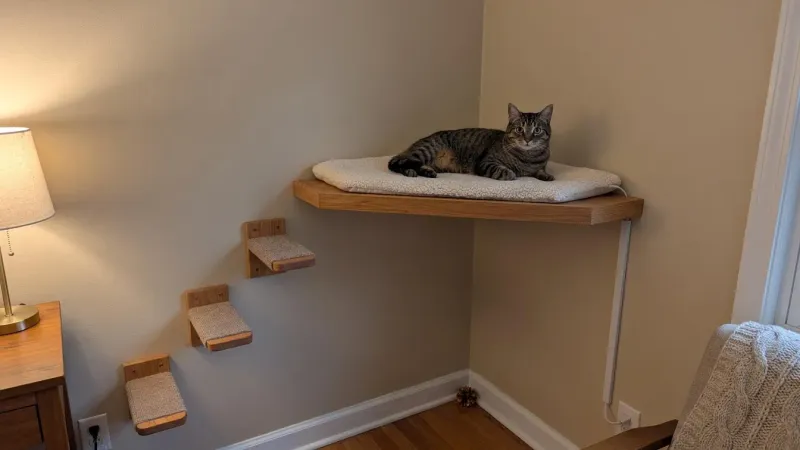
Mount a spacious corner shelf near an outlet and fit it with a UL-listed, low-wattage, thermostat-controlled pet-specific heating pad covered in soft fleece. Enclose the power cord completely inside a rigid, chew-proof wall conduit or cord cover to prevent chewing and entanglement hazards. Reach the corner via three 7-inch carpeted steps arranged along the adjacent wall, creating a draft-free, protected resting spot where gentle warmth eases chronic joint stiffness.
8Extra-Deep 16-Inch Turnaround Platforms
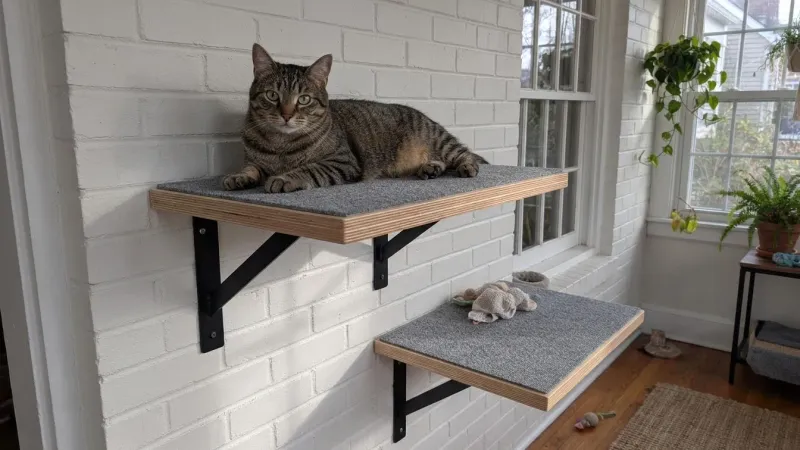
Standard 8-inch cat shelves force older cats to arch or twist awkwardly when turning back toward the stairs. Replace narrow ledges with 16-inch-deep plywood platforms supported by heavy-duty L-brackets anchored into studs. The generous surface area lets a large or stiff-jointed cat walk forward, turn in a wide, comfortable circle, and descend headfirst without straining their lower back.
9Stud-Mounted Vertical Shelving Tower With Gradual Steps
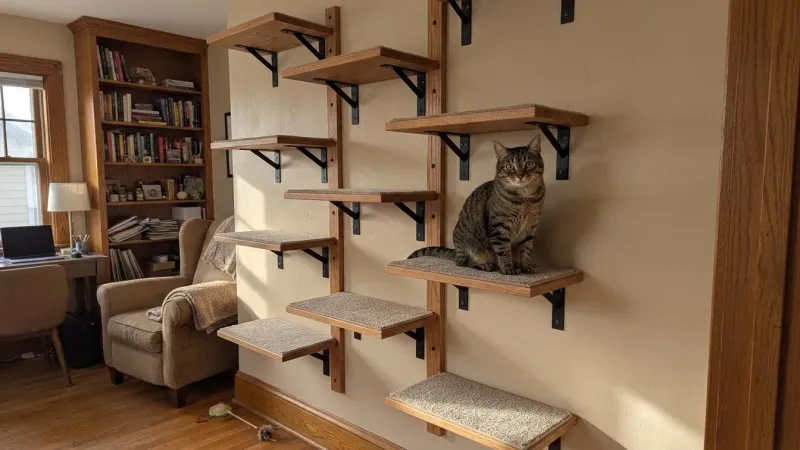
Install a true wall-mounted vertical shelf system using solid wood planks and heavy-duty brackets anchored directly into wall studs, with carpeted step ledges offset at 7-inch vertical intervals. Unlike freestanding or lightly anchored bookcases that can tip or collapse under a cat's shifting weight, stud-mounted solid wood shelving provides rigid, wobble-free support. You can blend the carpeted treads with your room's decor while giving your senior cat multiple low-height resting platforms along the climb.
10Sisal-Wrapped Ramp With Landing Rest
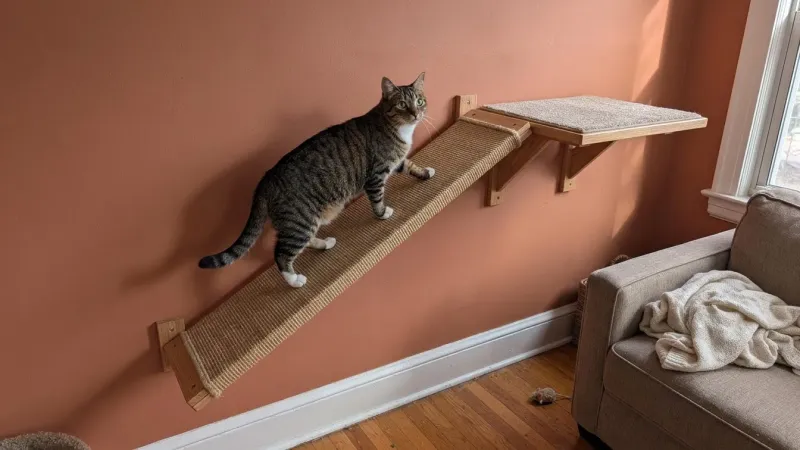
Pair a 30-inch low-incline ramp wrapped in flat-woven sisal fabric with a spacious 18-inch carpeted rest platform halfway up the wall. Flat-woven sisal offers firm claw traction without the loose loops that catch untrimmed senior claws. Placing a level rest deck mid-climb allows cats with moderate arthritis or reduced stamina to pause, catch their breath, and stretch before finishing the ascent.
11Sunlit Stud-Mounted Window Perch With Ramp Access
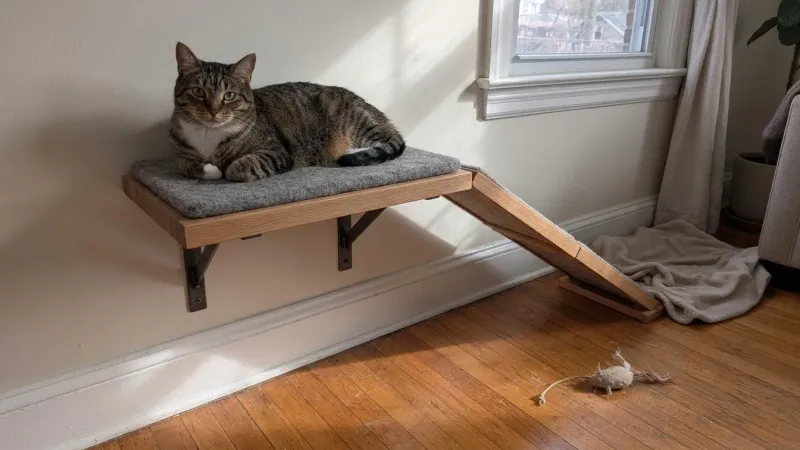
Install a deep, cushioned wooden wall perch anchored directly into wall studs beside a bright window—positioned well away from radiators, baseboard heaters, and air vents to prevent overheating or burns—and connect it to the floor with a gentle two-section carpeted ramp. Natural sunlight and a thick wool felt topper warm stiff joints safely without artificial heat sources. Keep the ramp angle mild so your cat enjoys an easy, low-impact climb to a cozy resting spot.
12Cushioned Wall Box Condo With Wide Cutout
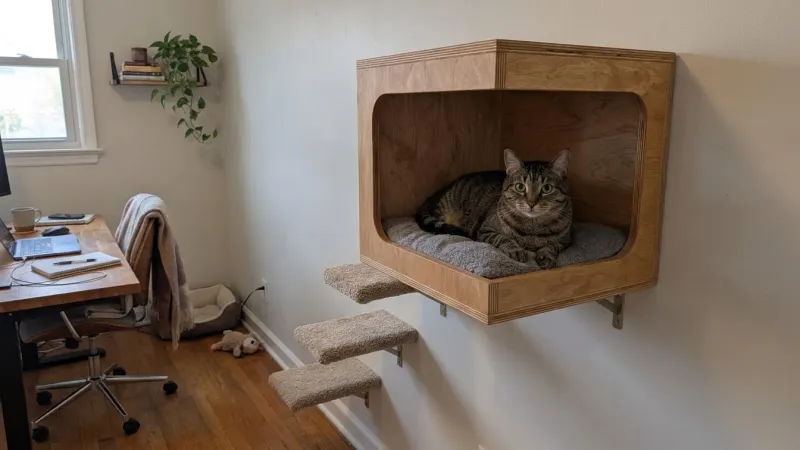
Mount a roomy 18-by-16-inch enclosed wooden cube at waist height, reachable via three 6-inch carpeted wall steps. Make the entry opening at least 10 inches wide with a threshold flush to the interior floor so your cat steps straight inside without lifting stiff legs over a lip. Inside, a thick orthopedic pad creates a quiet, dark sanctuary away from household noise.
13Staggered Wide-Tread Bracketed Steps
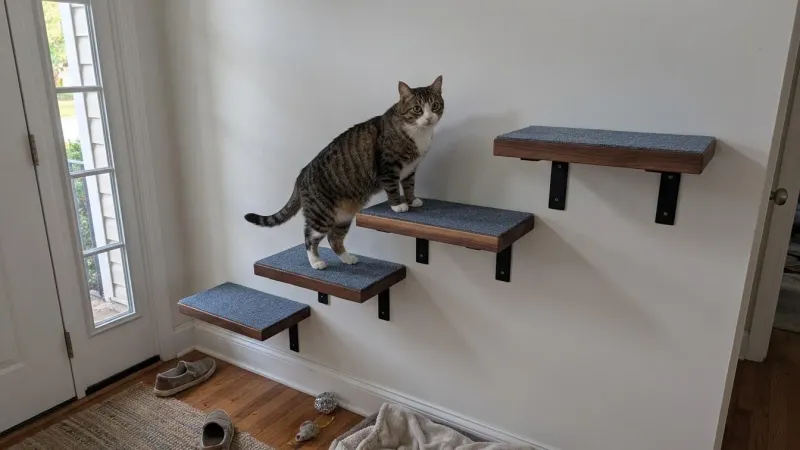
Use 12-by-10-inch solid wood steps mounted on heavy-duty L-brackets or cleat mounts anchored directly into wall studs, spaced 6.5 inches apart vertically. Top each step with peel-and-stick commercial carpet tiles cut flush to the wood edges. Rigid bracket or cleat support prevents flexing when a cat steps onto the outer edge, while the generous 10-inch tread depth accommodates all four paws at once so an older cat can stand squarely and stabilize their weight.
14Double-Ramp Switchback Wall Tower
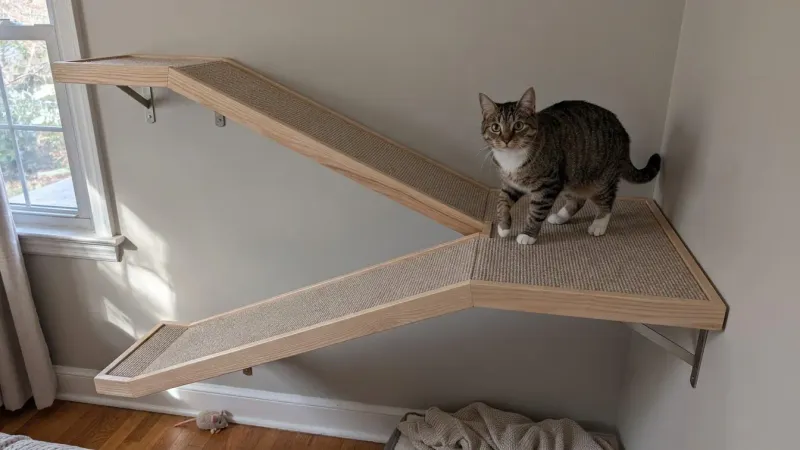
Eliminate steps altogether by mounting two 32-inch carpeted ramps joined by an oversized, wide rectangular corner landing platform with gentle transition angles. Each ramp rises at a mild slope so your cat walks uphill, turns in a wide, natural arc across the spacious rectangular deck without twisting their spine, and walks up the second incline to a high perch. This continuous-surface design prevents the joint compression caused by jumping up or dropping down between staggered ledges.
15Low-Sill Bay Window Extension Perch
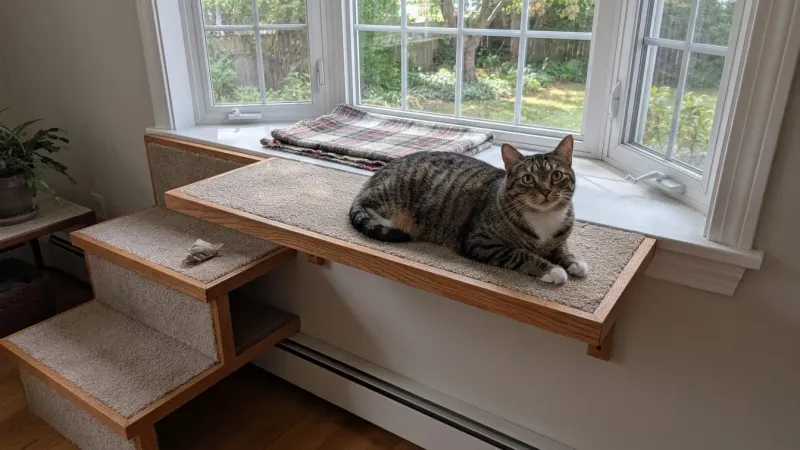
Extend a narrow bay window sill using a 14-inch-deep carpeted wall shelf mounted level with the glass, reached by two broad 7-inch steps tucked beside the window trim. Many older cats love watching birds from bay windows but slip off narrow painted wood sills. Adding a wide, cushioned extension gives them room to stretch out fully in the sun without risking a fall.
16Padded Bolster Wall Bed With Step Approach
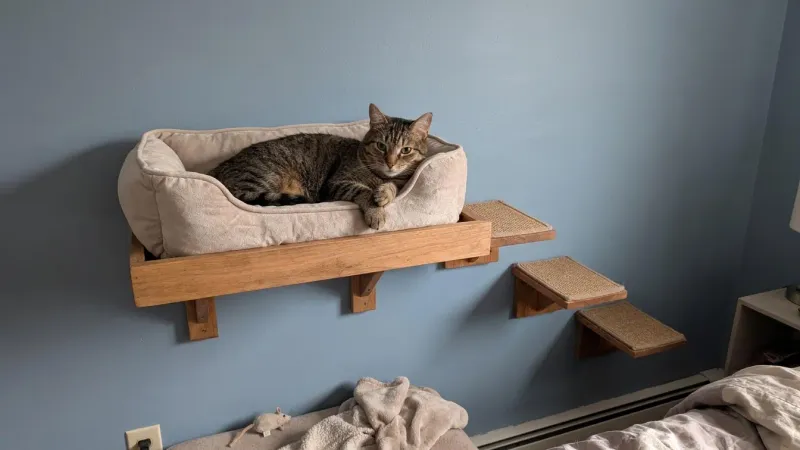
Attach a sturdy wooden wall tray fitted with a washable three-sided bolster bed, flanked on one side by a gentle 6-inch-rise staircase. The padded bolsters support an aging cat's head and spine while curled up, and the open fourth side aligns flush with the top step for effortless entry and exit. Choose dense upholstery velvet or short fleece that feels soft on sensitive paws.
17Modular Pegboard Wall Path for Adjustable Heights
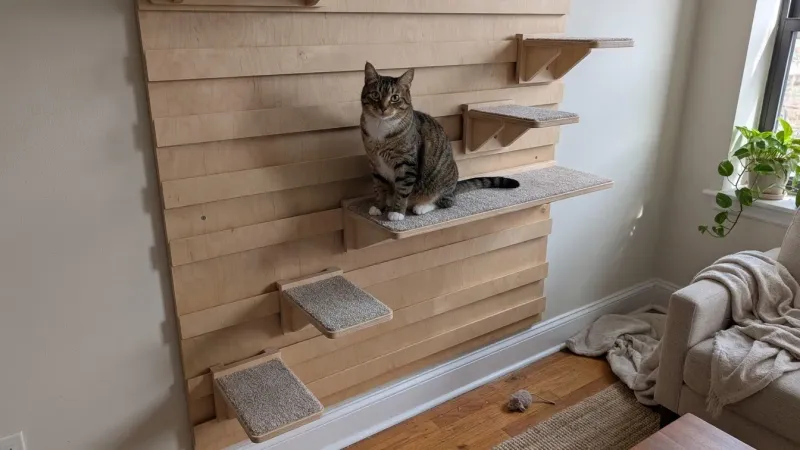
Install a heavy-duty wooden slatwall or French-cleat panel across a section of wall so you can reposition carpeted steps and ramps as your cat's mobility changes. Start with 8-inch spacing while your cat is active, and easily lower the ledges to 5- or 6-inch intervals if arthritis progresses. Adjustable mounting lets you adapt your cat's favorite vertical territory without drilling new holes.
Ramps vs. Tightly Spaced Steps for Arthritic Cats
Choosing between a ramp and a staircase depends on which joints bother your cat most. A continuous, low-angle carpeted ramp removes the repeated push-off force required for stepping, which helps cats with severe hind-leg stiffness or hip arthritis. Keep the incline gentle—ideally under 25 degrees—so your cat never feels like they are sliding backward.
Tightly spaced steps spaced 6 to 8 inches apart vertically work better for cats that prefer pausing to rest between movements or struggle with the continuous downward tilt of a ramp. Whichever layout you choose, pair wall furniture with heavy duty wall mounted cat trees anchored into solid wood studs so nothing shifts underfoot.
When to Adjust Your Home and Consult a Veterinarian
Because cats hide discomfort well, subtle changes—like hesitating before a jump, sleeping on the floor instead of a favorite windowsill, or landing heavily—often signal joint pain. Schedule a veterinary exam before remodeling your walls so a vet can confirm arthritis, rule out neurological issues, and discuss safe pain management, joint supplements, or weight control.
Never give human pain medications like ibuprofen or acetaminophen, which are toxic to cats. Once your veterinarian approves a mobility plan, start your wall path just 8 inches off the floor and place wall mounted cat trees that keep cats safe from energetic dogs or busy household traffic in quiet corners where your senior can rest undisturbed.
You do not have to take away your senior cat's favorite high perches when stiff joints slow them down. By replacing tall leaps with 6-to-8-inch carpeted steps, gentle ramps, and solid stud-mounted platforms, you keep sunny windows safely within reach. Watch how your cat moves each week, adjust shelf spacing as needed, and partner with your veterinarian to keep them comfortable.
Sources: Cornell Feline Health Center · International Cat Care · American Veterinary Medical Association (AVMA) · VCA Animal Hospitals
Frequently asked questions
At what age is a cat considered elderly or senior?
Veterinary organizations generally classify cats as senior starting at age 11, and geriatric or super-senior at age 15 and older. However, joint stiffness and early arthritis can appear earlier, especially in larger breeds or overweight cats, so watch mobility habits rather than relying on age alone.
Is a ramp or stairs better for an older cat with arthritis?
A gentle ramp under 25 degrees works best for cats with severe hip or hind-leg arthritis because it eliminates repeated pushing off. Tightly spaced stairs (6 to 8 inches apart) suit cats that prefer resting between steps or feel uneasy walking down an angled slope.
What is the average life expectancy of a cat with arthritis?
Osteoarthritis itself is not fatal, and many cats with arthritis live full lifespans into their late teens or early twenties. With veterinary pain management, weight control, and mobility-friendly home setups like low-incline wall shelves, affected cats can stay comfortable for years.
How far apart should wall shelves be for a senior cat?
Space wall shelves 6 to 8 inches apart vertically and 8 to 10 inches horizontally for senior cats. Keeping vertical gaps under 8 inches prevents the painful spinal and hip extension required for larger 15-to-18-inch jumps.

Nathan Brooks
Nathan Brooks runs Farmingzoom to help loving pet owners create safe, enriching homes for their animals. He cares deeply about responsible pet care and focuses on making everyday decisions simpler for fellow owners.…