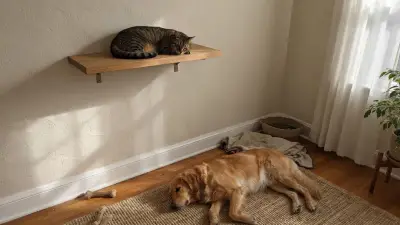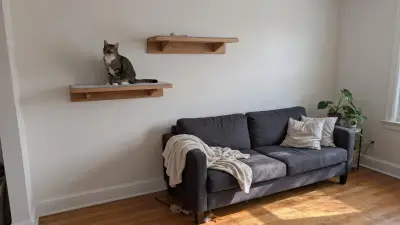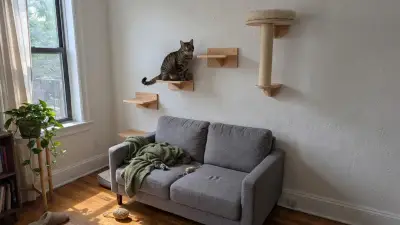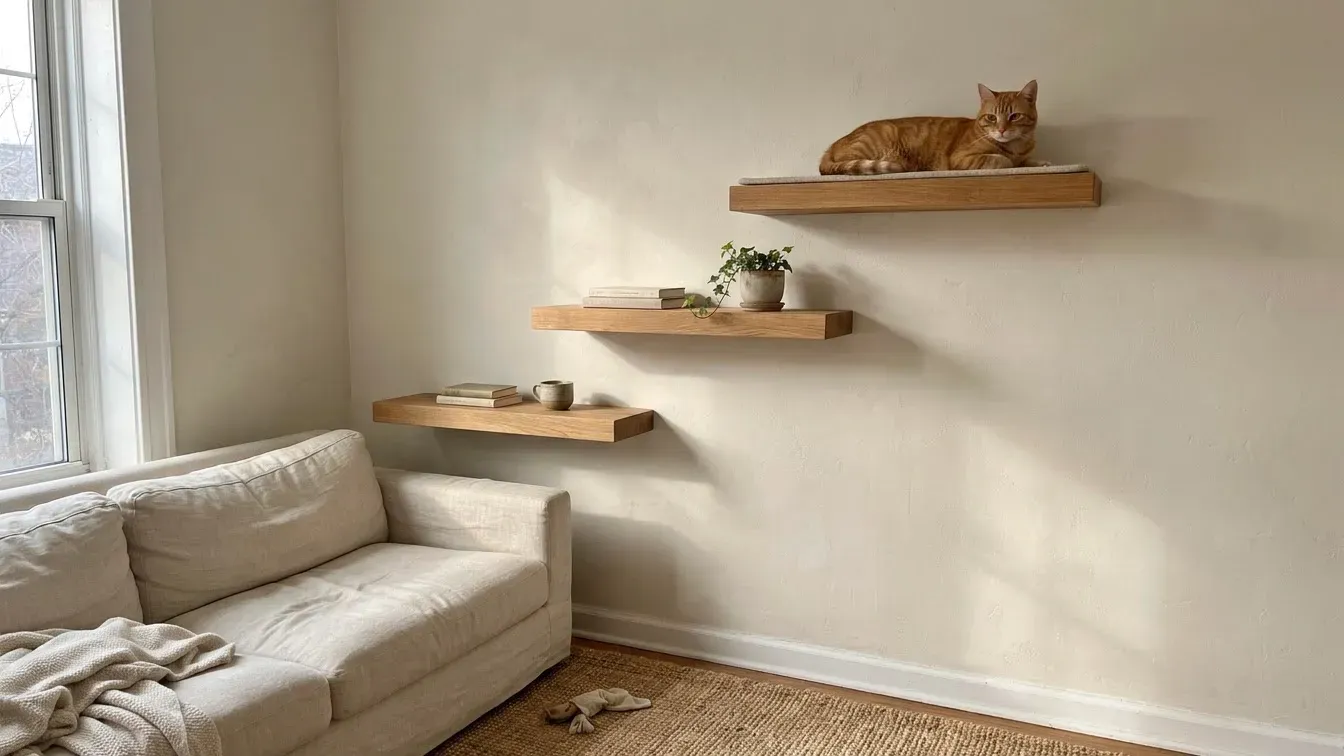
You can give your cat high, stimulating perches without sacrificing your living room aesthetic by choosing modern wall mounted cat trees crafted with minimalist wood and hidden hardware. Bulky, beige carpeted towers collect fur and interrupt clean sightlines, whereas architectural wall shelves function like floating bookshelves while satisfying your cat's natural instinct to climb and survey their territory.
Each layout below pairs sturdy wall-stud anchoring with refined finishes—like white oak, walnut, and matte metal—so your cat gets safe vertical enrichment and your living room stays open and uncluttered.
1White Oak Floating Bookshelf Steps
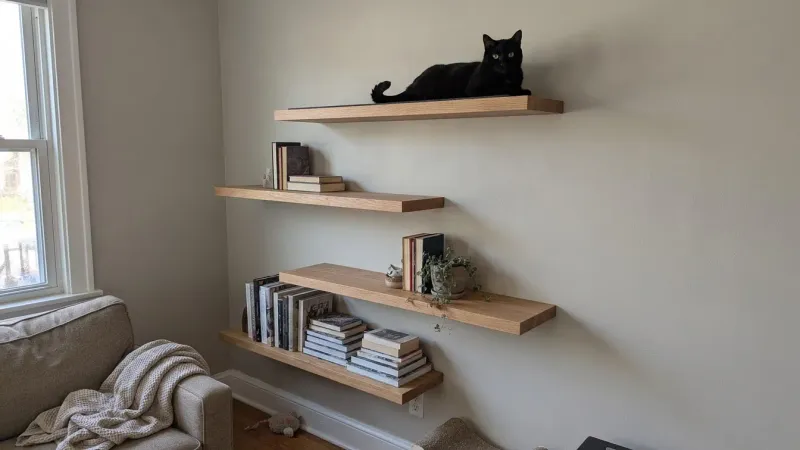
Thick solid white oak planks mounted with concealed steel rods create clean, bracket-free ledges that mimic architectural bookshelves. Stagger three or four 14-inch-deep planks at 14-inch vertical intervals up a neutral wall, leaving the lowest shelf clear for books or small frames and reserving the upper tiers—fitted with recessed felt, cork, or sisal traction strips so cats do not slip when jumping—for your cat. The pale wood grain brightens minimalist spaces while providing secure footing.
2Walnut Ledge and Sisal Scratching Pillar
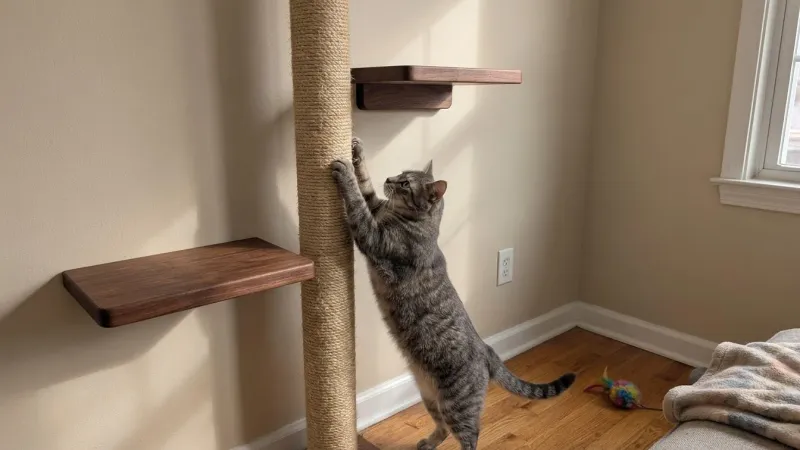
Pair dark walnut floating shelves with a vertical sisal-wrapped post mounted directly to the wall studs. Your cat can stretch and sharpen claws on the upright column before hopping onto the warm walnut perches above. Because the sisal matches natural jute tones, the vertical post reads like a sculptural room divider accent rather than a standard scratching pole.
3Curved Bentwood Wall Lounger
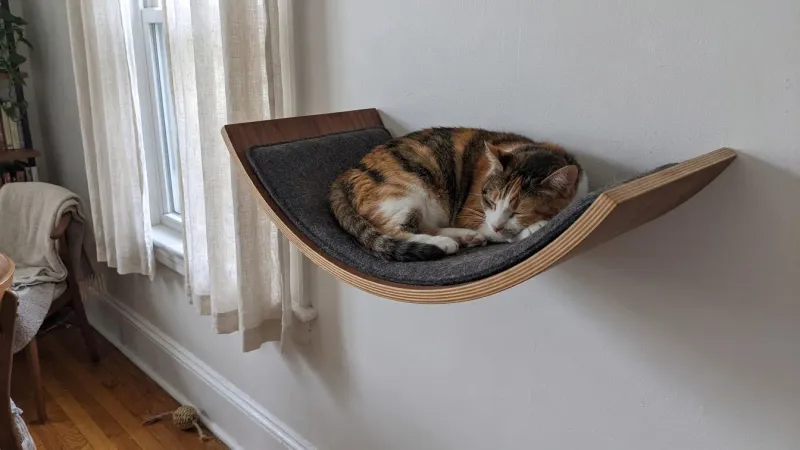
Inspired by mid-century modern chairs, curved birch or walnut plywood cradles your cat's body while projecting a sleek, ribbon-like silhouette against the wall. Line the inner curve with a removable gray wool-felt pad so your cat gets traction and warmth without visible carpet scraps. Mount it at eye level near a window for an afternoon sunbath spot.
4Matte Black Steel and Ash Wood Grid
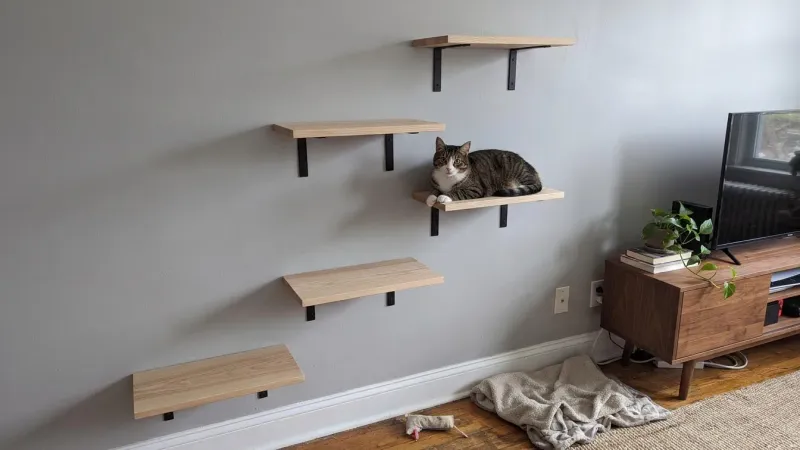
Slim matte black steel brackets frame natural ash planks to mirror industrial-modern living room shelving units. Arrange five rectangular perches in an asymmetrical staircase beside a media console so the wall looks intentionally curated. Wipe the sealed ash wood down weekly with a damp microfiber cloth to remove dander and fur effortlessly.
5Hexagonal Birch Cubby Cluster
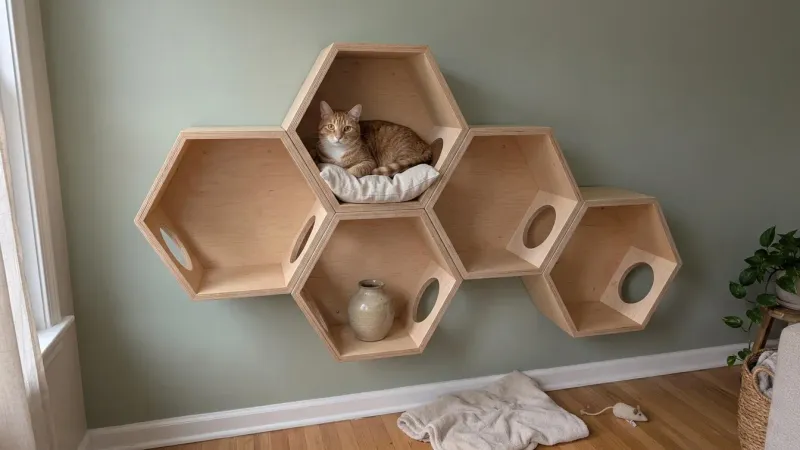
Interlocking wooden hexagons create a geometric honeycomb pattern that doubles as modern wall art and enclosed cat hideaways. Cut circular pass-through holes between adjacent cubbies so your cat can climb internally from one level to the next. Leave one lower hexagon open for lightweight decor items and fit upper cubbies with washable linen cushions.
6Canvas Hammock Between Floating Planks
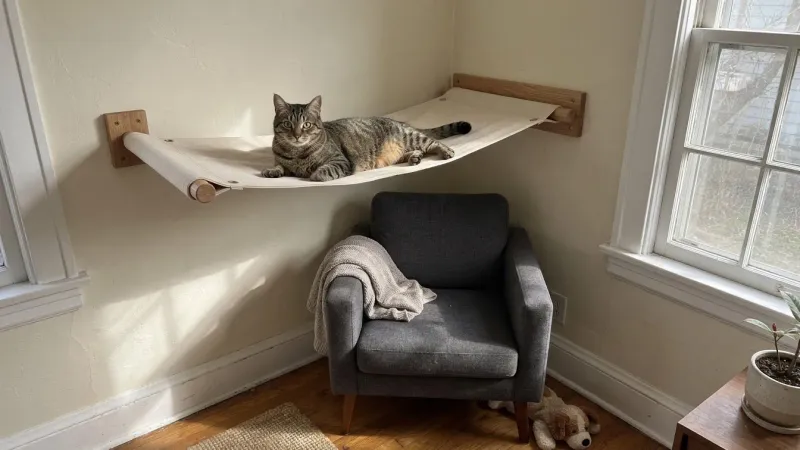
Suspend a taut, heavy-duty cotton canvas sling between two solid wood wall brackets to give your cat a supportive, breathable bed that tucks flush against the wall. Choose oatmeal or charcoal canvas to match your sofa upholstery. Unlike puffy plush beds, a flat canvas hammock maintains crisp horizontal lines and slides off the dowels for machine washing.
7Gallery Wall Picture Ledge Climber
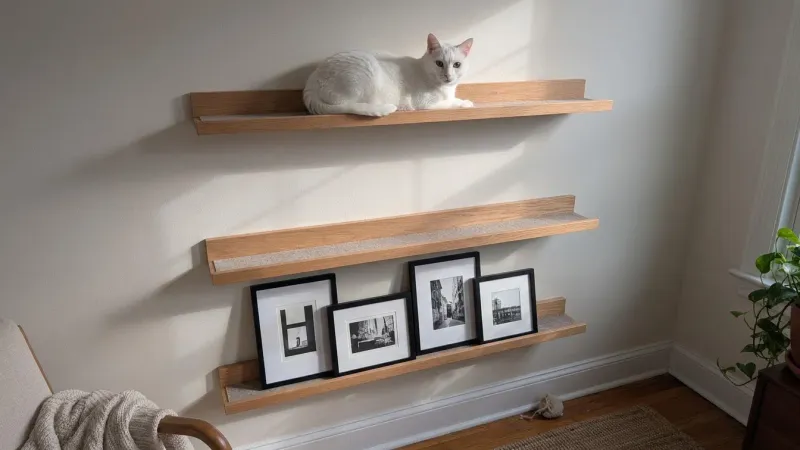
Extra-deep wooden picture ledges—at least 11 inches wide—let you blend framed artwork seamlessly into your cat's climbing route. Mount command-secured lightweight acrylic frames on the lower ledges and keep the upper ledges bare with recessed felt strips for safe paw grip. Visitors will read the entire arrangement as a cohesive gallery wall.
8Vertical Bamboo Scratching Ladder
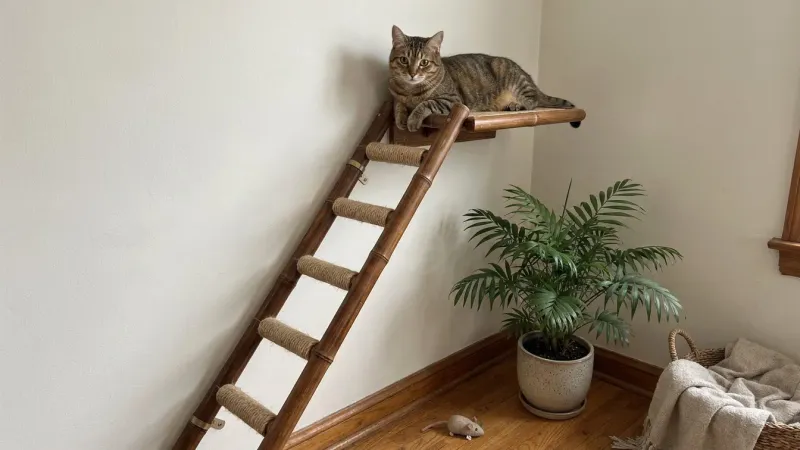
A narrow wall-mounted ladder built from carbonized bamboo rails and sisal-wrapped rungs takes up less than 12 inches of horizontal wall width. Cats can climb hand-over-hand vertically to reach a high ceiling-adjacent perch without needing wide diagonal steps. Bamboo's fine grain pairs effortlessly with Scandinavian and organic modern living rooms.
9Fluted Wood Cube Hideaway
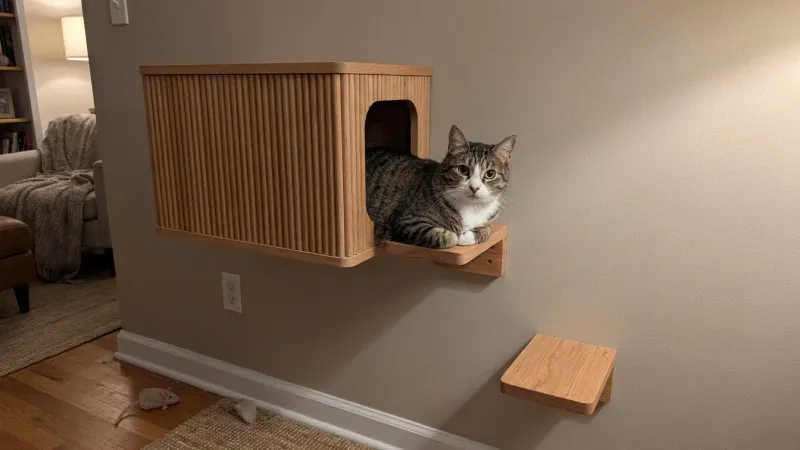
A wall-mounted box clad in vertical slatted oak tambour looks like a floating bedside nightstand while hiding a cozy interior cat nap cave. Cut an arched doorway on the side facing the climbing steps so the front facade shows only clean vertical wood flutes. This design gives shy cats a secure retreat without visual clutter.
10Acrylic and Oak Transparent Perch
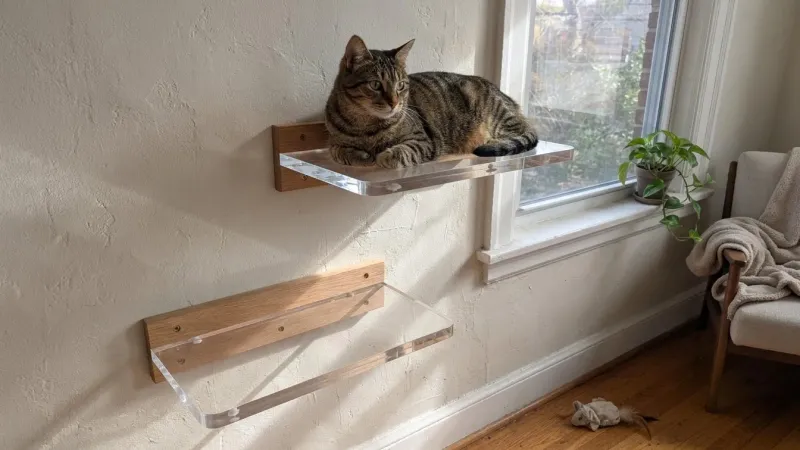
Combine a solid oak wall cleat with a thick, clear cast-acrylic shelf to keep sightlines completely open in small living rooms. Natural window light passes right through the clear ledge, preventing dark shadows on the wall below. Add clear non-slip silicone dots along the surface so your cat feels confident jumping onto the smooth acrylic.
11Corner Wrap-Around Floating Steps
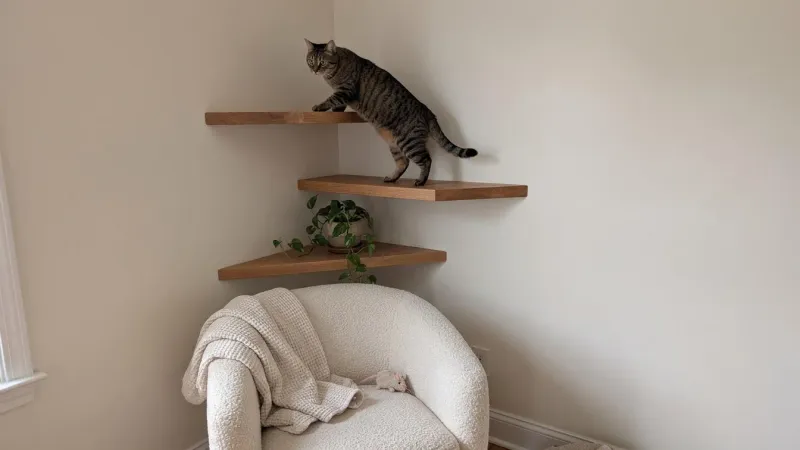
Bridge two adjoining living room walls using triangular oak corner shelves that guide your cat smoothly around a 90-degree turn. Corner installations utilize dead wall space behind accent chairs while keeping main wall expanses open for large artwork. For even more space-saving layouts, explore corner wall mounted cat trees designed for tight floor plans.
12Over-the-Sofa Horizontal Cat Bridge
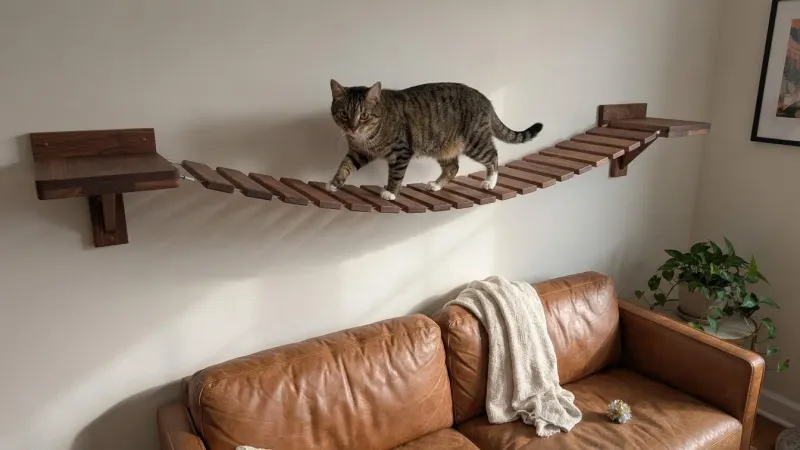
Span the blank wall above your sofa with a sleek wooden bridge made of individual hardwood slats linked by concealed steel cables. Anchor the end platforms into wall studs flanking the couch so your cat can patrol high above the seating area. Keep the wood tone matched to your coffee table legs for visual unity.
13Minimalist Felt-Lined Wall Condo
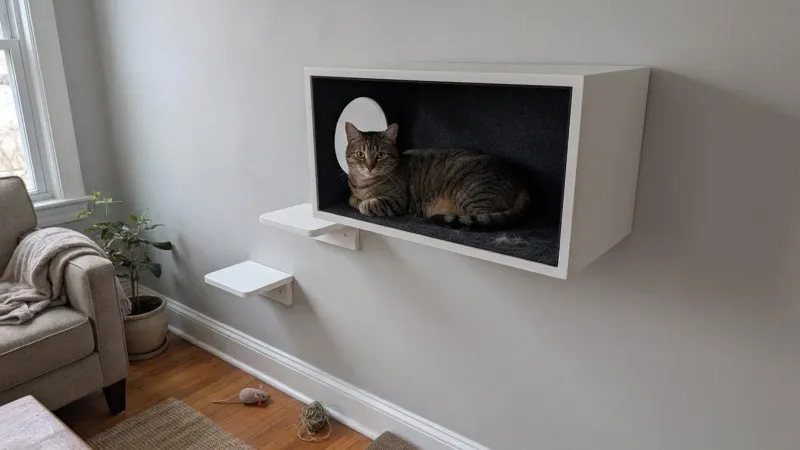
Mount a sleek rectangular plywood box finished in matte white lacquer on the outside and dark charcoal acoustic felt on the inside. The white exterior disappears against light walls, while the interior felt dampens noise and gives cats a textured surface to knead. Position it 4 to 4.5 feet off the floor as the summit of a three-step climb.
14Live-Edge Cedar Floating Plank
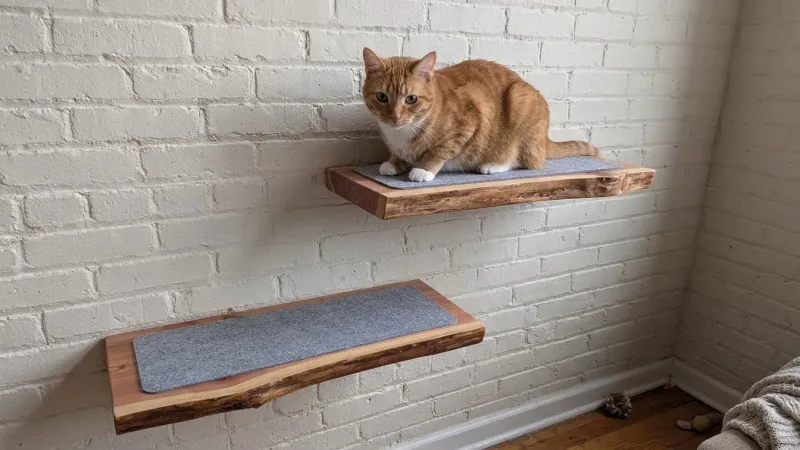
A single fully sealed or kiln-dried non-aromatic cedar or maple slab—treated to prevent phenol toxicity from raw cedar oils—with a natural organic front edge brings warm, earthy texture to a modern living room. Add non-slip felt or sisal pads to the smooth wood surface, and mount two staggered slabs using heavy-duty blind shelf pins rated for high loads. If you share your home with a large breed like a Maine Coon, review heavy duty wall mounted cat trees to ensure proper stud reinforcement.
15Modular Pegboard Cat Wall System
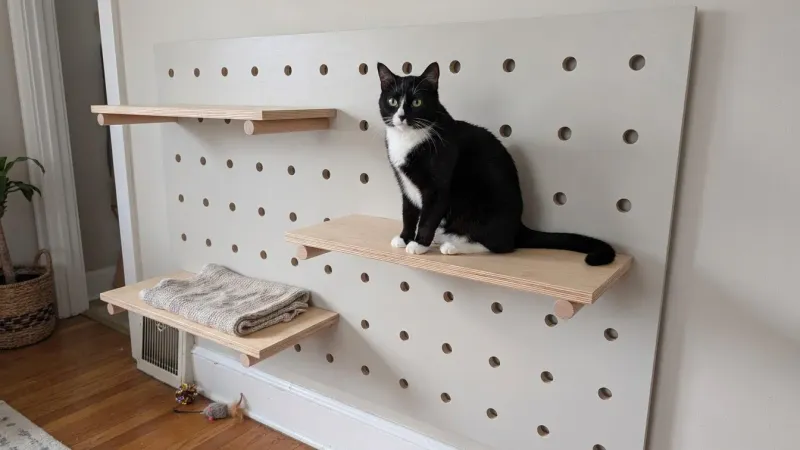
Install a large birch plywood pegboard panel painted to match your living room wall, then insert thick hardwood dowels and cantilevered shelves wherever your cat prefers. You can rearrange shelf heights as a kitten grows into an adult or as a senior cat needs lower steps, all without drilling new drywall holes.
16Floating Credenza and Perch Combo
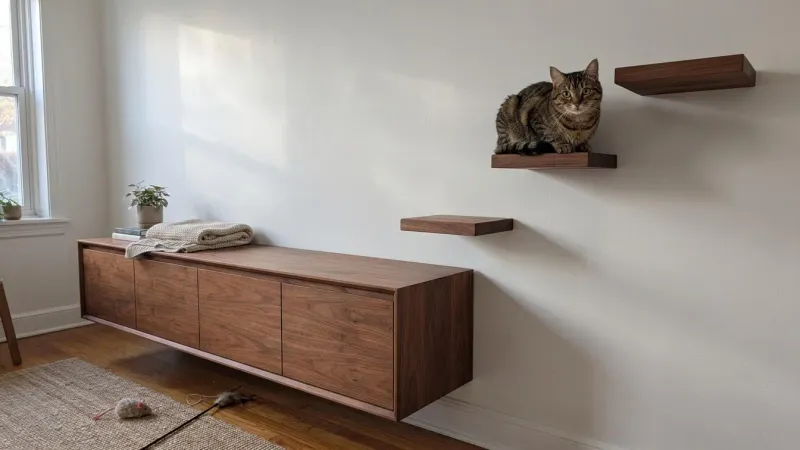
Extend the visual line of a wall-mounted media credenza by mounting matching wood cat steps that step upward from one end of the cabinet. This unified millwork look makes the cat furniture appear built-in by a custom cabinetmaker. Keep toxic houseplants like lilies or pothos off the credenza so your cat never chews harmful leaves while climbing.
17Ceiling-High Window Perch Shelf
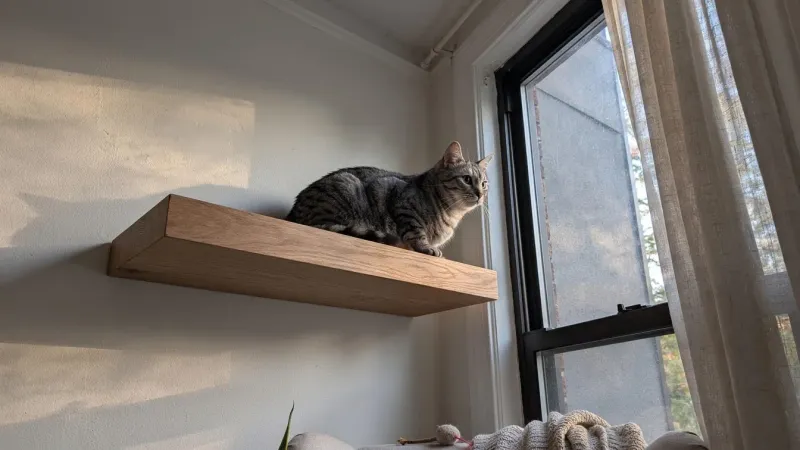
Finish your vertical climbing route with an 18-inch-wide floating shelf mounted 14 inches below the ceiling beside a sunlit living room window. Cats love high vantage points where they can monitor the entire room undisturbed. Check out more aesthetic cat tree ideas if you want to pair wall shelves with a low-profile floor scratcher.
How to Install Wall Mounted Cat Trees Safely
Cats launch off perches with significant horizontal force, so anchor primary load-bearing brackets directly into wooden wall studs spaced 16 inches apart rather than relying solely on drywall anchors. When a shelf span does not align with two studs, secure one end into a stud and use heavy-duty toggle bolts rated for at least 75 pounds on the drywall side.
Space vertical steps 12 to 16 inches apart so cats can step upward smoothly without risky leaps. If you have a senior cat, a short-legged breed, or a kitten, reduce vertical gaps to 8 to 10 inches and add non-slip felt or sisal pads to every wooden surface so paws never slide during landings.
Living Room Placement Tips That Keep Cats Happy
Mount your highest lounge perch near a living room window where your cat can watch outdoor birds and squirrels, but leave at least 18 inches of clearance from blinds or curtain cords that pose entanglement hazards. Avoid placing shelves directly above fragile glassware, hot radiators, or fireplaces.
Create a complete circuit with at least two entry and exit paths, such as stepping up from a sturdy sofa back and descending onto a console table. In multi-cat households, a continuous loop prevents one cat from trapping another at a dead-end perch.
Start with three staggered shelves anchored firmly into wall studs near a window, and observe how your cat uses the route before adding bridges or cubbies. Matching the wood finish to your existing coffee table or shelving keeps your living room calm, open, and unmistakably yours while giving your cat daily vertical exercise.
Sources: International Cat Care · ASPCA · Cornell Feline Health Center
Frequently asked questions
How high should wall mounted cat trees be off the floor?
Place the lowest starting step 16 to 24 inches above the floor, or directly beside a sturdy armchair or sofa so your cat can step on easily. Space subsequent shelves 12 to 16 inches apart vertically, keeping the highest lounge perch at least 14 inches below the ceiling so your cat can sit upright comfortably.
How much weight can floating cat shelves safely hold?
When anchored directly into wooden wall studs with steel brackets or heavy-duty blind rods, quality hardwood cat shelves safely support 40 to 65 pounds. Always account for dynamic jumping force rather than just your cat's resting weight, and avoid using standard plastic drywall anchors for climbing steps.
How do I get my cat to use new wall mounted cat shelves?
Rub a pinch of dried catnip onto the felt pads, place a few favorite treats on the lowest two shelves, and guide your cat upward slowly using a wand toy. Never force or lift your cat onto a high perch, as letting them explore each step at their own pace builds lasting confidence.
Are wall mounted cat trees safe for senior cats or kittens?
Kittens under four months old and senior cats with arthritis face higher fall risks on tall vertical routes. Keep shelves low to the ground with wide, carpeted or felt-lined surfaces and short 8-inch vertical steps, and consult your veterinarian if your older cat shows stiffness or hesitation when jumping.

Nathan Brooks
Nathan Brooks runs Farmingzoom to help loving pet owners create safe, enriching homes for their animals. He cares deeply about responsible pet care and focuses on making everyday decisions simpler for fellow owners.…