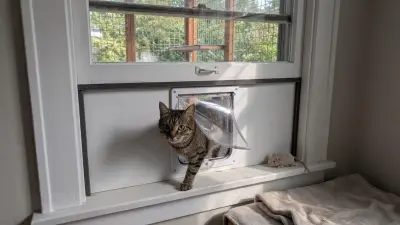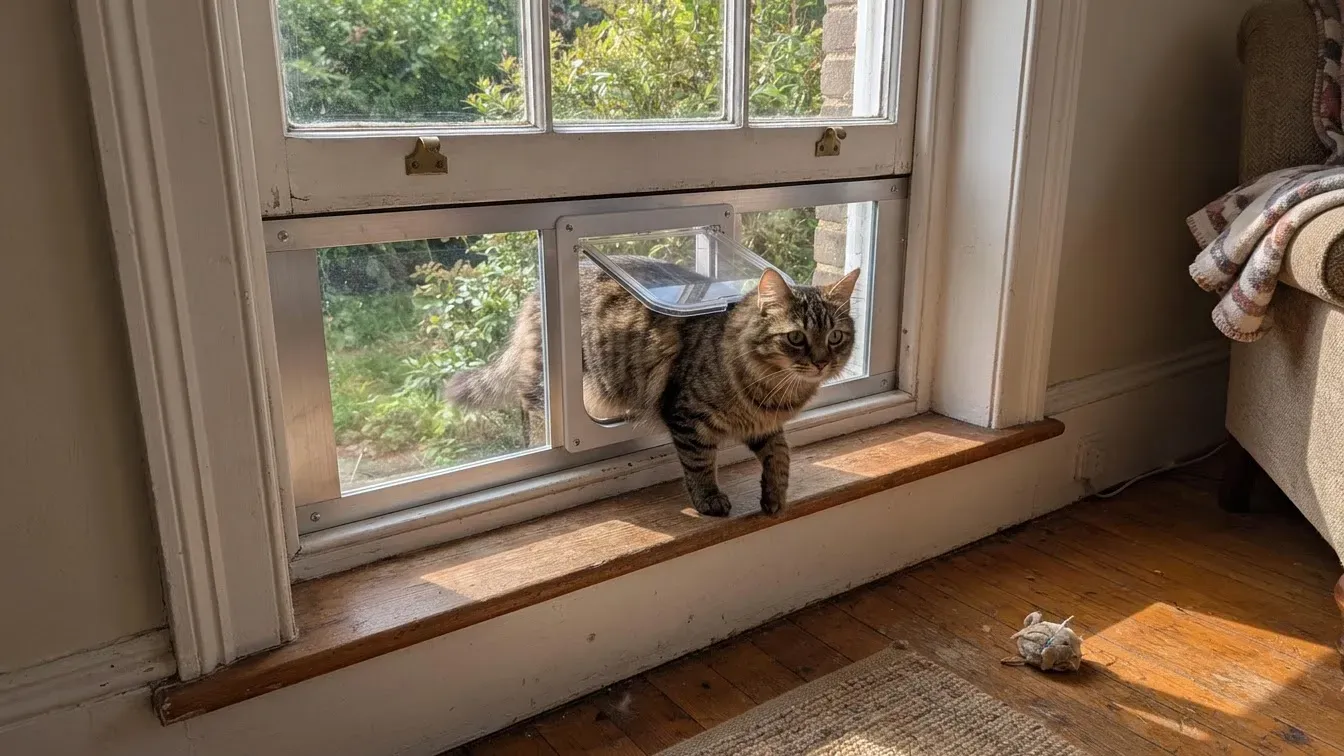
A removable horizontal panel insert is the most reliable window cat door for vertical sliding windows because it sits directly on your lower sill without cutting original wood or glass. Most online listings confuse vertical-sliding sash windows with tall panels built for side-to-side patio sliders, leaving owners of older homes with inserts that simply do not fit.
Traditional double-hung sash windows are tall and narrow, with deep wooden parting beads and counterweight channels. You can fit a sturdy cat flap into these openings by choosing a width-adjustable sash insert, sealing gaps around the meeting rail, and securing the upper sash against intruders.
Why Vertical Sash Windows Need a Different Insert Style
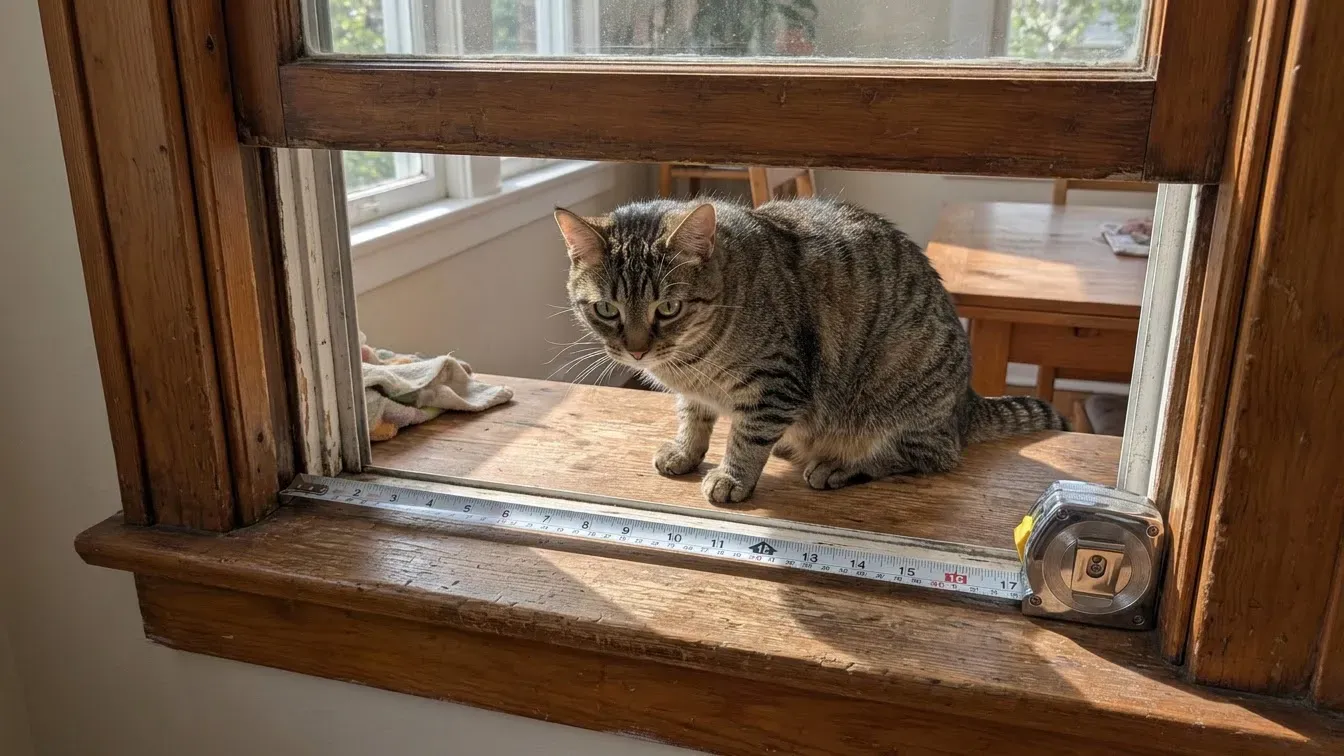
Shopping for a window cat door often leads to confusing product labels. Many manufacturers call a tall, narrow panel a "vertical window insert" because the panel itself stands upright, even though it is built for windows that slide side to side. If you buy one of those for a traditional double-hung window, it will not fit.
In a vertical sliding window, the lower sash lifts up, leaving a wide, low rectangular gap along the bottom sill. Your insert must run horizontally across the width of the window frame while the lower sash rests firmly on top of the insert's upper rail. If you also have side-to-side patio doors or horizontal sliders elsewhere in your home, you can compare those vertical panels in our guide to the best cat doors for sliding glass doors.
- Horizontal sash inserts: Expand side-to-side with spring-loaded ends to press into the left and right vertical sash channels.
- Panel height: Typically stands 8 to 15 inches tall so the lower window sash closes down onto the top edge of the frame.
- No permanent alterations: Ideal for rental properties, vinyl replacement sashes, and historic wood frames where drilling is not an option, though older wood windows with deep tracks or protruding parting beads may require custom-depth channels or non-damaging track fillers rather than a standard off-the-shelf insert.
How to Measure Tall, Narrow Double-Hung Window Tracks
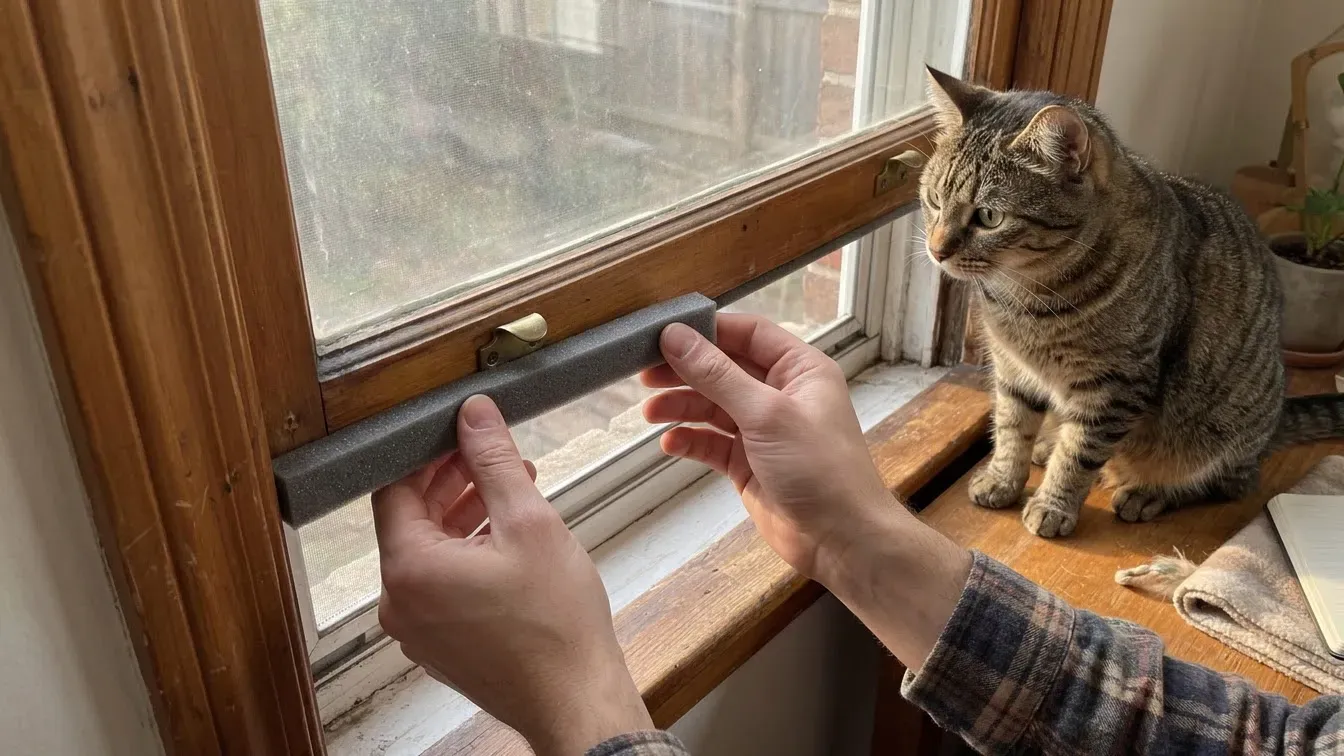
Older double-hung windows rarely follow modern standard sizes, and wooden jambs often shift slightly over decades. Measure three separate spots before ordering any adjustable insert so you do not end up with a frame that jams or falls out.
- Measure the inside track width: Raise the lower sash about 12 inches. Measure from the inside back of the left sash channel to the inside back of the right sash channel at the sill, 6 inches up, and 12 inches up. Use the smallest number so the spring-loaded ends can compress smoothly.
- Check the channel depth: Measure the thickness of the wooden track where the lower sash travels. Older wood sashes often have deep, wide channels, while modern vinyl replacements have narrow tracks that require thinner insert flanges.
- Confirm the flap rise and opening size: Measure from the bottom of the window sill to your cat's chest, and check the flap opening width. Most adult cats pass comfortably through a flap opening measuring about 6 inches wide by 6 to 8 inches tall, while larger breeds or cats weighing over 15 pounds generally need a wider opening around 7 to 8 inches across.
Best Types of Window Cat Door Inserts for Vertical Sliders
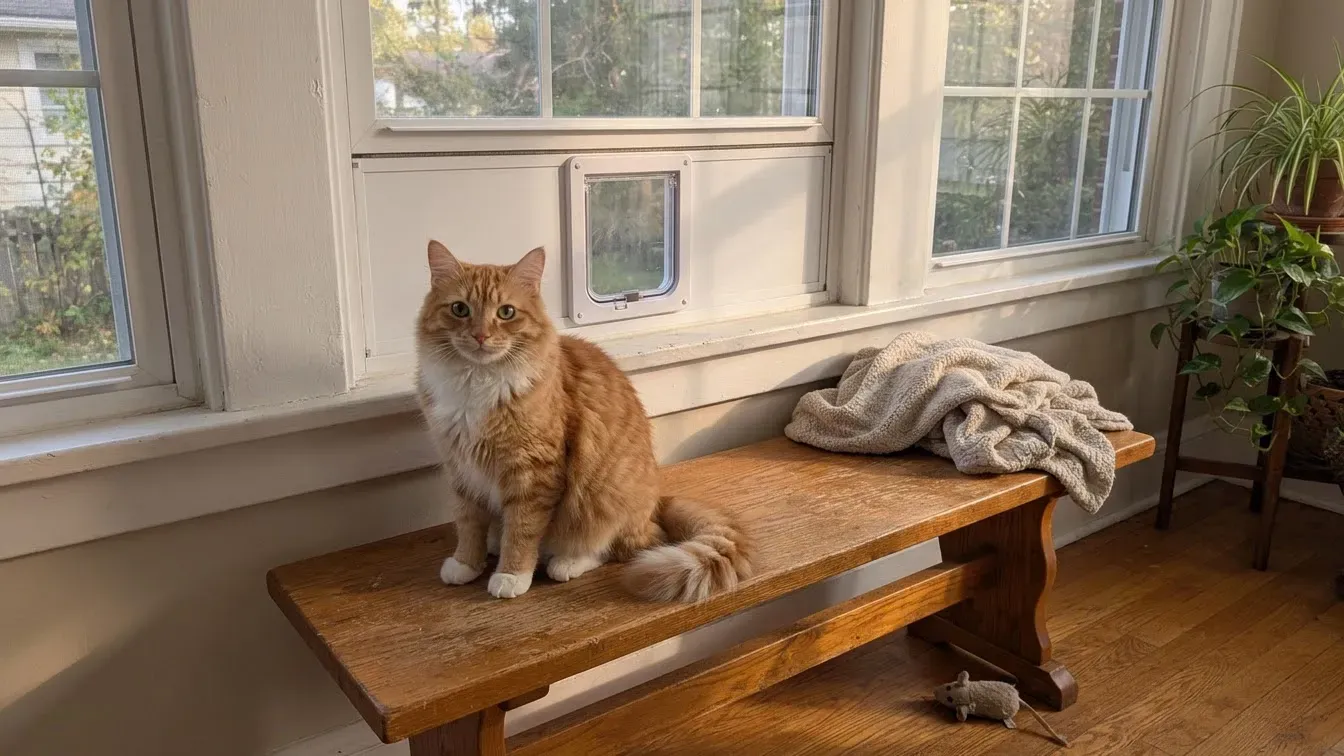
Window inserts for double-hung frames vary in framing materials, glazing, and flap design. Choosing the right build depends on your climate, window frame material, and how often your cat uses the door.
| Insert Style | Best Window Type | Key Features | Typical Price Range |
|---|---|---|---|
| Spring-Loaded Aluminum Frame with Single Flap | Standard wood or vinyl double-hung windows | Lightweight, easy seasonal removal, basic magnetic closure | $70 to $140 |
| Insulated Dual-Flap Aluminum Insert | Drafty older homes in cold or windy climates | Double-pane glass or thick polycarbonate, magnetic seals | Starting around $420 |
| Clear Polycarbonate Single-Piece Panel | Narrow historic sashes where maximum daylight matters | 3/8-inch rigid clear panel, minimal visual bulk | $120 to $260 |
Look for inserts with adjustable side wings that offer at least 2 to 4 inches of width range. If your window is unusually narrow—under 22 inches wide—you may need a custom-sized insert rather than an off-the-shelf adjustable model, since the flap assembly itself needs space next to the spring mechanism.
Sealing Drafts Between the Upper and Lower Sashes
The biggest mistake when installing an insert in a double-hung window is forgetting what happens at the middle of the window. When you raise the lower sash to sit on top of the cat door panel, the top rail of the lower sash no longer meets the bottom rail of the upper sash. This creates an open gap right across the center of the window where warm indoor air escapes and insects enter.
To close this gap completely, cut a strip of high-density foam weatherstripping or install a flexible vinyl sweep along the top edge of the lower sash rail so it presses snugly against the glass of the upper sash. You should also run thin adhesive-backed foam tape along the bottom edge of the cat door insert where it meets the wooden sill. For step-by-step advice on blocking cold air around flaps and frames during colder months, read our guide on how to choose and seal an insulated window cat door for winter.
Securing a Double-Hung Window Against Intruders and Escapes
Standard window thumb locks at the center meeting rail will not line up once the lower sash is raised 10 to 14 inches to accommodate the insert. Without secondary locks, someone outside could push the lower sash upward and lift the entire cat door out of the track.
- Install non-destructive sash stops or track locks: Clamp heavy-duty thumbscrew track locks onto the channels or wedge a cut-to-length wooden dowel in the upper track just above the raised lower sash so the window cannot be forced open without drilling into the frame.
- Lock the upper sash: Older double-hung windows with broken sash cords sometimes let the upper sash slide down on its own. Place a wooden dowel or clamp-on track lock above the upper sash so both sashes remain pinned in place.
- Use a locking flap cover: Choose a cat door with a rigid slide-in security panel or a 4-way manual lock so you can keep your cat indoors at night and block raccoons or neighborhood cats from pushing inside.
Helping Your Cat Reach High Windowsills Safely
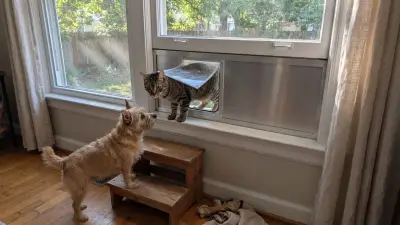
Unlike sliding glass patio doors that sit flush with the floor, double-hung windows in older homes often sit 24 to 36 inches above the interior floorboards and even higher above exterior ground level. Asking a cat to jump onto a narrow sill and push through a magnetic flap at the same time often causes hesitation or scraped paws.
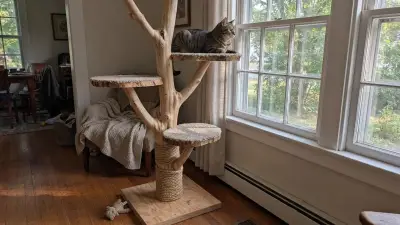
Place a stable interior landing spot directly beneath the window so your cat can step up calmly, pause, and push through the flap at shoulder height. A sturdy bench, a dedicated window perch, or one of the best cat trees for large cats that stay sturdy and safe works well inside, while a weather-treated wooden step stool or deck box outside prevents steep drops. Senior cats, kittens, and heavy-bodied breeds especially benefit from a wide, non-slip platform on both sides of the sill to protect their joints.
Fitting a window cat door for vertical sliding windows comes down to buying a horizontal sash insert, measuring the narrowest point of your wood or vinyl tracks, and sealing the center gap where the two sashes overlap. Add secondary track locks and a steady step on both sides of the sill so your cat can come and go safely all year.
Sources: International Cat Care
Frequently asked questions
Can you put a cat door in a double-hung vertical sliding window?
Yes. You can install a horizontal spring-loaded window insert on the bottom sill of a double-hung window, then lower the bottom sash onto the top edge of the insert. This requires no cutting or permanent changes to the frame.
How do you stop drafts when a window cat door is in a vertical window?
Raising the lower sash leaves an open gap between the middle rails of the upper and lower sashes. Press a thick foam weatherstripping seal or vinyl sweep into that center gap, and apply thin foam tape under the insert base.
Are window cat doors secure in older sash windows?
They are secure once you add secondary locks. Because the center sash latch will no longer align, install thumbscrew track locks or steel pin locks just above the raised lower sash so the window cannot be forced open from outside.
What size window insert flap does an adult cat need?
Most adult cats pass comfortably through a flap opening measuring about 6 inches wide by 6 to 8 inches tall. Larger breeds or cats weighing over 15 pounds generally need a wider opening around 7 to 8 inches across.

Nathan Brooks
Nathan Brooks runs Farmingzoom to help loving pet owners create safe, enriching homes for their animals. He cares deeply about responsible pet care and focuses on making everyday decisions simpler for fellow owners.…