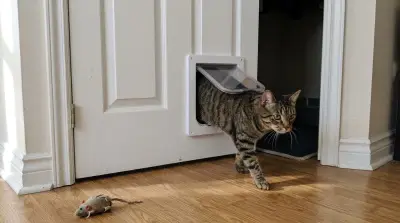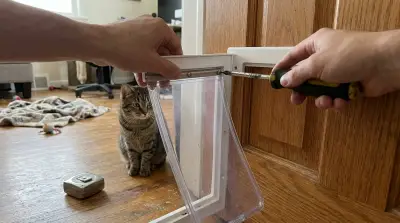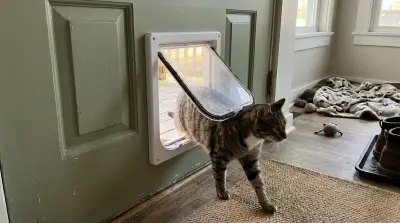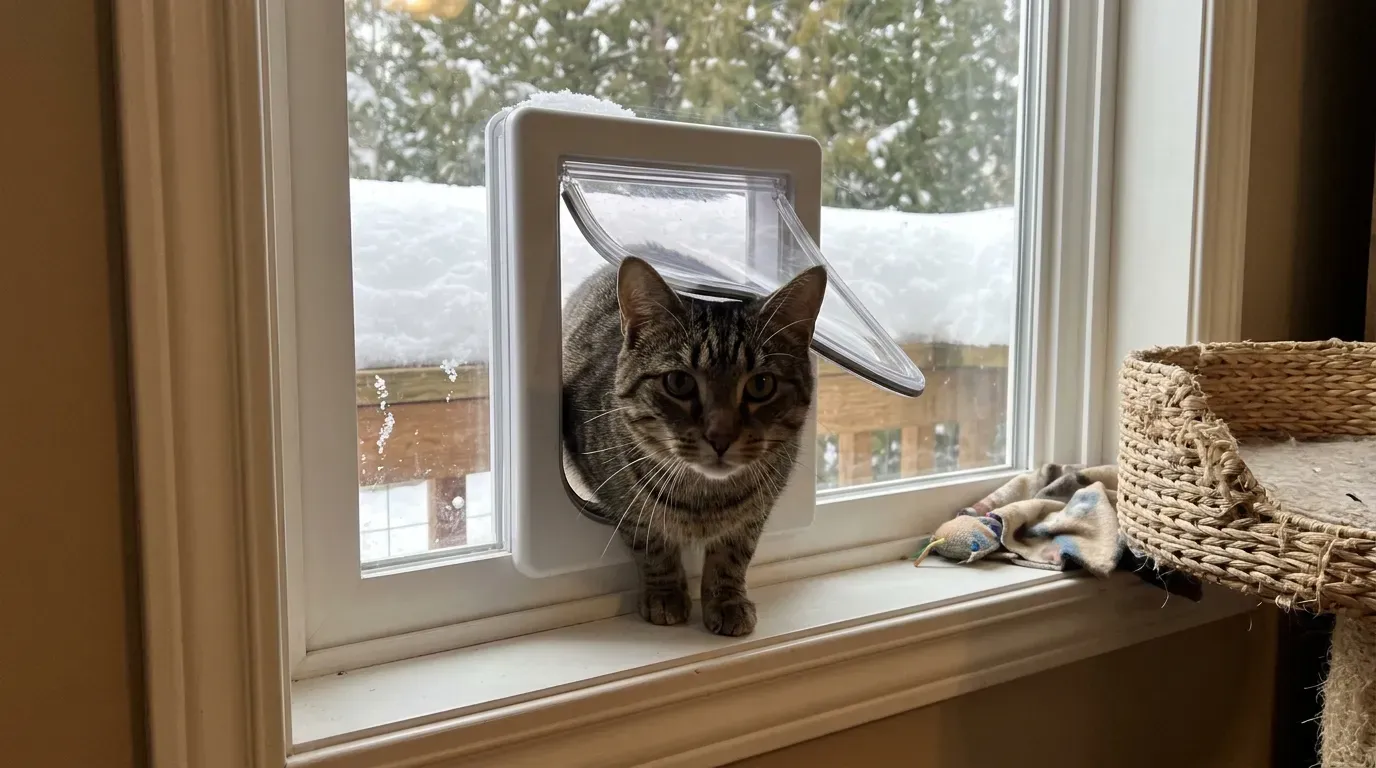
Learning how to choose and seal an insulated window cat door replaces a cracked, drafty window with a weather-tight panel that blocks sub-zero wind while giving your cat easy access to an enclosed catio or safe yard. When temperatures plunge below freezing, ordinary single-flap plastic pet doors warp, stiffen, and leak expensive heated air all day and night.
Choosing a cold-weather model means looking closely at multi-flap air pockets, flexible low-temperature magnetic seals, and double-pane insulating glass. By matching the right thermal insert to your window track and closing off hidden air gaps around the sash, you keep your living room warm and protect your cat from harsh winter chill.
Why Standard Pet Flaps Fail in Sub-Zero Winter Weather
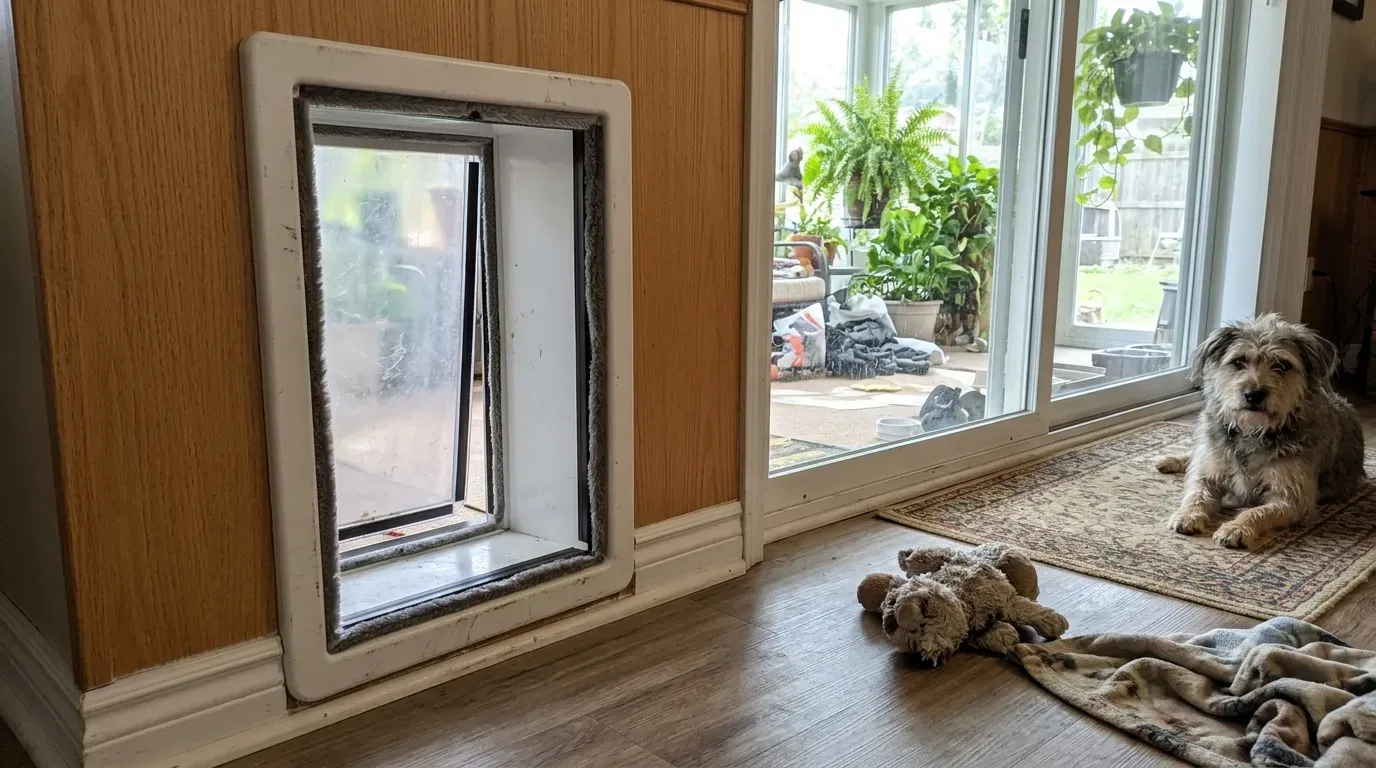
Most budget window pet inserts use a single sheet of rigid PVC plastic suspended inside an uninsulated aluminum frame. In mild weather, that thin barrier keeps bugs out, but once temperatures drop below freezing, standard vinyl stiffens and curls at the corners. Cold gusts easily push the flap open, creating a continuous funnel of freezing air right onto your floor.
Heat loss also happens directly through the surrounding panel material. Single-pane glass or thin polycarbonate conducts indoor warmth straight outside, causing frost and condensation to build up along the window sill. Over a long northern winter, that constant thermal bridge forces your furnace to run harder while leaving a chilly draft zone where your cat hesitates to walk through.
Key Features of a True Cold-Weather Insulated Window Cat Door
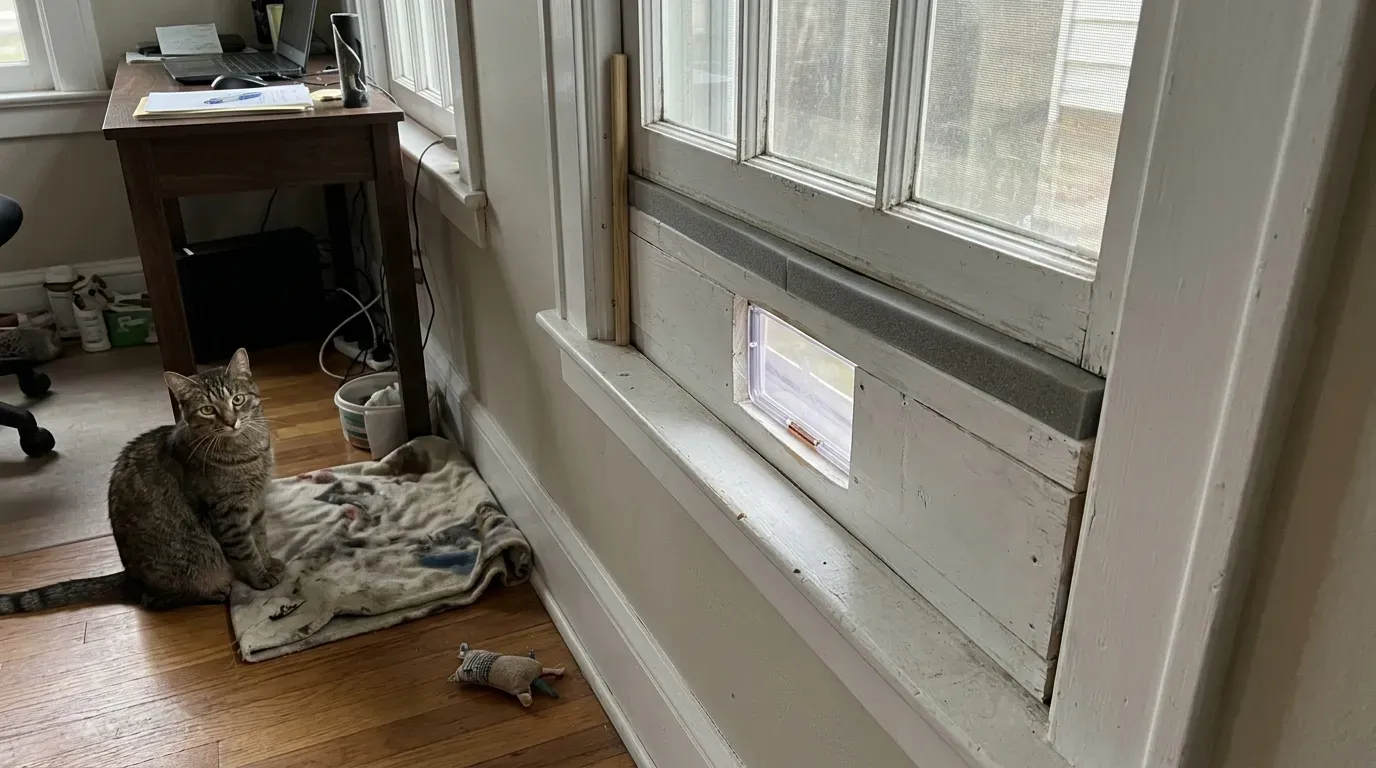
To keep indoor temperatures stable during heavy snow and biting wind, look for engineered thermal barriers rather than basic spring-loaded flaps. A reliable cold-weather insert combines several protective layers:
- Double-flap air pocket design: Two separate flaps separated by a recessed tunnel trap a pocket of still air between them, acting much like a double-pane storm window.
- Cold-flexible flap materials: High-grade polyolefin or heavy-duty silicone stays supple well below zero, allowing your cat to push through effortlessly without the flap cracking or freezing shut.
- Continuous perimeter magnets and pile weatherstripping: Strong magnets along the bottom and sides pull the flap back into place immediately after your cat passes, while dense brush seals block wind around the edges.
- Insulated glazing panels: Dual-pane tempered glass or foam-core insulated panels prevent radiant heat loss through the upper section of the window insert.
If you also need a full-height patio door setup, comparing how cat doors for sliding glass doors seal against drafts will help you spot quality weatherstripping before you buy.
Double-Flap vs. Single-Flap Thermal Performance Compared
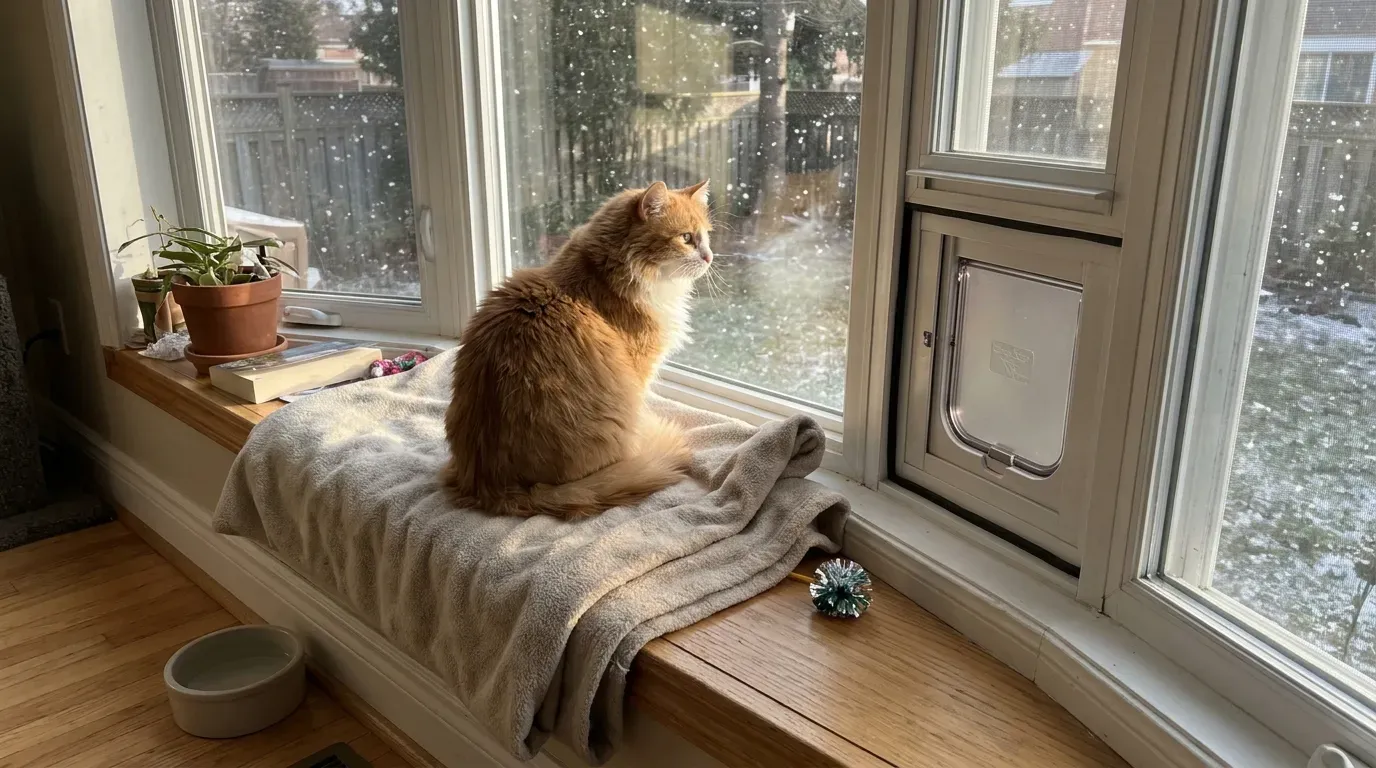
Not every insulated window insert offers the same level of protection against wind chill. Comparing single-flap and double-flap assemblies helps match the door to your local winter lows.
| Feature | Single-Flap Insulated Insert | Double-Flap Cold-Climate Insert |
|---|---|---|
| Air Barrier | One flexible barrier with magnetic bottom seal | Two independent flaps creating a dead-air insulation buffer |
| Wind Resistance | Moderate; strong gusts can briefly flex the flap | High; outer flap absorbs wind pressure while inner flap stays sealed |
| Best Climate Zone | Cool autumn nights and mild winters above 20°F | Sub-zero temperatures, heavy snow, and high wind exposure |
| Cat Training Ease | Very easy for kittens, seniors, and timid cats | Requires brief training so cats push through two light magnets |
For older cats with arthritis or smaller breeds under eight pounds, check the magnet strength. Many cold-weather models let you remove a secondary magnet strip while your cat builds confidence pushing both flaps open.
Matching the Insert to Horizontal vs. Vertical Sliding Windows
Window orientation changes how an insert sits in the frame and where cold air tries to sneak through. Measure your window opening carefully before ordering, following standard cat door dimensions so the step-over height stays comfortable for your pet.
Horizontal Sliding Windows
Vertical insert panels fit into the side track of a horizontal slider and use a spring-loaded top cap to press firmly into the upper channel. Because the sliding glass sash moves sideways against the insert, the vertical meeting rail between the moving window and the insert is the main spot where drafts enter.
Vertical Single-Hung and Double-Hung Windows
Horizontal insert panels rest across the bottom sill while the lower window sash closes down onto the top edge of the panel. Here, heat escapes through the horizontal gap created between the upper and lower window sashes when the bottom sash is raised. Stuffing dense foam weatherstripping into that upper sash gap is essential for an airtight winter fit.
How to Seal Gaps and Stop Condensation on Window Tracks
Even the best insulated window cat door will leak cold air if the surrounding window frame has unsealed seams. After placing the spring-loaded panel into your track, run your hand slowly around every edge on a windy day to feel for cold streams.
- Seal the sash overlap gap: Press self-adhesive closed-cell foam tape or a snug foam draft snake between the stationary glass and the open sliding sash.
- Insulate the metal track: Line empty metal window channels with adhesive brush weatherstripping so frost does not bridge from the exterior aluminum frame to your indoor sill.
- Add a reflective thermal sleeve at night: On extreme sub-zero nights when you lock the door, slide the rigid security cover into place and back it with a cut piece of reflective bubble insulation for extra warmth.
- Secure the sliding sash: Install a track clamp or wooden dowel so the partially open window cannot be forced open from the outside.
For more security options during overnight freezes, explore practical cat door blocker solutions that lock out both drafts and neighborhood wildlife.
Winter Safety Tips for Cats Using Outdoor Window Doors
Giving your cat winter access works best when the door leads into a sheltered, predator-safe catio rather than roaming free near icy roads. Snowplows, road salt, and antifreeze spills pose serious hazards to outdoor cats during winter months.
Keep these health and safety habits in mind whenever temperatures drop:
- Manage cold-weather access safely: Healthy adult cats with dense winter coats can safely make brief, voluntary trips into a sheltered catio when temperatures dip below 32°F (0°C). However, lock the door and keep your cat indoors during prolonged sub-20°F (-6°C) weather, severe wind chills, or wet snow, and restrict freezing access altogether for kittens, seniors, and hairless or thin-coated breeds.
- Wipe paws after snowy catio visits: Ice-melting salts and chemical de-icers irritate paw pads and cause stomach upset if licked off during grooming.
- Watch for hypothermia signs: Shivering, lethargy, hunched posture, or cold ears require immediate warming indoors and a prompt call to your veterinarian.
- Inspect the flap weekly: Clear packed snow, ice pellets, or frozen condensation from the bottom magnet strip so the flap never sticks open or traps a tail.
If your current flap becomes brittle or torn mid-season, you can replace a cat door flap in minutes without removing the entire window insert.
Pairing a double-flap insulated window cat door with tight foam sash seals stops freezing drafts without giving up your cat's favorite catio lookout. Measure your window track carefully, seal the upper sash gap against heat loss, and lock the security cover whenever prolonged sub-20°F cold or severe winter storms roll in so both your home and your cat stay warm all winter.
Sources: Cornell Feline Health Center · American Veterinary Medical Association (AVMA) · ASPCA
Frequently asked questions
Do insulated cat doors actually stop cold air in winter?
Yes, models with double magnetic flaps, cold-flexible silicone or polyolefin, and dual-pane glass block most wind and conductive heat loss. Sealing the gap between your sliding window sashes with closed-cell foam tape is equally important to stop drafts around the frame.
How cold is too cold for a cat to use a window cat door?
Healthy adult cats with winter coats can make brief, voluntary trips into a sheltered catio below 32°F (0°C), as veterinary risk thresholds for prolonged exposure generally begin between 20°F and 32°F depending on wind and moisture. Lock the door during prolonged sub-20°F weather, severe wind chills, or whenever caring for kittens, seniors, or hairless breeds.
Can I install an insulated window cat door in a vertical sliding window?
Yes, horizontal window insert panels fit across the bottom sill of single-hung and double-hung windows. Lower the bottom sash onto the top channel of the insert, lock the sash in place, and pack foam weatherstripping between the upper and lower window panes.
How do I stop frost from building up on my window cat door?
Frost forms when warm indoor humidity hits cold single-pane glass or uninsulated aluminum frames. Choose an insert with double-pane insulating glass, line bare metal tracks with brush weatherstripping, and wipe away excess moisture during extreme cold snaps.

Nathan Brooks
Nathan Brooks runs Farmingzoom to help loving pet owners create safe, enriching homes for their animals. He cares deeply about responsible pet care and focuses on making everyday decisions simpler for fellow owners.…