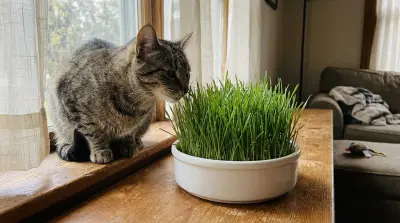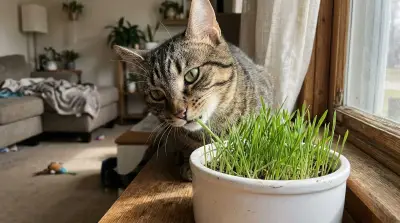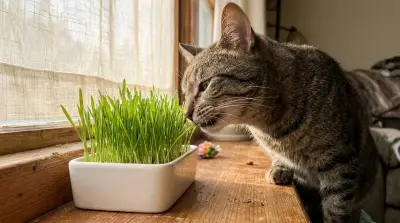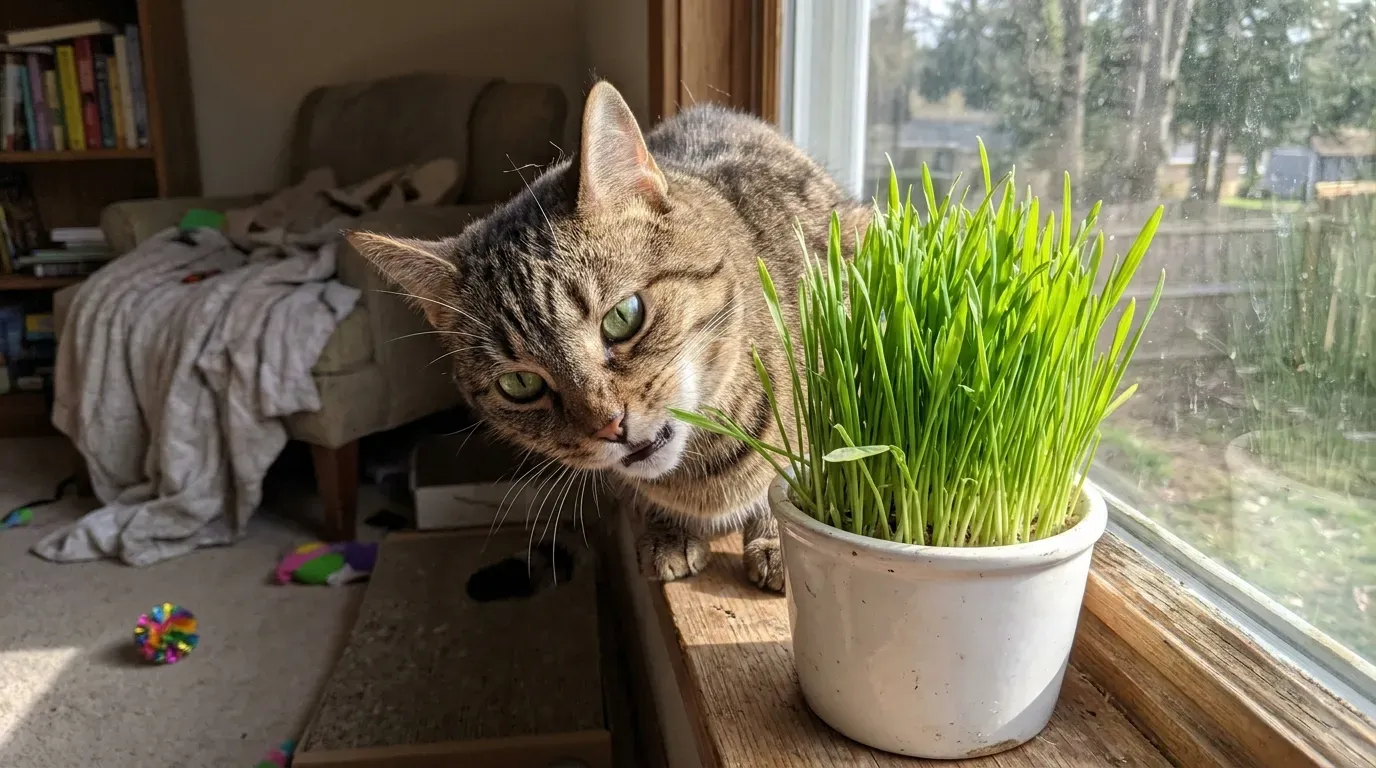
Yes, cat grass can cause diarrhea, especially when a cat eats too much of it at once. While indoor cereal grasses like wheat, oat, and barley are non-toxic, cats lack the digestive enzymes needed to break down large amounts of tough plant fiber.
When an enthusiastic grazer swallows too many blades, that indigestible roughage adds bulk and speeds movement through the intestines, irritating the stomach lining and leaving the colon less time to absorb water. You will learn exactly why this happens, how to tell the difference between simple fiber overload and a serious medical issue, and how to portion cat grass safely.
Why Eating Cat Grass Can Trigger Diarrhea
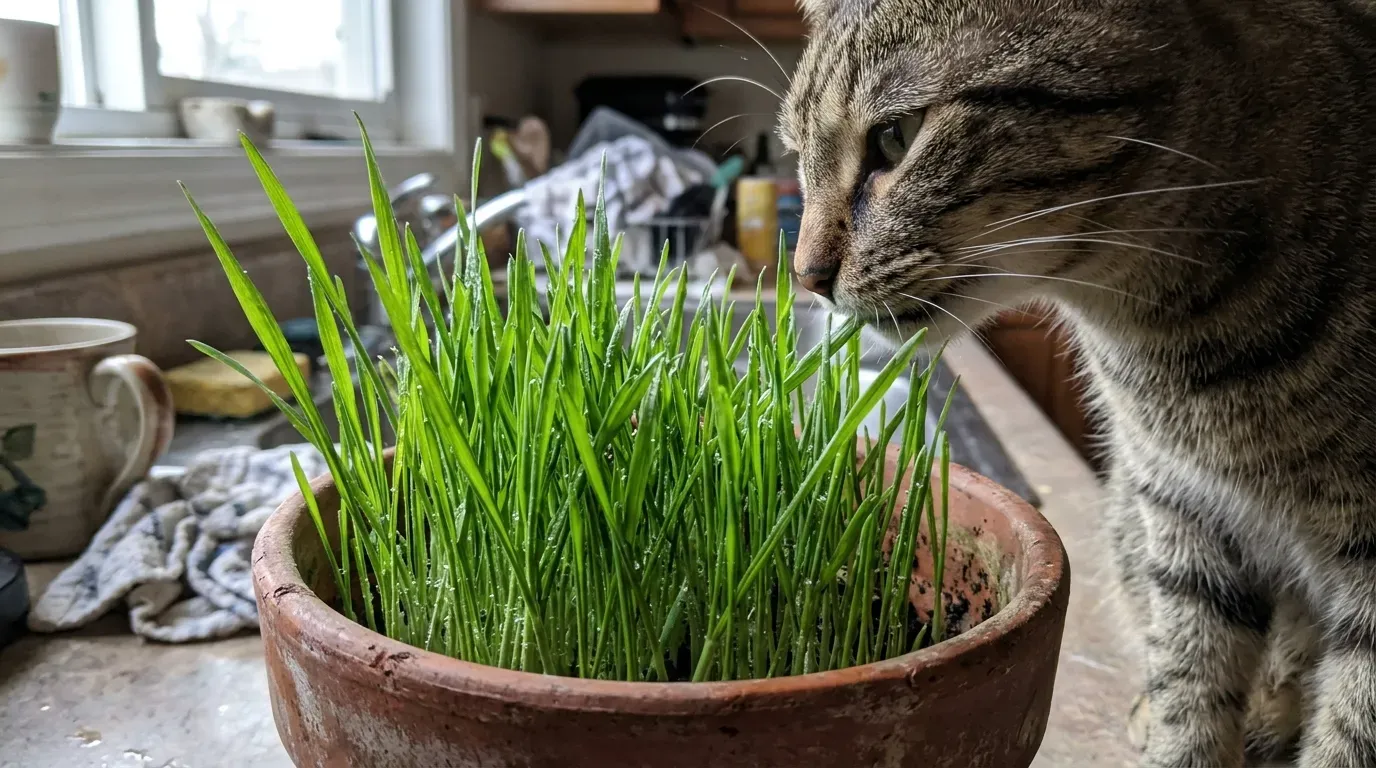
Cats are obligate carnivores built to process animal proteins and fats, not dense vegetation. Understanding how cat grass affects your cat starts with its fibrous structure. In small amounts, those blades act as gentle roughage that helps move swallowed fur through the gut. In large amounts, the exact same grass becomes a mechanical irritant.
Several overlapping factors explain why a grazing session ends in a messy litter box:
- Sudden fiber overload: Rapidly introducing high amounts of insoluble plant fiber accelerates gut motility, leaving the colon too little time to absorb water properly.
- Physical stomach irritation: Rough grass blades tickle and scrape the lining of the stomach and small intestine, triggering mild inflammation, gurgling stomach sounds, and intestinal spasms.
- Chlorophyll sensitivity: Large doses of plant chlorophyll can temporarily loosen stools in cats with sensitive digestive tracts.
- Existing nausea: Many cats seek out grass because their stomach already feels unsettled. In those cases, the grass did not cause the diarrhea; an underlying stomach bug or dietary indiscretion triggered both the grass-eating and the loose stool.
Indoor Cat Grass vs. Backyard Grass: Critical Safety Differences
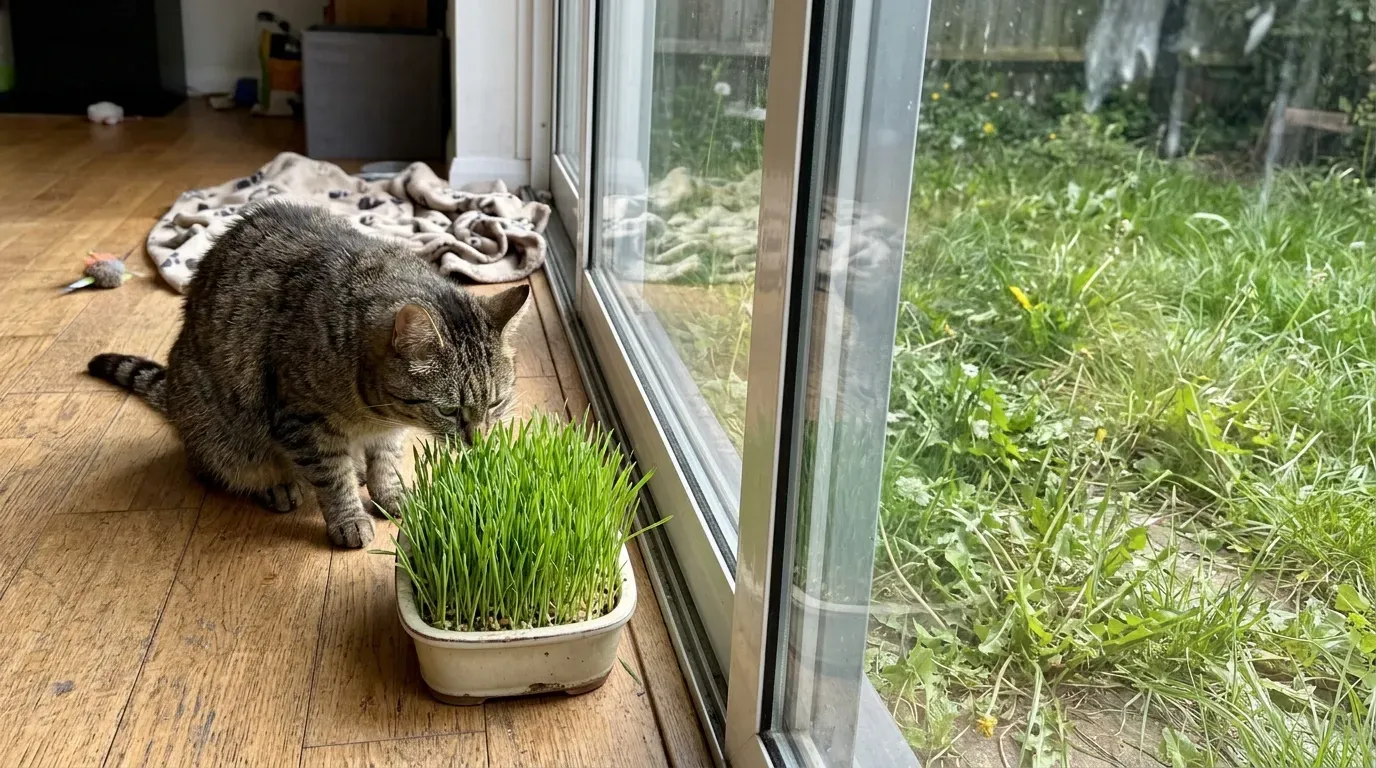
Not all grass poses the same risk to your cat's stomach. Store-bought or home-grown indoor cat grass consists of young wheat, barley, oat, or rye shoots grown in clean potting mix. If your cat develops diarrhea after eating indoor grass, the culprit is usually simple overconsumption—or occasionally mold spores hiding in damp soil.
Outdoor lawn grass carries far steeper dangers. Cats that graze in the yard can ingest chemical lawn fertilizers, weed killers, and pesticide residues that cause severe gastrointestinal poisoning. Outdoor grass also harbors microscopic intestinal parasites such as Giardia, roundworms, and coccidia picked up from wildlife or neighborhood animals.
Additionally, outdoor explorers risk nibbling on toxic garden plants mistaken for grass, including true lilies (which cause fatal kidney failure in cats), sago palms, and autumn crocuses. Keeping your pet's grazing strictly indoors—or learning how to grow cat grass outdoors safely in a dedicated, chemical-free container—eliminates exposure to yard toxins and parasites.
Harmless Fiber Overload vs. Medical Emergency
Mild, grass-induced diarrhea looks very different from a serious feline illness. Watching your cat's energy level, appetite, and stool appearance over the first 12 to 24 hours helps you decide whether home monitoring is safe or a vet visit is urgent.
| Symptom | Likely Mild Grass Upset | Urgent Vet Visit Needed |
|---|---|---|
| Stool consistency | Soft, pudding-like, or slightly watery with visible grass blades | Completely liquid, tarry black, or streaked with bright red blood |
| Duration | Improves within 24 hours after removing the grass | Lasts longer than 24 to 48 hours |
| Energy & appetite | Alert, playful, drinking water, and eating normal meals | Lethargic, hiding, refusing food, or refusing water |
| Other signs | Occasional mild stomach gurgling | Repeated vomiting, fever, straining in the litter box, or weight loss |
Kittens, senior cats, and cats with chronic conditions like inflammatory bowel disease or kidney disease dehydrate much faster than healthy adults. Never wait out diarrhea in a kitten or an elderly cat; call your veterinarian at the first sign of loose stools.
What to Do If Your Cat Has Diarrhea After Eating Grass
If your adult cat is bright, active, and otherwise acting completely normal, you can take a few practical steps at home to settle their digestive tract:
- Remove the grass immediately: Put the planter out of reach for at least three to five days so the intestinal lining can rest and recover.
- Prioritize fresh water: Diarrhea depletes fluids quickly. Place extra water bowls around your home or offer a pet fountain to encourage steady drinking.
- Stick to their regular, easily digestible diet: Avoid rich treats, dairy products, or sudden food switches. Feeding smaller, more frequent portions of your cat's usual wet food supports hydration without overwhelming the gut.
- Monitor the litter box closely: Track how often your cat passes stool and whether the consistency firms up over the next day.
Never give human anti-diarrheal medications to a cat. Over-the-counter drugs containing loperamide or bismuth subsalicylate can be toxic to felines. Always contact your veterinarian before offering any medication, probiotic, or dietary supplement.
How Much Cat Grass Is Safe? Portion Control and Care
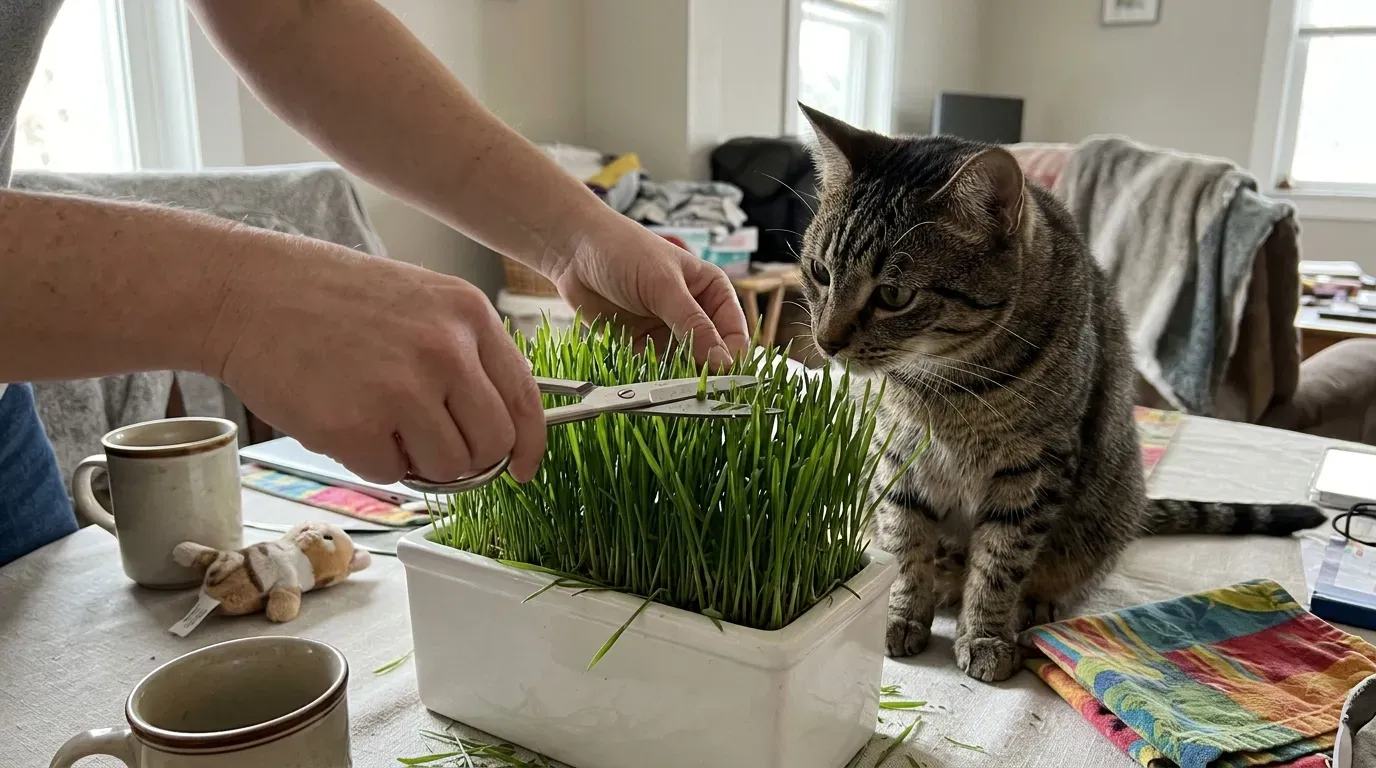
Most cases of cat grass diarrhea happen because a planter is left out 24/7 for a cat that lacks self-control. While there is no single universal dose for every feline, offering a small pinch of blades—roughly a few shoots—a couple of times a week is plenty for most healthy adult cats.
Follow these habits to keep grazing safe and mess-free:
- Offer supervised grazing sessions: Bring the pot out for 5 to 10 minutes every few days rather than leaving unlimited access on the floor.
- Start slow with new grazers: Let your cat nibble just two or three blades on their first introduction, then wait 24 hours to check their stool before offering more.
- Prevent mold and bacterial growth: Overwatered pots quickly grow white or gray fuzz near the soil line, which upsets feline stomachs. Follow proven steps on how to grow cat grass indoors without mold, and discard any pot that smells sour or looks slimy.
- Trim overgrown blades: Keep shoots around 3 to 4 inches tall so your cat chews tender tips instead of swallowing long, tough stems whole.
Can Cat Grass Stop Diarrhea or Soothe an Upset Stomach?
A common myth among pet owners is that cat grass works like a natural medicine to stop diarrhea. In reality, cat grass does not cure diarrhea, kill intestinal parasites, or calm an inflamed colon. While small amounts of regular fiber can help prevent mild constipation and support hairball movement through the digestive tract, feeding grass to a cat that already has loose stools usually makes the irritation worse.
Why, then, do cats chew grass in the first place? While owners often associate grass eating with nausea or hairballs—since rough blades can sometimes trigger vomiting—veterinary studies show that most healthy cats eat grass without appearing sick beforehand, and researchers have not confirmed a single definitive evolutionary reason for the behavior. Even if your cat begs for grass while sick, withhold the planter until their stools return to normal and ask your vet to pinpoint the real cause of their stomach upset.
Cat grass is a safe, enriching treat when offered in modest portions, but unrestricted grazing easily overwhelms a carnivore's digestive tract and triggers loose stools. Remove the planter at the first sign of soft stool, keep fresh water accessible, and contact your veterinarian promptly if diarrhea lasts beyond 24 hours or comes with lethargy, vomiting, or blood.
Frequently asked questions
Can cat grass cause diarrhea in cats?
Yes. Eating too much cat grass at once floods a cat's digestive tract with indigestible plant fiber and chlorophyll. This roughage irritates the stomach and intestinal lining, speeding up digestion and causing temporary loose stools.
Can cat grass stop diarrhea in cats?
No, cat grass does not stop or cure diarrhea. Because grass adds insoluble fiber and stimulates gut movement, giving it to a cat with loose stools usually increases intestinal irritation and worsens the diarrhea.
How long does diarrhea from eating cat grass last?
Mild diarrhea caused purely by eating too much indoor cat grass typically resolves within 24 hours once you take the grass away. If loose stools persist longer than 24 to 48 hours, schedule a veterinary exam.
Do cats eat grass because their stomach is upset?
Not usually. While owners often associate grass eating with nausea or hairballs, studies show most healthy cats eat grass without appearing sick and researchers have not confirmed a single definitive reason.
Nathan Brooks
Nathan Brooks runs Farmingzoom to help loving pet owners create safe, enriching homes for their animals. He cares deeply about responsible pet care and focuses on making everyday decisions simpler for fellow owners.…