Time needed
25 min
What you need
- Certified organic cat grass seeds (oat, barley, wheat, or rye blend)
- Organic, fertilizer-free potting soil
- Wide, heavy planter with drainage holes (4 to 6 inches deep)
- Clean room-temperature water
- Spray bottle
- Sturdy wire cloche, weighted metal mesh basket, or rigid hardware cloth
- Clean scissors
Tools
- Spray bottle or gentle watering can
- Wire cloche or breathable garden mesh
- Clean garden scissors
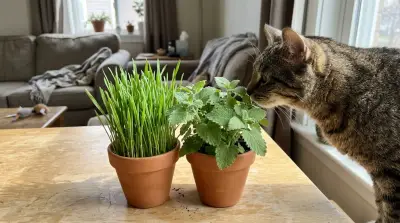
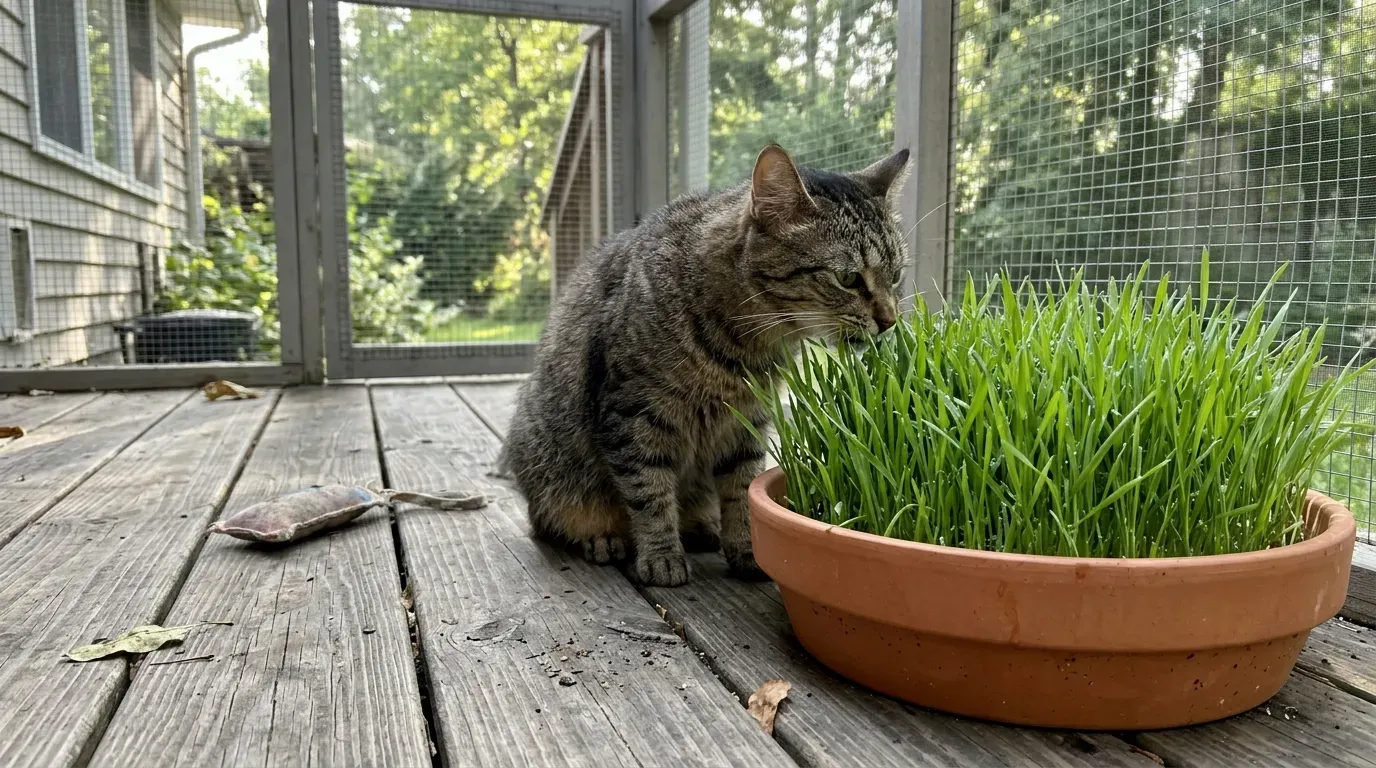
Growing cat grass outdoors gives your feline a fresh, nutrient-rich grazing patch without the risks of chemically treated lawns or toxic yard plants. By planting certified organic oat, barley, wheat, or rye seeds in raised containers or enclosed catio beds, you control the soil, water, and surrounding environment from start to finish.
Unlike flimsy indoor pots that can easily tip over, a weighted outdoor setup thrives in natural sunlight when given regular watering to counter sun and wind and when properly shielded from stray animals, backyard pests, and fertilizer runoff. Follow these eight practical steps to sow, protect, and maintain a healthy outdoor grass patch your cat can safely enjoy.
- 1
Pick an Elevated or Enclosed Spot
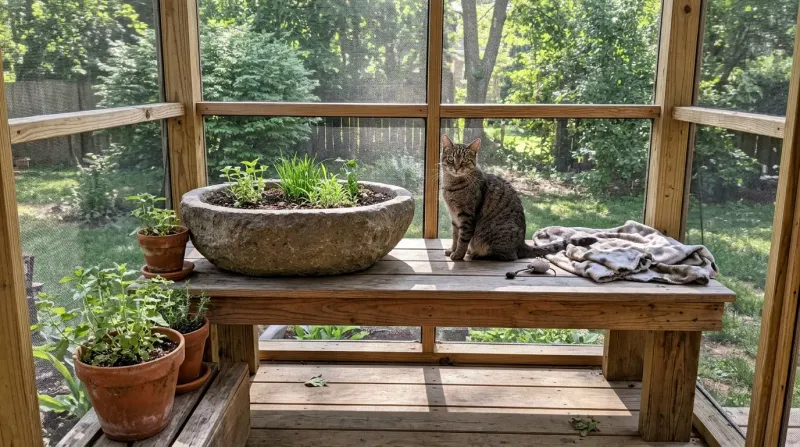
Choose a location that receives 4 to 6 hours of gentle morning sun and afternoon shade, such as a screened catio, balcony, or raised patio table. Keep the spot away from roof downspouts and downhill slopes where lawn fertilizers, weed killers, or driveway oils could wash into your planter during heavy rain.
- 2
Select a Wide, Heavy Planter
Use a wide, shallow container at least 4 to 6 inches deep with plenty of drainage holes so roots never sit in standing water. Heavy ceramic, stone, or weighted wooden planters work best because cats love to lean on the edges while chewing. For more ideas, explore these cat grass planter ideas that prevent tipping.
- 3
Fill With Organic, Fertilizer-Free Potting Mix
Fill the container to within 1 inch of the rim using an organic potting soil free from synthetic time-release fertilizer beads, wetting agents, and perlite dust. Avoid scooping dirt straight from your yard, which often harbors weed seeds, fungal spores, and insect eggs.
- 4
Soak and Sow Certified Organic Seeds
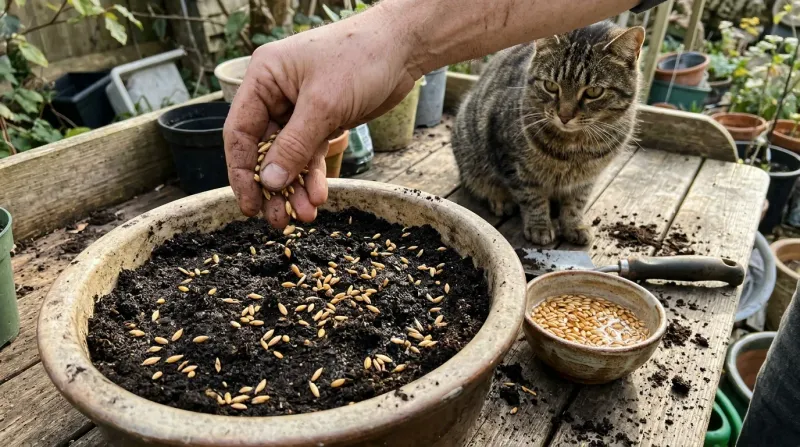
Cool-season cereal grains can be sown in early spring once soil temperatures reach 40°F to 50°F (4°C to 10°C) and severe hard freezes have passed. Soak organic oat, barley, wheat, or rye seeds in room-temperature water for 4 to 6 hours to speed up sprouting, then drain and scatter them thickly across the damp soil without overlapping.
- 5
Cover Lightly and Mist Until Germination
Press the seeds gently into the surface and cover them with a 1/4-inch layer of fine soil. Mist the top twice daily with a spray bottle so the surface stays consistently moist like a wrung-out sponge, allowing tender green shoots to emerge within 3 to 7 days.
- 6
Shield Sprouts From Birds and Squirrels
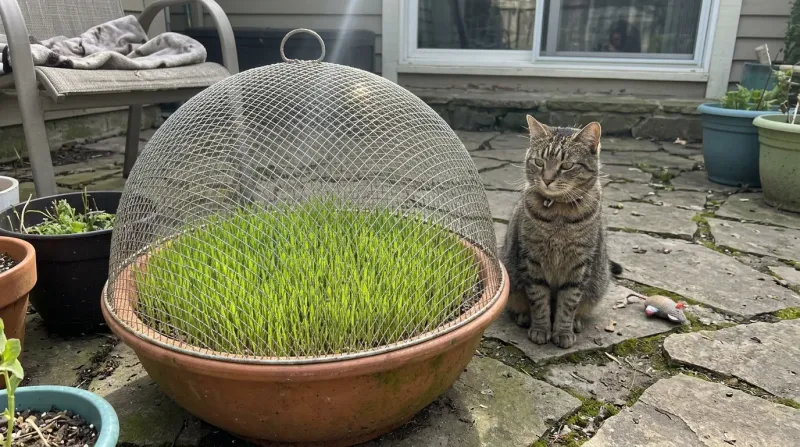
Place rigid, securely anchored hardware cloth, a sturdy wire cloche, or a weighted metal mesh basket over the planter during the first week. Birds and squirrels love digging up sprouted grain seeds, and a sturdy physical barrier protects your seedlings without using chemical repellents or loose netting that could entangle curious cats.
- 7
Open for Grazing at Four Inches Tall
Remove the protective mesh once the grass blades reach 4 to 5 inches high and feel sturdy. Introduce your cat slowly, letting them nibble small amounts to support healthy digestion; read more about how cat grass affects your cat to recognize normal grazing versus overeating.
- 8
Trim, Water, and Reseed Every Few Weeks
Water at the soil line whenever the top half-inch feels dry, and snip ragged tips back to 3 inches with clean scissors to encourage tender regrowth. Because cereal grasses are annuals that turn yellow and woody after 3 to 4 weeks, start a second backup pot two weeks after your first planting.
Toxic Backyard Hazards to Keep Away From Your Cat
Even when your cat has a dedicated grass planter, curious pets often nibble nearby greenery. Before placing pots on a patio or building a catio bed, inspect the surrounding yard for common plants and chemicals that pose serious health risks to cats and dogs.
- Lilies (Asiatic, Easter, Tiger, Daylilies): Every part of the plant—including pollen and vase water—can cause fatal acute kidney failure in cats.
- Sago Palms and Azaleas: Both are common landscaping shrubs with severe toxicities if chewed—Sago Palms primarily cause acute liver failure, while Azaleas cause vomiting, dangerously low blood pressure, and cardiac arrest.
- Slug and Snail Pellets: Traditional metaldehyde baits are deadly to pets; use pet-safe iron phosphate only if strictly necessary, and keep it outside the cat's enclosure.
- Cocoa Mulch and Bone Meal: Cocoa hulls contain theobromine (toxic like chocolate), while bone meal attracts dogs and cats to dig and ingest stomach-blocking clumps.
If your cat ever chews an unknown yard plant, vomits repeatedly after grazing, or acts lethargic, contact your veterinarian or an animal poison control hotline right away.
Common Mistakes When Growing Outdoor Cat Grass
Outdoor conditions introduce variables that indoor growers rarely face. Avoiding a few frequent missteps keeps your crop lush and safe for daily nibbling.
- Planting Directly in Ground Soil: Open garden beds allow neighborhood cats, raccoons, and birds to use the soft soil as a litter box, spreading intestinal parasites like roundworms and giardia. Always use elevated containers or a fully screened catio bed.
- Overwatering in Shady Corners: Damp, stagnant soil breeds white fuzz and root rot. If you notice fuzzy growth at the base, check out our guide on how to grow cat grass without mold and move your planter into brighter morning sun.
- Letting Kittens or Fast Eaters Overgraze: Young kittens and cats prone to gulping food may eat large amounts of grass and vomit afterward. Limit grazing sessions to 5 or 10 minutes until you see how your cat's stomach handles fresh greens.
Growing cat grass outdoors takes less than half an hour of hands-on prep and gives your pet a safe, pesticide-free alternative to backyard weeds. Keep your planters elevated or inside an enclosed catio, protect young sprouts with simple mesh, and sow a fresh batch every few weeks for a steady supply of crisp greens.
Frequently asked questions
Can you put indoor cat grass outside?
Yes, you can move potted indoor cat grass outside once frost danger has passed. Place it in a spot with morning sun and afternoon shade, keep it elevated away from stray animals and lawn runoff, and check the soil daily since outdoor breezes dry pots out faster.
Does cat grass come back every year outdoors?
No, standard cat grass varieties—oat, barley, wheat, and rye—are annual cereal grains rather than perennial lawn grasses. Each batch lasts about three to four weeks before turning yellow and tough, so you will need to compost old roots and sow fresh seeds regularly.
Is regular outdoor lawn grass safe for cats to eat?
Untreated lawn grass is generally non-toxic, but outdoor yards frequently carry hidden dangers like herbicides, chemical fertilizers, slug bait, and parasites left by wildlife. Growing dedicated organic cat grass in a clean container eliminates those risks while offering softer, easier-to-digest blades.
What are the disadvantages of outdoor cat grass?
Outdoor cat grass attracts birds, squirrels, and slugs, and open ground beds can be contaminated by neighborhood animals. Grass left in damp shade can also develop mold, while cats that eat too much at once may vomit up undigested blades.

Nathan Brooks
Nathan Brooks runs Farmingzoom to help loving pet owners create safe, enriching homes for their animals. He cares deeply about responsible pet care and focuses on making everyday decisions simpler for fellow owners.…