Time needed
45 min
What you need
- Wide, heavy-bottomed planter trays
- Organic cat grass seeds (wheat, oat, or barley)
- Organic, fertilizer-free potting soil
- 1/2-inch stainless-steel or PVC-coated hardware cloth
- Heavy-duty zip ties
Tools
- Tin snips or wire cutters
- Metal file
- Work gloves
- Measuring tape
You can keep wildlife off outdoor cat grass by pairing elevated, movable planters with fitted hardware-cloth covers and bringing pots indoors after dusk. In yards bordering woods or open fields, deer, rabbits, and squirrels treat uncovered oat, wheat, and barley grass as an overnight salad bar.
Beyond stripping your planters bare, wild visitors leave droppings and saliva that carry roundworms, hookworms, giardia, and fleas. Because chemical repellents and spicy powders can burn your cat's paws or upset their stomach, physical exclusion is the only safe strategy for wooded properties.
- 1
Switch From Ground Beds to Portable Planters
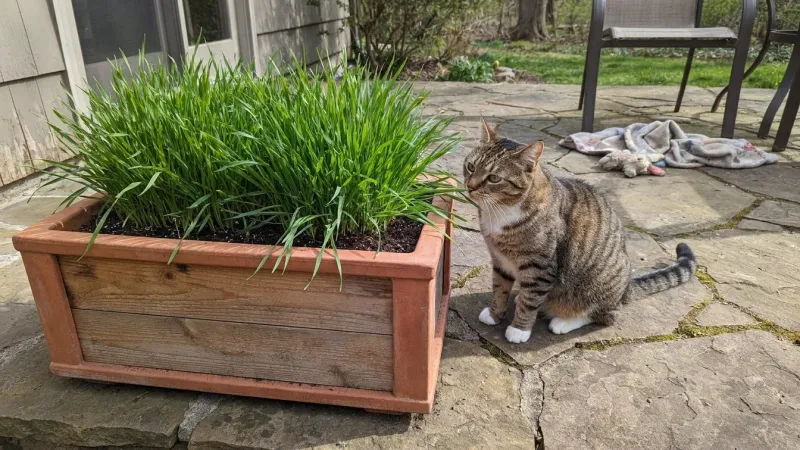
Move your cat grass out of in-ground borders and into heavy, shallow containers that you can easily lift and relocate. Ground-level patches near tree lines invite rabbits, voles, and deer to graze freely and leave droppings in the soil. If you want to build an outdoor cat grass box, keep the footprint compact enough to carry onto a porch or inside a mudroom. Choose wide, low-sided trays so large cats cannot tip them over while tugging on blades.
- 2
Elevate Planters at Least Three Feet Off the Ground
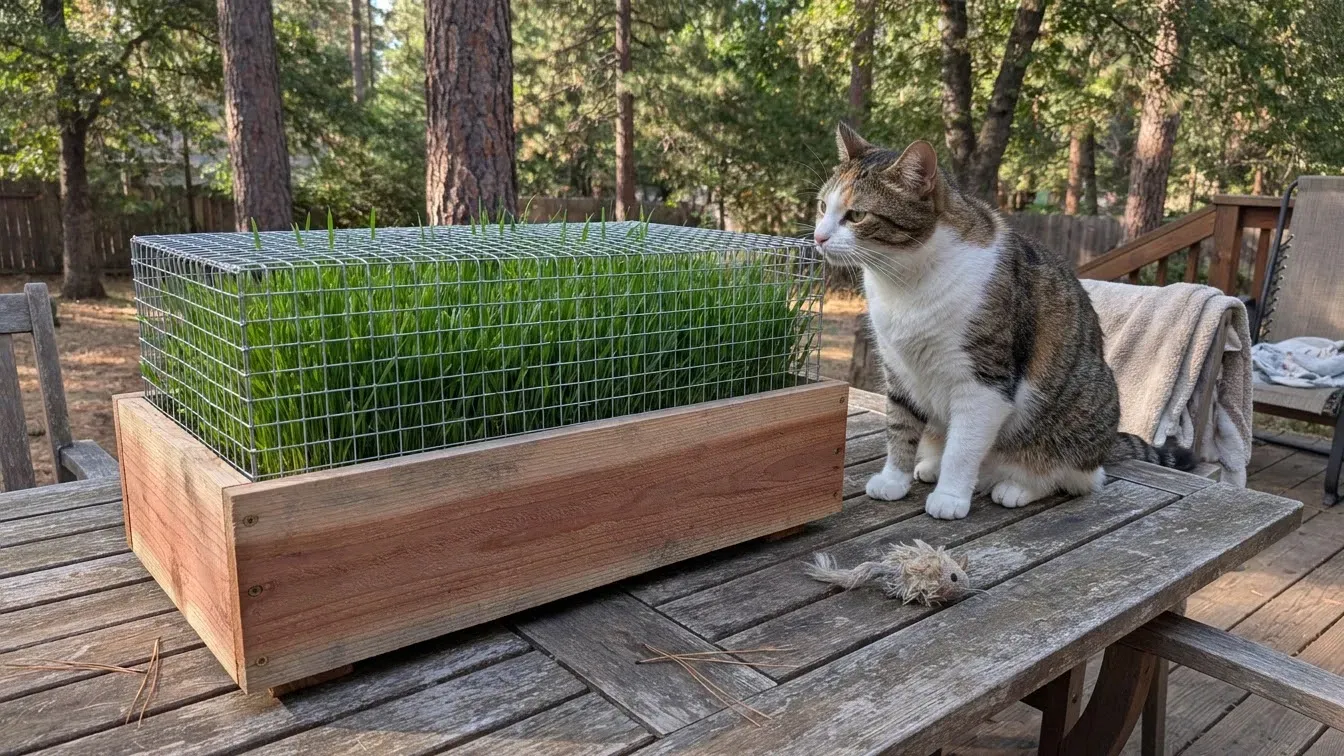
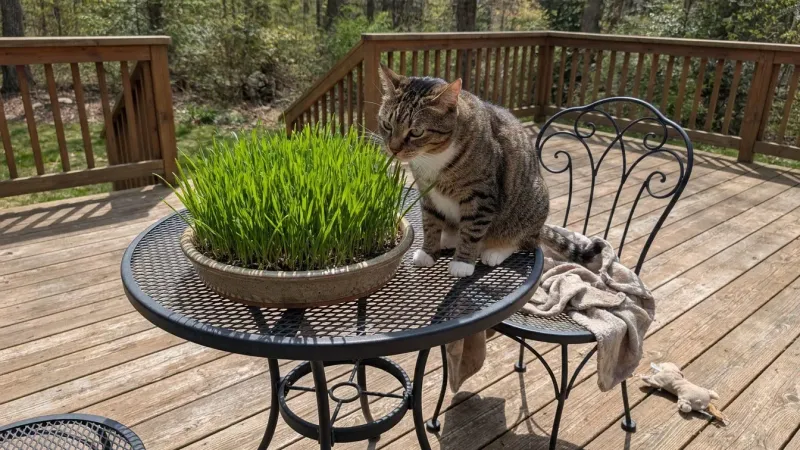
Place your cat grass containers on a sturdy deck table, porch railing shelf, or patio stand at least 36 inches above the ground. Raising the tray deters casual ground-level grazing by rabbits, though climbing animals like squirrels, raccoons, and groundhogs as well as tall deer still require a fitted wire cover or enclosed catio. Keep the table at least four feet away from tree branches, wooden fences, and deck posts so squirrels cannot leap directly onto the planter from above.
- 3
Build a Fitted Hardware-Cloth Cage Cover
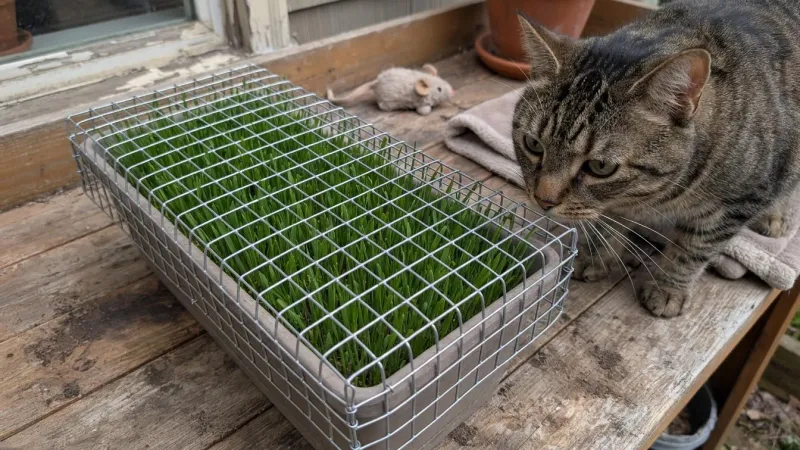
Cut a piece of 1/2-inch stainless-steel or PVC-coated hardware cloth—avoiding bare galvanized wire, whose zinc coating can cause zinc toxicity if chewed or licked—and bend the edges down to form a sturdy, five-sided removable wire lid that sits snugly over your planter when unattended. Unlike flimsy bird netting, which can entangle small wildlife or your cat's claws, rigid hardware cloth blocks squirrels, chipmunks, and deer from reaching the grass. Fasten the wire corners with rust-proof zip ties, file down any sharp cut ends so neither you nor your pet gets scratched, and always lift the cover off before letting your cat near the planter to graze so they do not chew on the mesh.
- 4
Position Grass Inside a Screened Catio
Keep outdoor grass inside a fully enclosed catio or screened porch whenever possible. A screened enclosure with a solid roof and buried perimeter wire lets your cat graze safely in fresh air while completely locking out deer, raccoons, and stray animals. Place the tray on a sunny bench inside the enclosure so the grass gets four to six hours of daily light without exposing it to open yard traffic.
- 5
Bring Trays Indoors Before Dusk Every Evening
Carry outdoor planters inside a garage, sunroom, or mudroom before sunset and set them back out after sunrise. Deer, rabbits, raccoons, and opossums do most of their foraging between dusk and dawn, so removing the food source overnight eliminates your biggest exposure window. When bringing pots inside, check the underside of the tray for slugs or ticks, and read up on caring for cat grass indoors so it stays crisp between outdoor sessions.
- 6
Inspect Blades and Soil Before Letting Cats Graze
Check the grass tray every morning before giving your cat access. Look for ragged bite marks, trampled stems, muddy footprints, or small droppings on the soil surface. Wild animals carry parasites like roundworms, hookworms, and giardia that pass through feces and contaminate nearby stems and soil. If anything looks disturbed, discard the entire batch, scrub the container with hot soapy water, and start fresh with clean potting mix.
- 7
Rotate Fresh Trays Every Two to Three Weeks
Sow a new container of organic wheat, oat, or barley seeds every 10 to 14 days so you always have a clean backup ready. Outdoor cat grass typically lasts two to three weeks before turning yellow, woody, or patchy, and older pots attract more outdoor pests. Rotating fresh batches lets you compost spent trays immediately and follow safe steps for growing cat grass outdoors without pesticides.
Common Mistakes That Put Your Cat at Risk
Many garden tips work against you when growing greens meant for pets to eat. Avoid these common errors in rural and wooded yards:
- Sprinkling cayenne pepper, coffee grounds, or essential oils: Coffee grounds contain caffeine, which is toxic to cats, while cayenne irritates feline eyes and paws. Essential oils like peppermint or citrus can cause severe liver toxicity in cats.
- Using motion-activated sprinklers near your cat's hangout: While water sprays deter deer and rabbits, they will also scare your cat away from their own enrichment zone or soak a catio.
- Planting directly in ground-level garden beds: Soil borders along tree lines are impossible to seal against burrowing rodents and passing raccoons, and ground soil harbors far more parasite eggs than clean potting mix.
When to Call Your Veterinarian
Even with strict barriers, wildlife can occasionally breach a yard. Replace any cat grass tray immediately if you notice flattened blades, chewed tips you did not trim, or droppings nearby.
Contact your veterinarian if your cat nibbles on compromised grass and develops diarrhea, vomiting, lethargy, pale gums, or weight loss. Bring a fresh stool sample to your appointment so your vet can screen for intestinal parasites and prescribe targeted deworming medication, especially for kittens and senior cats with weaker immune systems.
Protecting outdoor cat grass on a wooded property comes down to physical barriers rather than sprays or powders. By elevating your planters, topping them with rigid hardware cloth, and bringing trays inside at dusk, you block deer, rabbits, and squirrels while keeping your cat's greens clean, fresh, and free from dangerous wildlife parasites.
Sources: Cornell Feline Health Center · ASPCA · VCA Animal Hospitals
Frequently asked questions
Should I leave cat grass outside all the time?
No, you should not leave cat grass outside overnight in rural or wooded areas. Deer, rabbits, raccoons, and rodents actively forage from dusk until dawn and can eat the grass or contaminate it with parasite eggs. Bring trays inside at sunset or keep them inside a fully enclosed, predator-proof catio.
What can I sprinkle on cat grass to keep wildlife away safely?
Do not sprinkle anything on cat grass that your cat will eat. Common garden deterrents like cayenne pepper, garlic powder, coffee grounds, and essential oils are either toxic to cats or irritating to their eyes, nose, and stomach. Rely on hardware-cloth covers and elevated tables instead.
What is the average lifespan of outdoor cat grass?
Outdoor cat grass typically stays fresh and tender for two to three weeks after sprouting. Warm weather, heavy grazing, and outdoor sun cause the blades to yellow and turn tough faster than indoor pots, so planting a backup tray every two weeks keeps a clean supply ready.
What happens if my cat eats grass that rabbits or deer touched?
Wildlife saliva and droppings can transmit intestinal parasites like roundworms, hookworms, and giardia, as well as bacteria. If you suspect wild animals grazed on your cat's tray, throw the grass away immediately and watch your cat for vomiting, diarrhea, or appetite loss.

Nathan Brooks
Nathan Brooks runs Farmingzoom to help loving pet owners create safe, enriching homes for their animals. He cares deeply about responsible pet care and focuses on making everyday decisions simpler for fellow owners.…