Time needed
1 h
What you need
- Two 8-foot 1x2 pine trim boards (for tunnel lining and framing both sides)
- 1/2-inch pine strips (for hollow-core door reinforcement)
- Painter's tape
- Wood glue
- 1-inch brad nails
- Wood screws (for solid wood doors)
- 120-grit sandpaper
- Paintable latex caulk
- Pet-safe water-based interior paint (optional)
Tools
- Tape measure
- Carpenter's square
- Pencil
- Power drill with 3/8-inch wood drill bit
- Jigsaw with fine-tooth wood blade
- Hammer or brad nailer
- Spring clamps
- Safety glasses
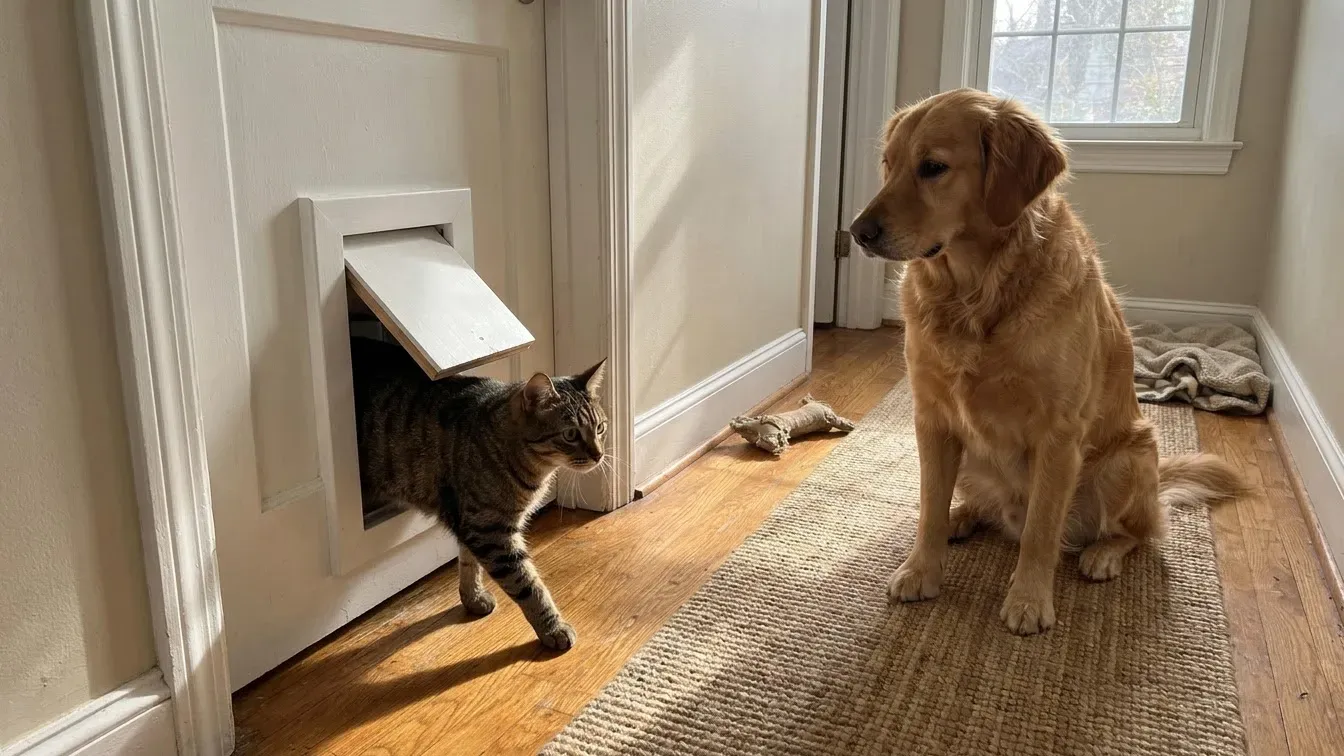
You can build a custom indoor cat door in under an hour of active cutting and assembly on a solid-core door—or allow extra hours for wood glue and paint to cure on hollow-core or painted builds—using basic trim boards, a jigsaw, and exact opening measurements that let your cat slip through while blocking larger dogs. Sharing a home with both cats and dogs brings plenty of joy, yet dogs rarely resist high-protein cat kibble or raiding a litter box.
Giving your cat a private room protects their digestion, prevents urinary stress caused by litter box guarding, and stops dogs from ingesting clumping litter or rich cat food. Whether you own your home or rent, this guide walks through cutting a clean pass-through opening and offers no-cut alternatives for tight spaces.
- 1
Measure Your Cat and Your Dog
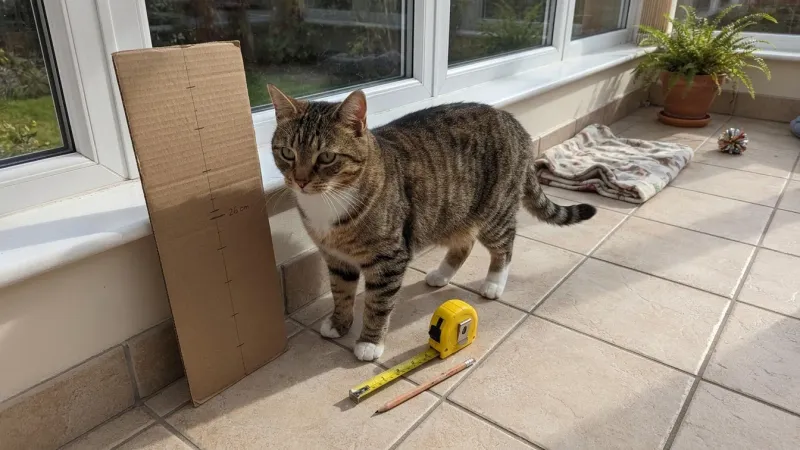
Measure your cat's torso height (excluding leg length, since cats naturally crouch low when stepping through openings) and across their widest chest and ribs, adding about 1 inch for comfortable clearance to arrive at roughly a 6 by 6.5 inch opening for an average adult cat. Next, measure your dog's head width across the cheekbones and chest width. Your opening must be at least 1.5 inches narrower than your dog's skull so they cannot wedge their head inside. Check our guide on cat door dimensions and sizing if you own a large breed cat.
- 2
Check Door Construction Before Cutting
Knock firmly on the lower corner of your interior door to determine whether it is solid wood or hollow-core. Solid wood doors hold screws directly along the cut edge. Hollow-core doors contain a cardboard honeycomb interior between thin veneer skins, meaning you will need internal wood blocking strips to reinforce the cut opening before attaching trim.
- 3
Mark the Cutout Template on Painter's Tape
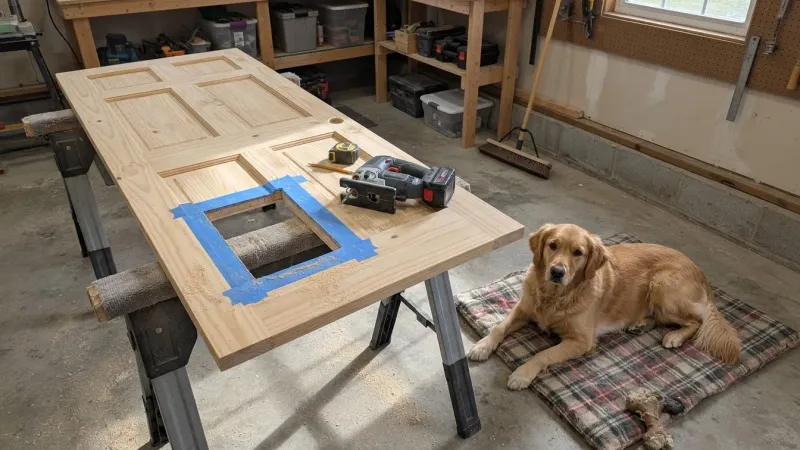
Apply wide painter's tape across the lower corner of the door, positioned at least 4 inches away from the latch edge and 3 inches above the bottom rail to preserve structural strength. Use a carpenter's square and pencil to draw your rectangle, typically 6 inches wide by 6.5 inches high, with the bottom edge sitting 3 inches off the floor.
- 4
Drill Corner Pilot Holes
Put on safety glasses and drill a 3/8-inch hole inside each of the four corners of your drawn rectangle. Keep the drill bit entirely inside the pencil lines so the outer corners remain crisp. These pilot holes give your jigsaw blade room to turn cleanly without binding or splintering the wood veneer.
- 5
Cut Out the Opening With a Jigsaw
Insert a fine-tooth wood blade into your jigsaw, place the blade into one corner hole, and cut slowly along the pencil lines. Support the center cutout piece with your free hand during the final cut so it does not drop and tear the bottom veneer. Peel away the painter's tape once the cutout is removed.
- 6
Reinforce Hollow-Core Doors and Sand Edges
If you cut into a hollow-core door, measure the gap thickness between the front and back door skins, rip thin pine strips to match, and glue them inside all four edges of the opening using wood glue. Clamp the strips until dry. Once solid, sand all cut surfaces smooth with 120-grit sandpaper so no splinters catch your cat's fur.
- 7
Install Interior Trim Frame Pieces
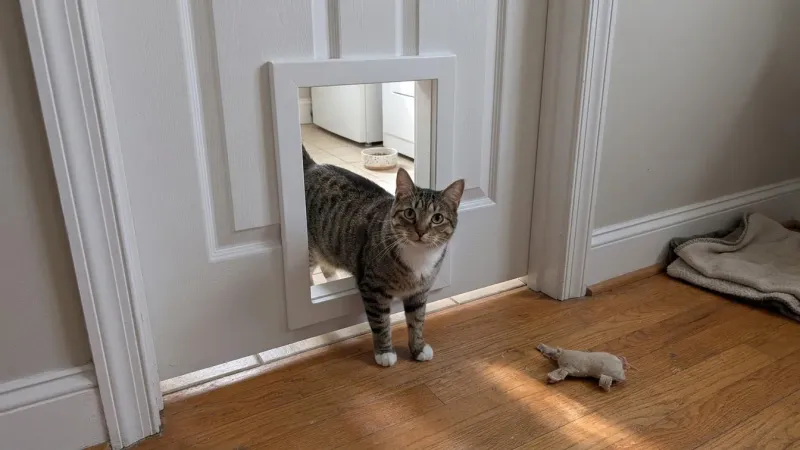
Measure the inside depth and perimeter of your opening, then cut four pieces of 1x2 pine trim or flat casing to line the tunnel and frame both sides of the door. Secure the frame pieces using 1-inch brad nails and a dab of wood glue, covering any raw edges cleanly. If you want inspiration for styling the opening, browse these interior cat door ideas that blend into home decor.
- 8
Train Your Cat to Use the Pass-Through
Caulk any tiny seams with paintable latex caulk, apply pet-safe water-based paint if desired, and let everything dry completely. Place your cat's favorite treats or dry kibble just inside the opening on the opposite side of the door, calling them gently until they walk through confidently on their own.
Renter-Friendly Options Without Cutting Your Door
If you lease your home or have hollow-core doors you prefer not to cut, you can achieve the same dog-blocking result using reversible hardware. For even more inspiration, explore our 10 clever cat door ideas without cutting your door.
- Adjustable Door Latch Straps: Heavy-duty nylon straps hook onto the doorknob and latch plate, holding the door cracked at a fixed width of 4 to 5 inches. Your cat can squeeze through easily, while medium and large dogs cannot push the door open further.
- Pet Gates With Built-In Small Pet Doors: Avoid raising a standard pressure-mounted baby gate 6 to 7 inches off the floor—doing so compromises the gate's structural tension stability and creates a dangerous entrapment hazard where small-to-medium dogs can wedge their heads or torsos underneath. Instead, install a properly floor-seated gate featuring a built-in small pet door so cats can walk through safely while dogs remain blocked.
- Temporary Plywood Insert Panel: Cut a piece of 1/2-inch plywood to fit inside the door frame alongside a slightly ajar door, securing it with removable tension rods.
Important Safety Tips for Multi-Pet Households
Proper sizing is critical when separating pets of different sizes. A standard domestic cat needs an opening roughly 6 inches wide by 6.5 inches tall, whereas larger breeds like Maine Coons may require 7 by 7.5 inches. Always measure your dog's skull width and chest depth before cutting; if your dog's head fits through the opening, they may get stuck trying to force their shoulders through.
Keep dangerous items out of reach during the build. Sweep up all sawdust immediately, as pine or composite wood dust irritates sensitive respiratory tracts, and store wood glue, paint, and screws safely away from curious noses. Remember that eating clumping cat litter or excessive cat food can cause gastrointestinal blockages or pancreatitis in dogs—contact your veterinarian promptly if your dog ingests litter or shows signs of vomiting and lethargy.
Building a properly sized indoor cat door gives your cat a peaceful, stress-free zone to eat and use the litter box without constant canine interference. Take accurate measurements of both pets first, smooth every wooden edge carefully, and reward your cat with treats as they learn their new private entrance.
Sources: ASPCA · International Cat Care · VCA Animal Hospitals
Frequently asked questions
What size cat door will keep a dog out?
An opening measuring 6 inches wide by 6.5 inches tall lets most adult cats pass comfortably while blocking most dogs over 25 pounds. However, slim or narrow-skulled dogs over 25 pounds—such as Whippets, Italian Greyhound mixes, or young Border Collies—can still slip through, so always measure your dog's skull width across the cheekbones and chest depth regardless of weight, making the opening at least 1.5 inches narrower than their skull.
What if my dog and cat are the exact same size?
If you have a small toy dog and an average cat, size alone will not stop the dog. Instead, place the cat's food bowl on an elevated cat tree or countertop your dog cannot reach, or install a microchip-activated pet door that unlocks exclusively for your cat.
How can I keep a door open enough for a cat but not a dog without cutting?
Use an adjustable nylon door strap or latch holder attached to the doorknob and strike plate. Set the strap so the door opens only 4 to 5 inches, which gives your cat plenty of room to slip through while stopping larger dogs from pushing inside.
Can you cut a cat door into a hollow-core interior door?
Yes, you can cut into a hollow-core door as long as you stay at least 3 inches away from the bottom and side edges. Glue thin pine framing strips inside the exposed hollow cavity around all four sides before attaching outer trim so the door stays sturdy.

Nathan Brooks
Nathan Brooks runs Farmingzoom to help loving pet owners create safe, enriching homes for their animals. He cares deeply about responsible pet care and focuses on making everyday decisions simpler for fellow owners.…