Time needed
20 min
What you need
- Organic oat, wheat, or barley cat grass seeds
- Sterile coconut coir or hydroponic hemp grow mat
- Washed horticultural sand or fine aquarium gravel
- Apple cider vinegar and unscented dish soap
Tools
- Shallow planter with drainage holes
- Watering saucer or bottom-watering tray
- Small glass jar and plastic wrap
You can keep fungus gnats out of cat grass by ditching damp potting soil in favor of sterile growing media, watering from the bottom, and sealing the surface with a dry mineral barrier. Tiny black flies are drawn to stagnant moisture and decaying organic matter in standard garden dirt, where they lay hundreds of eggs.
Because your cat chews directly on these blades, harsh chemical sprays and systemic pesticides are off the table. By adjusting how you plant and hydrate your seeds, you can maintain a spotless, bug-free home while giving your cat fresh greens to nibble.
- 1
Switch to a Sterile Soilless Growing Medium
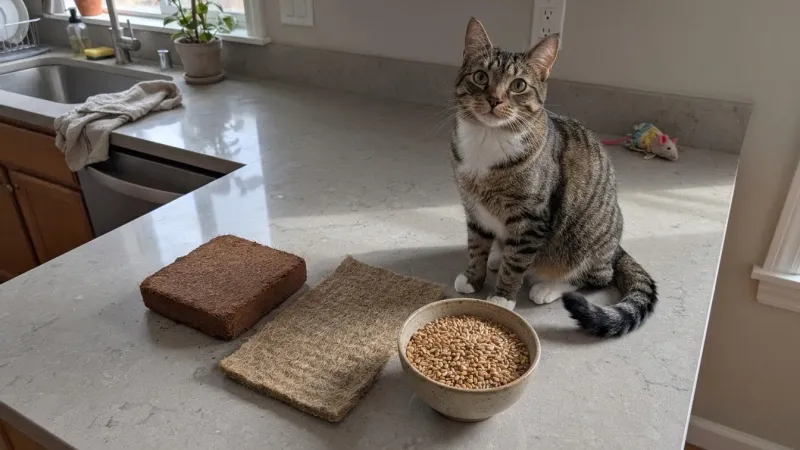
Skip bagged garden soil, which often holds dormant eggs and decaying bark. Instead, sprout your oat, wheat, or barley seeds in rinsed coconut coir, vermiculite, or hydroponic hemp mats. If you prefer a completely dirt-free setup, you can grow indoor cat grass without soil using clean mesh trays and plain water.
- 2
Sanitize Your Planter Before Every Planting
Wash your container with hot, soapy water and rinse it thoroughly before adding fresh media. Scrub away any old root residue or mineral buildup along the rim and drainage holes. Starting with a clean vessel ensures leftover fungal spores do not linger from a previous batch of greens.
- 3
Use a Pot With Proper Drainage Holes
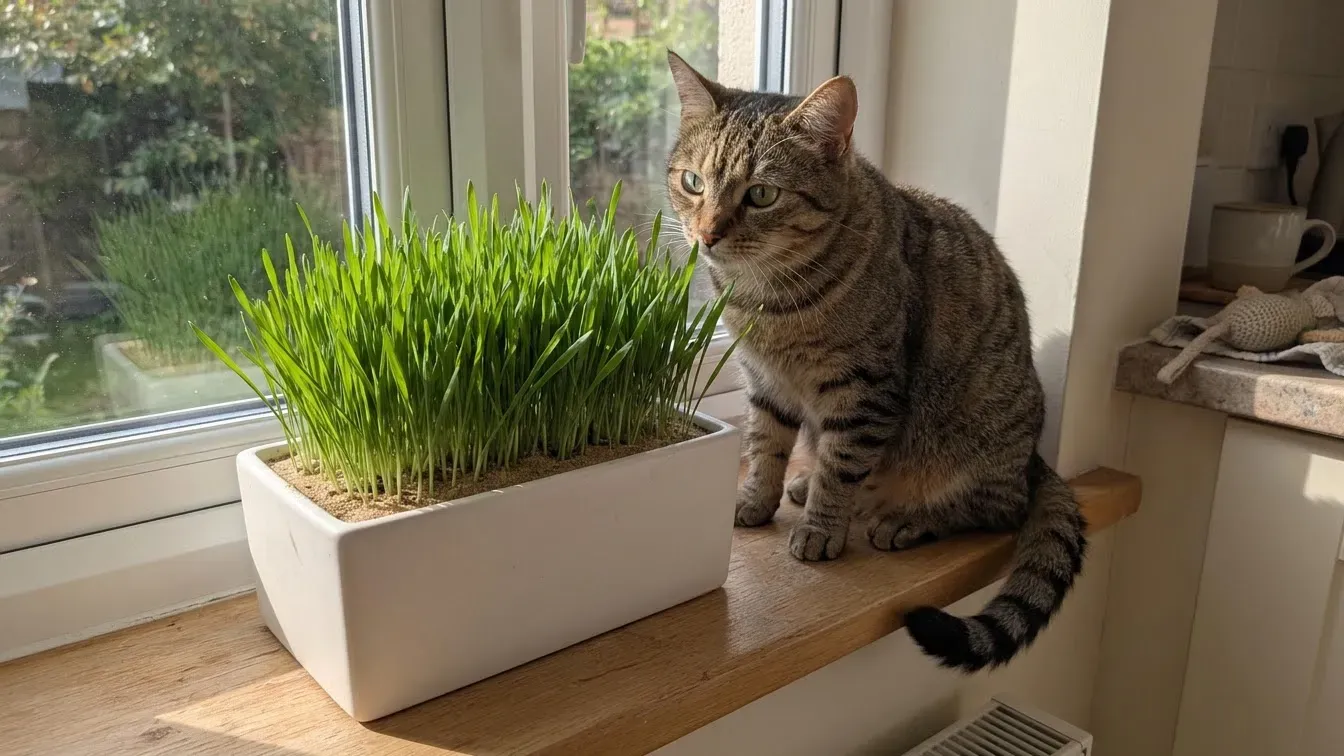
Choose a shallow, heavy ceramic or BPA-free plastic planter with open drainage holes at the bottom. Containers without drainage trap excess moisture at the base, turning the lower layer into a stagnant swamp that attracts adult flies. Place a removable saucer underneath so you can empty runoff immediately.
- 4
Cover Loose Growing Media With Fine Horticultural Sand
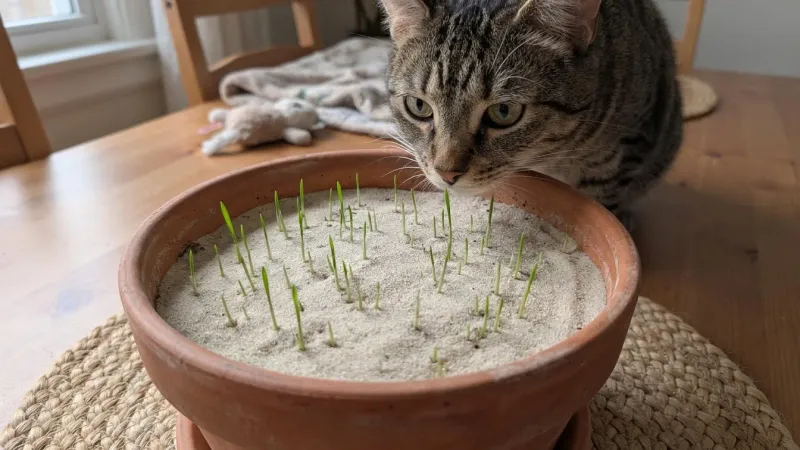
If you are using loose potting media like coconut coir or vermiculite, wait until your seeds sprout and reach about two inches tall, then spread a quarter-inch layer of dry, washed horticultural sand or fine aquarium gravel over the surface. Adult gnats need damp, exposed organic matter to lay eggs, and a dry mineral top layer blocks them from reaching the moist roots below. Skip this step for hydroponic hemp mats or bare mesh trays, as flat fiber mats have no loose structure for sand to cap and will simply let sand wash through or trap excess moisture.
- 5
Water From the Bottom Instead of Top
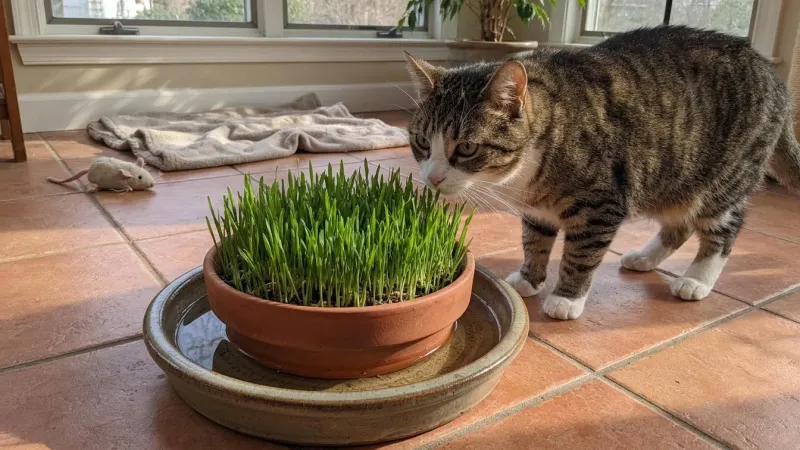
For potted coconut coir or vermiculite, keep the top barrier bone-dry by setting the pot in a shallow dish of water for ten to fifteen minutes whenever the roots need moisture; the medium wicks water upward through the drainage holes while the surface stays dry, and you should always discard any unabsorbed water afterward. For hydroponic hemp mats and bare mesh trays, keep a thin reservoir of water just below the seed bed so the roots stay hydrated without submerging the sprouts or flooding the tray.
- 6
Skip Cinnamon and Stick to Clean Mineral Barriers
Do not sprinkle ground cinnamon or spice powders on or around edible cat grass. Even Ceylon cinnamon contains trace coumarin and essential oils like cinnamaldehyde that can irritate a cat's mouth, stomach, or airways if licked or inhaled while grazing. Instead, rely solely on a clean, dry sand or fine gravel top-dressing on loose media to deter surface mold and gnats safely.
- 7
Set Out Apple Cider Vinegar Traps Nearby
If you spot a few stray adult flies hovering near the windowsill, place a small jar containing two tablespoons of apple cider vinegar and one drop of unscented dish soap nearby. Cover the jar with plastic wrap poked with tiny holes, keeping it on a high shelf out of your cat's reach.
- 8
Replace Grass Batches Every Two to Three Weeks
Cat grass has a short indoor lifespan and naturally yellows after a few weeks of grazing. Compost the spent mat and start a fresh tray every two to three weeks. Regularly cycling fresh batches prevents older roots from breaking down and attracting pests, helping you grow cat grass indoors without mold or flies.
Common Mistakes That Invite Fungus Gnats
Even tidy homes end up with tiny black flies when a few common planting habits go unchecked:
- Reusing old houseplant soil: Potting mix from other indoor plants often carries dormant gnat larvae or fungal spores that thrive once watered.
- Misting the blades daily: Frequent surface misting keeps the top layer wet, creating an ideal nursery for eggs while encouraging mold growth.
- Leaving standing water in saucers: Trays filled with runoff water raise humidity around the pot base and attract adult flies from nearby windows or drains.
- Using coffee grounds or raw compost: Adding uncomposted kitchen scraps or damp coffee grounds feeds the exact fungi that gnat larvae eat, making an infestation worse.
What to Avoid Around Edible Cat Grass
Standard houseplant pest remedies can harm curious cats who brush against pots or chew on leaves. Never apply systemic insecticide granules, chemical fly sprays, or synthetic soil drenches to grass meant for pets. Avoid using any form of diatomaceous earth—including food-grade—on or near cat grass, because its fine silica dust irritates a cat's lungs, airways, and eyes when inhaled while sniffing and grazing.
If you notice your cat vomiting repeatedly, acting lethargic, or refusing food after chewing on treated grass or nearby houseplants, contact your veterinarian right away. Keep toxic ornamental houseplants like lilies, pothos, and sago palms well out of reach so your pet sticks strictly to their safe grass tray.
Keeping your living space bug-free does not mean giving up fresh greens for your cat. By swapping damp potting soil for sterile coconut coir, bottom-watering, and sealing the surface with dry sand, you eliminate the exact conditions fungus gnats need to breed. Check out our guide on how to care for cat grass indoors to keep every batch crisp and clean.
Sources: ASPCA · Cornell Feline Health Center
Frequently asked questions
Are fungus gnats harmful to cats if eaten?
Fungus gnats do not bite pets or transmit diseases, and swallowing an occasional fly will not harm your cat. However, the damp, moldy soil that attracts them can upset your cat's stomach if ingested, and any chemical pest sprays used on the grass are dangerous.
Can I spray diluted hydrogen peroxide on cat grass for gnats?
While a mild hydrogen peroxide soil drench kills larvae in ornamental houseplants, it is best avoided on edible cat grass. Instead, discard infested soil, rinse the roots or start a fresh sterile batch, and switch to bottom-watering to keep the surface dry.
Will coffee grounds get rid of fungus gnats in cat grass?
No, coffee grounds actually attract more fungus gnats because they hold moisture and grow mold as they decompose. Coffee is also toxic to cats and dogs, so you should never put coffee grounds in or near pet grass.
What kills adult fungus gnats immediately without sprays?
Taking the pot outdoors and gently shaking the blades dislodges adult flies right away. Indoors, setting an apple cider vinegar and dish soap trap on a high shelf or using sticky yellow traps mounted safely out of your cat's reach catches remaining adults quickly.
Nathan Brooks
Nathan Brooks runs Farmingzoom to help loving pet owners create safe, enriching homes for their animals. He cares deeply about responsible pet care and focuses on making everyday decisions simpler for fellow owners.…