Time needed
5 min
What you need
- Sprouted cat grass pot (oat, wheat, barley, or rye)
- Room-temperature water
- Shallow drainage saucer
Tools
- Clean spray bottle
- Sharp scissors
- Small knife or skewer (for adding drainage holes)
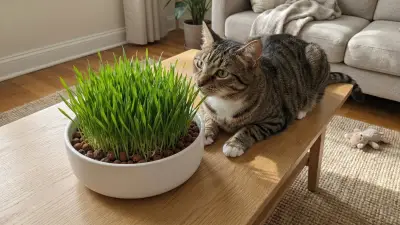
To keep indoor cat grass fresh and green, place it in bright indirect sunlight, keep the soil lightly damp without soaking the roots, and trim the blades to two inches whenever they grow tall. Most store-bought containers wilt or mold within a week because the dense roots sit in stagnant water or scorching sun.
With a few simple daily habits, you can stretch the lifespan of a single pot to two or three weeks while giving your cat a safe, nutritious snack. Whether you bought a sprouted carton at the pet store or grew a batch from seed, this step-by-step routine prevents yellowing tips and keeps every blade crisp.
- 1
Check the Container for Proper Drainage Holes
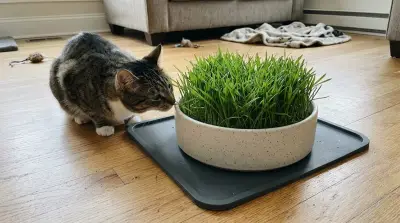
Inspect the bottom of your cat grass container as soon as you bring it home. Many grocery and pet store cartons come in solid cardboard or unperforated plastic cups that trap excess moisture. If your grass came in solid cardboard, transfer the intact soil and root clump into a perforated plastic or ceramic pot with a saucer rather than poking holes into the cardboard, which will soften, disintegrate, and leak mush onto surfaces. For unperforated plastic cups, carefully poke three or four small drainage holes in the bottom with a sharp knife or skewer, then set the container on a shallow saucer to catch runoff and keep roots from sitting in puddles.
- 2
Place the Pot in Bright Indirect Sunlight
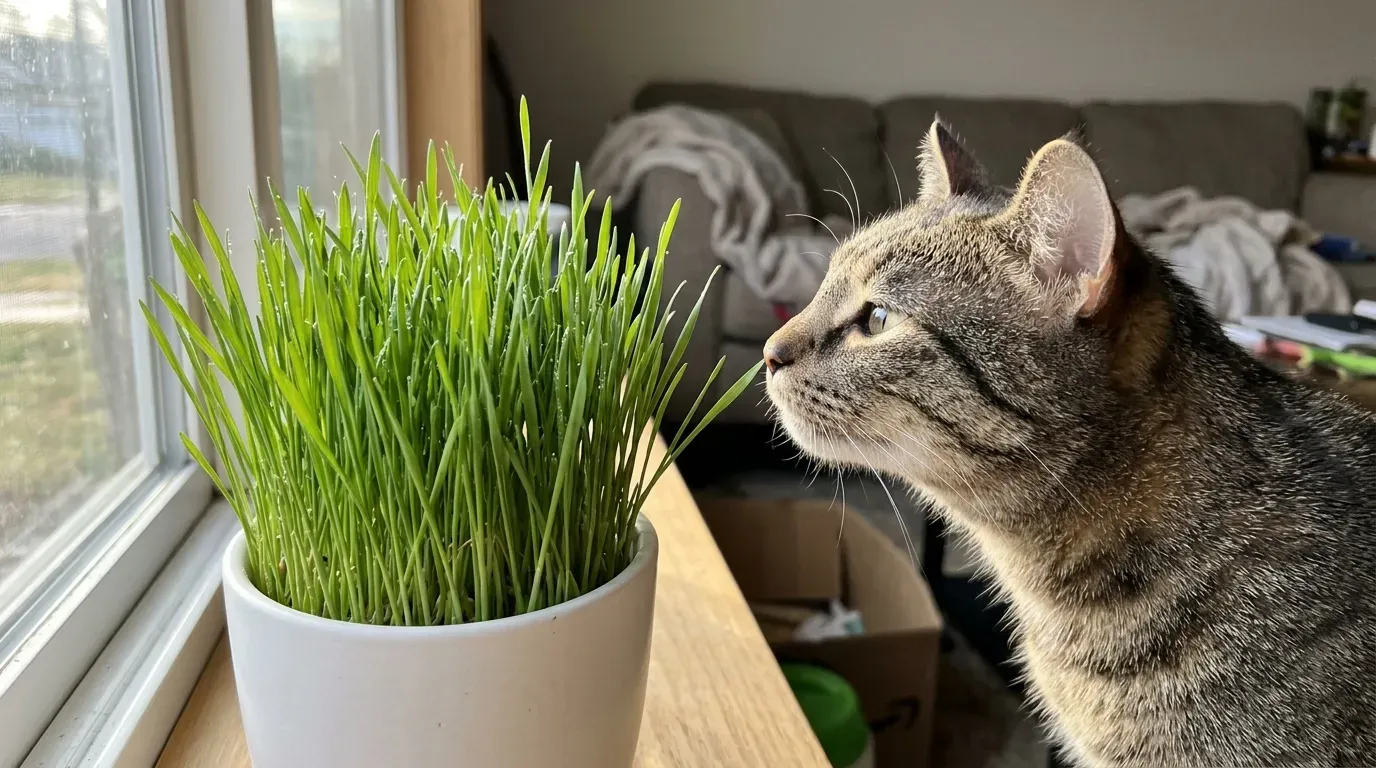
Set your cat grass near an east- or west-facing window (or a few feet back from a south-facing window) where it receives four to six hours of bright, filtered natural light each day. Keep it a couple of feet back from harsh afternoon sunbeams, which dry out shallow soil and scorch tender green tips. Keep the indoor room temperature steady between 65 and 75 degrees Fahrenheit, and avoid placing the pot directly above heating vents or drafty air conditioners.
- 3
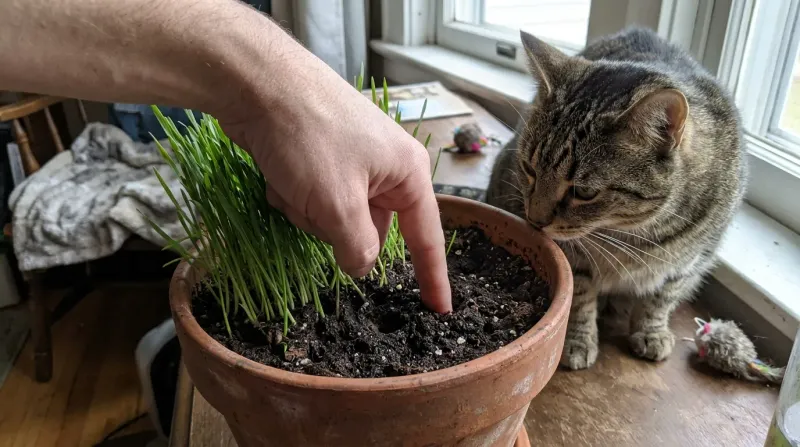
Test Soil Moisture With Your Finger Daily
Before reaching for water, press your index finger about half an inch into the soil near the edge of the pot. Because cereal grass roots grow densely, the top surface can look dry while the bottom remains soggy. If the soil feels cool and damp beneath the surface, skip watering for the day and check again tomorrow. Only add water when the top half inch feels dry to the touch.
- 4
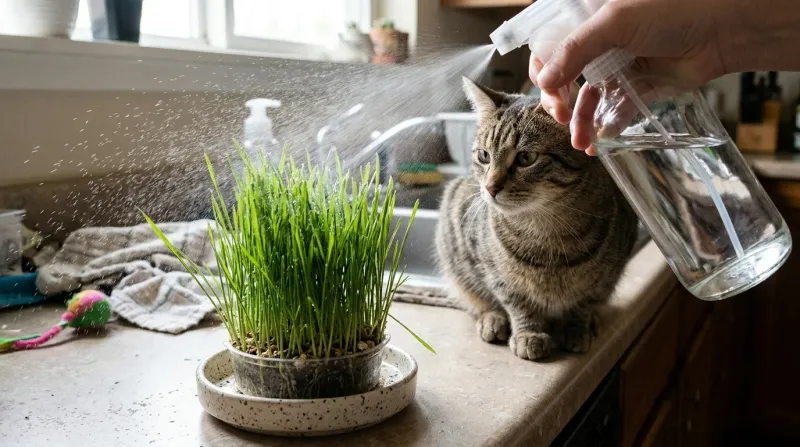
Mist or Water Lightly Without Soaking Roots
When the soil feels dry, use a clean spray bottle filled with room-temperature water to mist the soil surface and lower stems thoroughly, or pour just two to three tablespoons of water slowly around the base. Stop as soon as the soil looks evenly darkened or a few drops reach the saucer. Empty any standing water from the saucer after ten minutes to prevent root rot and fungal growth.
- 5
Rotate the Container Every Two Days
Indoor grass naturally leans toward the nearest window, which causes uneven growth and weak, floppy stems on the shaded side. Give the pot a quarter turn every other day during your morning moisture check. This simple habit exposes all sides of the clump to even light, encouraging upright, sturdy blades that are easier for your cat to chew cleanly.
- 6
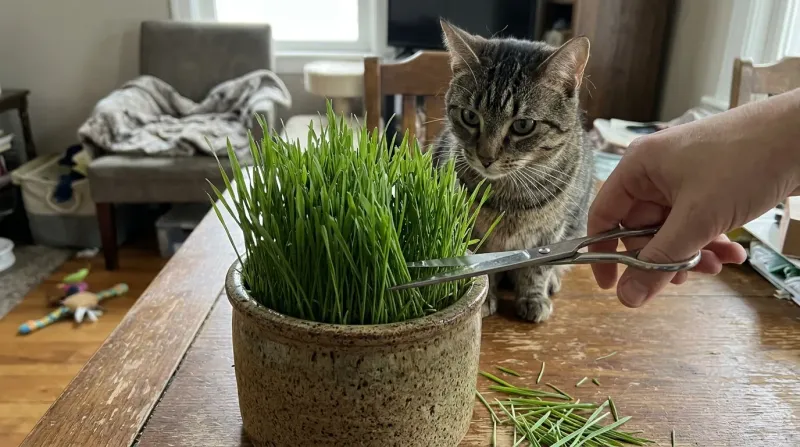
Trim Tall Blades Back to Two Inches
If your cat does not graze fast enough and the grass grows taller than four inches, the blades will bend over, shade the lower stems, and turn yellow. Use clean, sharp scissors to snip the top growth back to about two inches tall. Trimming stimulates fresh, tender shoots from the base and keeps the grass crisp, which is especially helpful for helping indoor cats manage hairballs safely.
- 7
Supervise Grazing Sessions and Store Safely
Place the pot in a heavy, wide-based holder so enthusiastic chewers do not knock dirt across the floor; browsing creative cat grass planter ideas can help you pick a tip-proof setup. If your cat tends to gorge on grass or dig in the soil, offer ten-minute supervised grazing sessions twice a day, then move the pot back to its sunny windowsill between visits.
Common Cat Grass Mistakes That Cause Rapid Die-Off
Even healthy grass turns yellow or slimy fast when a few basic indoor needs get overlooked. Avoid these common habits to get the most out of every container:
- Drowning the roots: Pouring a full cup of water into a small carton floods the root mat. Without drainage holes, standing water suffocates the roots and triggers white fuzzy mold within 48 hours.
- Leaving it in scorching direct sun: A hot south-facing windowsill bakes shallow soil dry in a single afternoon, leaving crisp, brown leaf tips your cat will ignore.
- Adding plant fertilizer: Never mix liquid houseplant food or slow-release pellets into your cat's grass. Cereal grasses carry all the nutrients they need inside their seeds for their short lifespan, and fertilizers can upset your pet's stomach.
- Placing near toxic houseplants: Keep grass away from surrounding houseplants that are toxic to cats, such as lilies, pothos, and sago palms, so curious nibblers do not sample the wrong leaves.
When to Replace Your Pot and Watch Your Cat's Digestion
Cat grass is a fast-growing annual cereal grass—usually oat, wheat, barley, or rye—so it naturally reaches the end of its lifecycle after two to four weeks. Once the blades turn pale yellow from the base or the root mat feels mushy, compost the old soil and start a fresh batch. If you want a continuous supply on a budget, learning how to grow cat grass indoors without mold from bulk seed costs pennies per pot.
Always check the soil surface before letting your pet graze. If you spot white or gray fuzz growing around the seed hulls, toss the container immediately rather than trying to scrape it off, as mold spores can cause digestive upset. While grazing on fresh greens supports healthy digestion, consult your veterinarian if your cat vomits repeatedly, struggles to pass stool, or loses their appetite after eating grass, as these signs can point to an underlying gastrointestinal issue rather than normal hairball relief.
Keeping cat grass lush indoors takes less than two minutes a day once you match watering to actual soil dryness and keep the pot in bright, indirect light. Check the soil each morning, empty excess saucer water promptly, and trim overgrown tips to two inches so your cat always has a fresh, crisp patch to nibble.
Frequently asked questions
How long does indoor cat grass last with proper care?
With proper drainage, indirect light, and light watering, a pot of indoor cat grass typically lasts two to three weeks, and occasionally up to four weeks. Because it is grown from annual cereal grains like wheat or oats, it naturally dies back once the seed nutrients are used up.
Should I water cat grass every day?
Not automatically. Check the soil daily by pressing your finger half an inch deep, and only mist or water when that top layer feels dry. Overwatering is the fastest cause of root rot and white mold, especially in small plastic or cardboard store containers.
Why is my cat grass turning yellow at the tips?
Yellowing tips usually come from one of three issues: too much harsh direct sunlight, soggy soil suffocating the roots, or overgrown blades shading the lower stems. Move the pot to bright indirect light, let the top half inch of soil dry between waterings, and trim the grass to two inches.
Can I repot or fertilize cat grass to make it last longer?
No, skip both repotting and fertilizer. Cereal grasses have delicate, short-lived root systems that do not transplant well, and houseplant fertilizers can make your cat sick. When the grass turns yellow at the base, compost it and start a fresh pot.

Nathan Brooks
Nathan Brooks runs Farmingzoom to help loving pet owners create safe, enriching homes for their animals. He cares deeply about responsible pet care and focuses on making everyday decisions simpler for fellow owners.…