Time needed
1 h 15 min
What you need
- Thin-door compatible cat flap kit (preferably double-flap)
- 100% silicone exterior caulk
- Painter's tape
- Foil HVAC tape (for hollow or foam-core panels)
- Fine-tip permanent marker
- Tape measure
- Carpenter's level
- Drill with 3/8-inch bit
- Jigsaw with metal/wood blades
- Metal file or sandpaper
- Screwdriver
- Safety glasses
- Work gloves
Tools
- Tape measure
- Carpenter's level
- Power drill with 3/8-inch metal/wood drill bit
- Jigsaw with fine-tooth metal-cutting blade
- Metal file or medium-grit sandpaper
- Screwdriver
- Caulk gun
- Safety glasses and work gloves
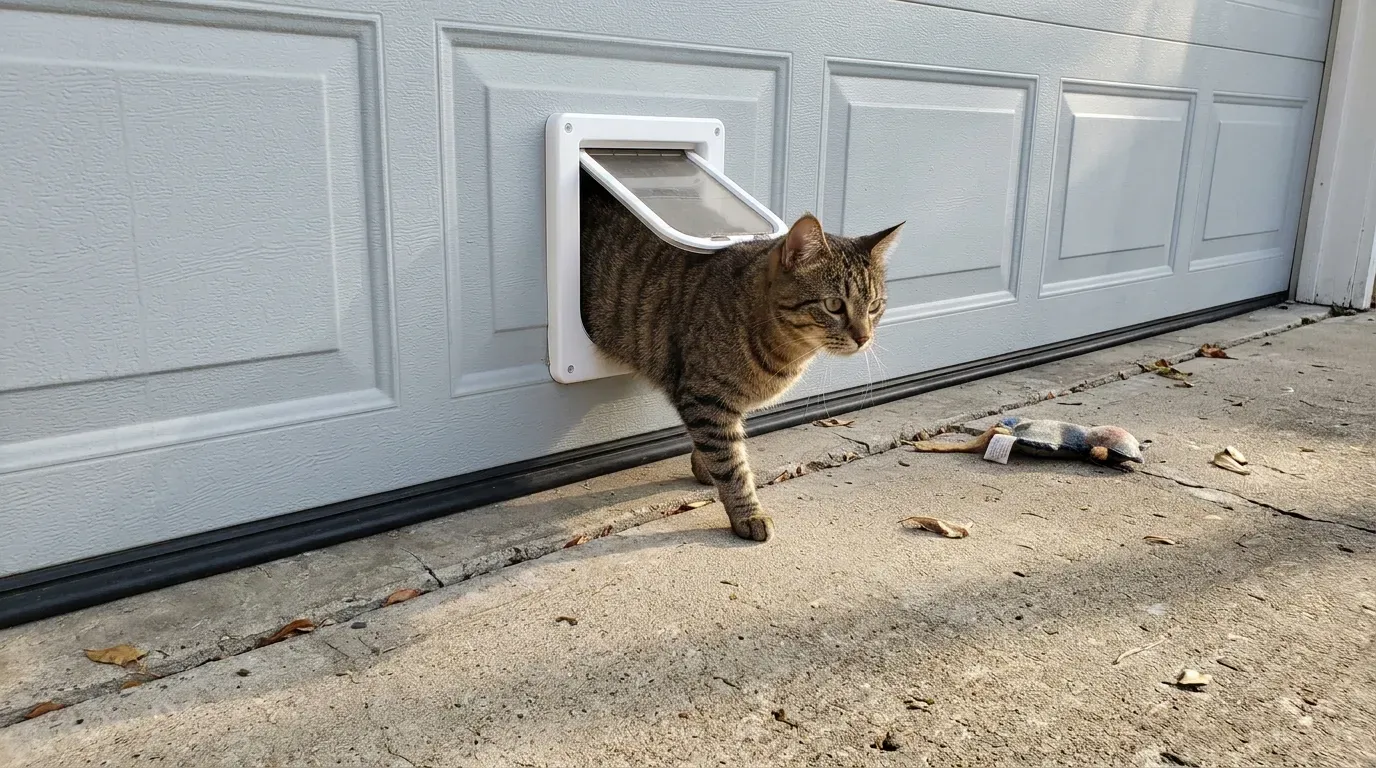
You can safely install a cat door in a sectional garage door by choosing a thin-panel pet flap, cutting strictly between structural reinforcement struts, and keeping the frame weight low enough not to strain the door springs. Standard exterior pet doors are built for thick house walls or solid entry doors, which means they often rattle, gap, or bind on hollow steel and aluminum garage panels.
Whether you want to house a litter box in a sheltered space or give an indoor-outdoor cat a safe weather refuge, careful placement protects both your garage opener and your pet. Follow the steps below to measure, cut, seal, and pet-proof your setup properly.
- 1
Measure Garage Panel Thickness and Height
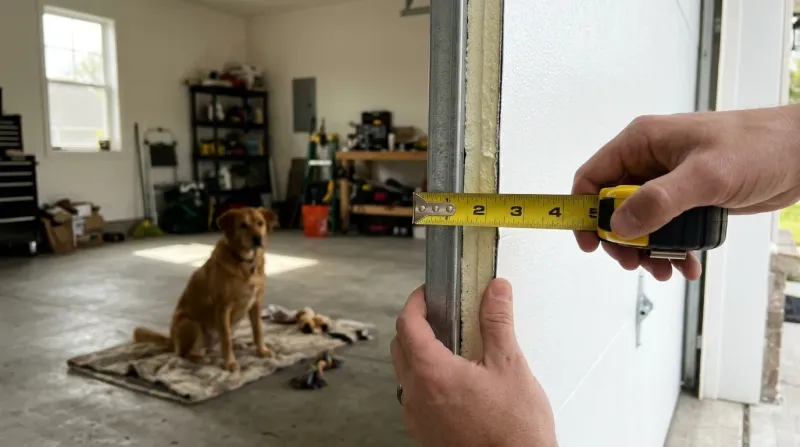
Measure your garage door panel thickness using a tape measure at an edge seam; most uninsulated steel doors are around 0.5 inches thick, while insulated sandwich doors measure 1.375 to 2 inches. Next, measure your cat from the floor to the top of their shoulders to determine the total opening height needed for them to pass comfortably, and measure from the floor to their belly or chest to find the ideal bottom threshold height. Plan to mount the bottom of the cat door 3 to 4 inches above the garage floor—aligned with your cat's belly or chest clearance—so your cat can step through comfortably without tripping, keeping senior or arthritic cats in mind with a lower threshold.
- 2
Select a Lightweight Thin-Door Cat Flap
Choose a cat door rated for your exact panel thickness and weighing under 3 pounds so it does not throw off your garage door spring balance. Double-flap frames with magnetic bottom seals work best for insulated garage panels because they block cold drafts and dust. Avoid heavy aluminum dog-door frames unless you plan to have a garage door technician recalibrate your torsion or extension springs afterward.
- 3
Disconnect the Automatic Garage Door Opener
Close the garage door completely and pull the red emergency release cord to disengage the automatic opener trolley. Unplug the motor unit from the ceiling outlet so nobody can accidentally trigger the door while you are measuring or cutting. Lock the manual slide latch on the inside track to keep the panels steady while you work.
- 4
Locate Struts, Hinges, and Foam Cores
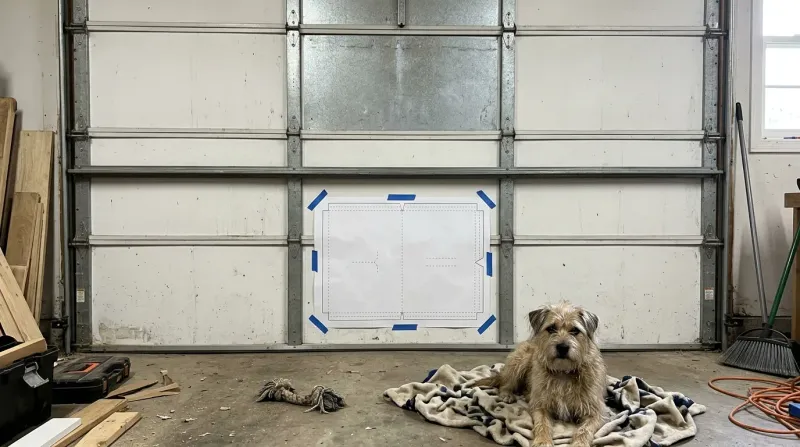
Inspect the inside face of the bottom garage panel to map out all steel reinforcement struts, center stiles, and vertical hinges. Position your cat door template strictly inside an open flat section between vertical stiles, at least 3 inches above the bottom weather seal and 2 inches below any horizontal strut. Tap the panel lightly to confirm whether it is hollow single-layer metal, foam-filled steel, or solid wood.
- 5
Tape and Trace the Cutting Template
Hold the paper template from your cat door kit flat against the interior side of the bottom panel. Use a carpenter's level along the top line of the template to make sure the cutout will sit straight, then secure it with painter's tape. Trace the cut lines with a fine-tip marker and mark the four corner drill points clearly.
- 6
Drill Pilot Holes at Each Corner
Put on safety glasses and work gloves before drilling. Use a 3/8-inch drill bit suited for metal or wood to bore a clean pilot hole inside each of the four traced corners. If your garage door has a sandwich construction with inner and outer steel skins, drill straight through both layers so the jigsaw blade enters smoothly without bending.
- 7
Cut the Opening Slowly With a Jigsaw
Fit a fine-tooth metal-cutting blade onto your jigsaw for steel or aluminum doors, or a wood blade for timber panels. Insert the blade into one corner pilot hole and cut steadily along the marked line, keeping the jigsaw shoe pressed flat against the panel to prevent vibration. Support the cutout piece with one hand as you finish the final side so it does not drop and dent the lower panel.
- 8
Smooth Edges and Expose Cavity Protection
Run a metal file or medium-grit sandpaper around the freshly cut perimeter to remove sharp burrs that could scratch you or catch your cat's fur. Wipe away metal shavings and foam dust with a damp cloth. If you cut into a hollow or foam-core metal door, line the exposed interior cavity edges with foil HVAC tape so moisture and insects cannot enter the panel insulation.
- 9
Dry-Fit and Seal the Cat Door Frame
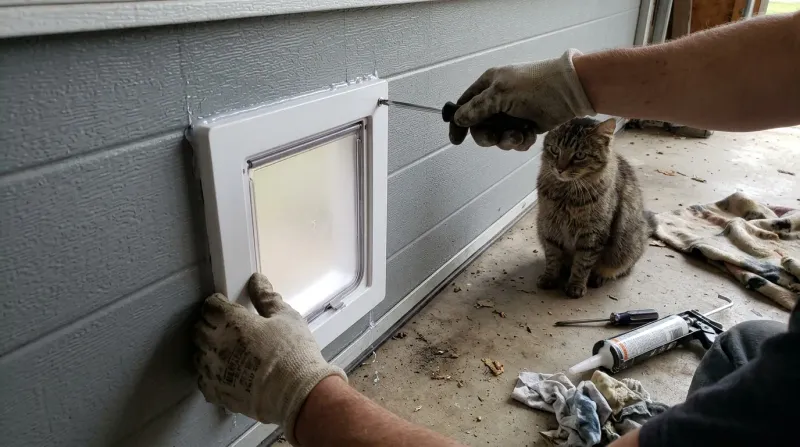
Slide the interior and exterior frame halves into the opening to verify a snug, level fit without pinching the flap. Remove the frames, apply a continuous bead of 100 percent silicone exterior caulk around the back lip of the outer frame, and press both halves firmly into the cutout. Tighten the mounting screws evenly by hand so you do not warp thin sheet metal.
- 10
Test Door Travel and Spring Balance
Unlock the manual slide latch, stand to the side with your feet and body clear of the door's path, and lift the garage door slowly with both hands halfway up before letting go carefully to check its balance. Never stand beneath the door while testing balance, as broken, worn, or improperly tensioned torsion or extension springs can cause a heavy door to slam down suddenly. A properly balanced door should stay in place without slamming down or shooting upward. Plug the opener back in, re-engage the trolley, and run a full open-and-close cycle while watching the cat door frame to confirm it clears the tracks and header seal cleanly.
Choosing the Best Cat Door for a Garage Door
Garage door panels are much thinner than standard 1.75-inch exterior house doors, often measuring between 0.5 and 2 inches depending on whether they have a foam core. Look for a cat door for garage door models labeled as thin-door compatible, or choose a telescoping tunnel kit that trims down cleanly without leaving exposed plastic edges.
If you live in a region with hot summers or freezing winters, skip basic single-flap units. Double-flap magnetic models create an insulating air pocket that blocks drafts and keeps garage odors from drifting inside. For homes in wildlife-heavy areas, microchip-reading flaps prevent raccoons, opossums, and stray animals from following your cat indoors. If you prefer an electronic model, check how long cat flap batteries last so extreme garage temperatures do not catch you with a dead sensor.
Making Your Garage Safe and Cat-Friendly
Before letting your cat use the new flap, inspect the garage for hidden hazards. Never leave your cat unattended in a garage with a running vehicle, and store all automotive chemicals—especially ethylene glycol antifreeze, motor oil, windshield washer fluid, and rodent poisons—inside latched cabinets. Even a few drops of sweet-tasting antifreeze can cause fatal kidney failure in cats; contact a veterinarian immediately if you suspect your pet licked any spill.
Keep sharp garden tools, pesticides, and fertilizers off the floor, and check that chemical fertilizers are stored well out of reach. Place a cozy, elevated bed away from the main overhead door tracks so your cat has a warm resting spot clear of moving rollers, and check that garage temperatures and ventilation stay safe year-round without extreme summer heat or freezing winter cold. Whenever a cat has access to the garage, always check under your vehicle and honk the horn or tap the hood firmly before starting the engine to make sure your cat is not hiding beneath the car or curled up inside the warm engine bay. If you decide cutting into an insulated metal panel feels too risky for your door warranty, explore cat door ideas without cutting your door or consider installing the flap in the solid walk-through entry door between the garage and house instead.
Common Installation Mistakes to Avoid
- Cutting into horizontal metal struts: Wide garage doors rely on steel U-bars to stay rigid when raised. Cutting through a strut weakens the entire panel and can cause the door to buckle mid-lift.
- Installing too close to the bottom rubber seal: Mounting the frame right against the bottom edge prevents the door from compressing evenly against the concrete floor, letting water and pests slip underneath.
- Ignoring flap clearance: Make sure the outer frame sits flush enough that it does not catch on the vertical steel tracks or weatherstripping as the door rolls overhead.
Taking the time to measure panel thickness, dodge structural struts, and seal exposed edges turns a tricky garage modification into a reliable, draft-free passage for your cat. Once the frame is installed and the door balance checks out, introduce your cat gradually using treats on both sides—and if you ever need to restrict access temporarily, see how to keep a cat door shut without locking your pet out.
Frequently asked questions
Can I put a cat door in a metal or insulated garage door?
Yes, you can install a cat door in steel, aluminum, or foam-insulated sectional garage doors as long as you choose a frame rated for thin panels and cut strictly between vertical stiles and horizontal reinforcement struts.
Will installing a cat door ruin my garage door spring balance?
A lightweight plastic cat flap under 3 pounds rarely affects spring tension. However, heavy metal pet doors can throw off balance, so always disconnect the opener and test that the door holds halfway open manually after installation.
What is the best cat door for a garage door in cold weather?
A double-flap cat door with magnetic bottom seals and a brush weatherstrip around the frame works best. The air gap between the two flaps slows heat loss and prevents cold drafts from blowing into your garage.
How do I keep raccoons and stray cats out of my garage cat door?
Install a microchip-activated cat flap that unlocks only when it scans your cat's implanted ID chip or collar tag. While microchip cat doors block neighborhood strays and opossums, determined raccoons are strong and dexterous enough to force or pry open standard residential plastic microchip latches, so choose a high-security reinforced lock or close off access at night in raccoon-heavy areas.

Nathan Brooks
Nathan Brooks runs Farmingzoom to help loving pet owners create safe, enriching homes for their animals. He cares deeply about responsible pet care and focuses on making everyday decisions simpler for fellow owners.…