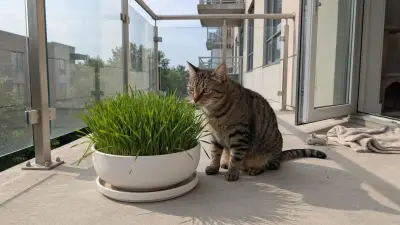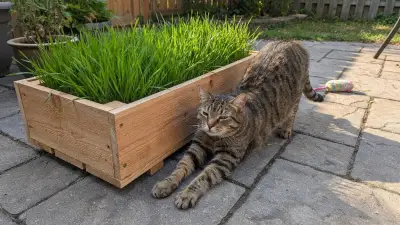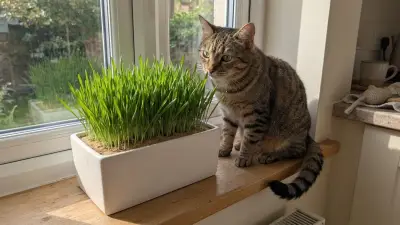
Safe indoor cat grass alternatives give your new cat an appealing, non-toxic target to nibble while steering them away from dangerous houseplants like lilies, pothos, and philodendrons. When you already own an established indoor plant collection, standard trays of wheatgrass often look out of place and die back quickly.
By choosing permanent, grass-like houseplants that are safe for felines, you satisfy your cat's natural urge to chew greens while preserving your home's style. Place these seven durable decoy plants at floor level to protect both your curious pet and your prized foliage.
| Plant Name | Light Needs | Texture & Habit | Care Level |
|---|---|---|---|
| Spider Plant | Bright to medium indirect | Arching narrow ribbons | Easy |
| Parlor Palm | Low to medium indirect | Upright feathery fronds | Easy |
| Boston Fern | Medium indirect, humid | Dense cascading fronds | Moderate |
| Ponytail Palm | Bright indirect to direct | Curly cascading leaves | Easy |
| Calathea Rattlesnake | Low to medium indirect | Upright wavy patterned leaves | Moderate |
| Blue Oat Grass | Bright direct window light | Spiky silver-blue blades | Moderate |
| Catnip | Bright indirect to direct | Soft scalloped aromatic leaves | Easy |
1Spider Plant
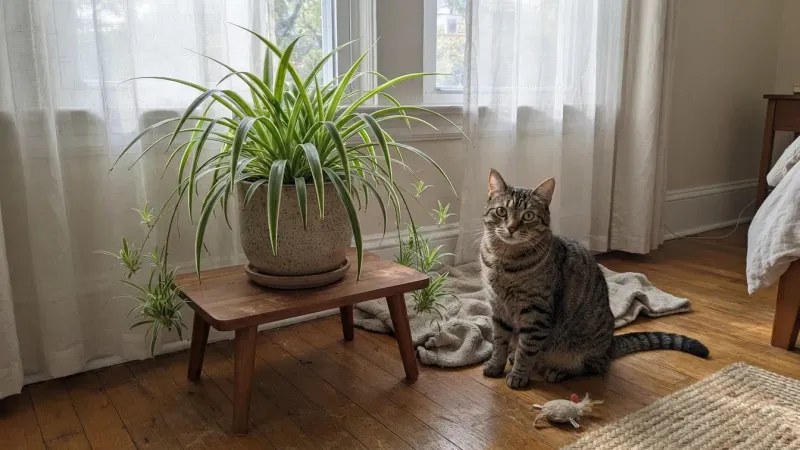
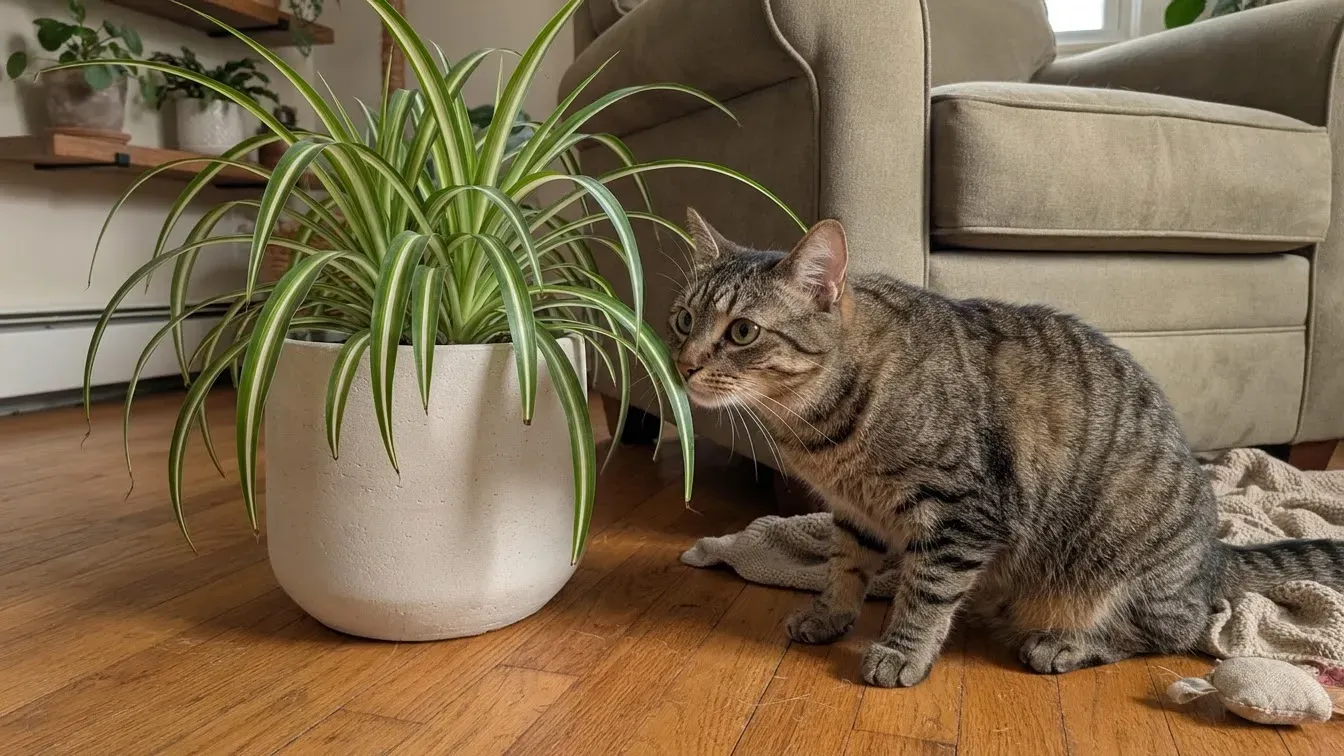
Light: Bright to medium indirect · Habit: Arching variegated ribbons · Toxicity: Non-toxic to cats and dogs Spider plants mimic the narrow, grassy blades cats instinctively love to bat and chew, making them the ultimate decoy for your indoor collection. Their cascading baby offshoots dangle at eye level, naturally drawing a new cat's attention away from toxic trailing vines like pothos. Pot a mature spider plant in a heavy base on the floor, though offer access only in moderation—spider plants contain compounds that produce a mild hallucinogenic effect in cats, and unrestricted grazing can lead to stomach upset. Keep it in bright, indirect light and water when the top inch of soil dries out.
2Parlor Palm
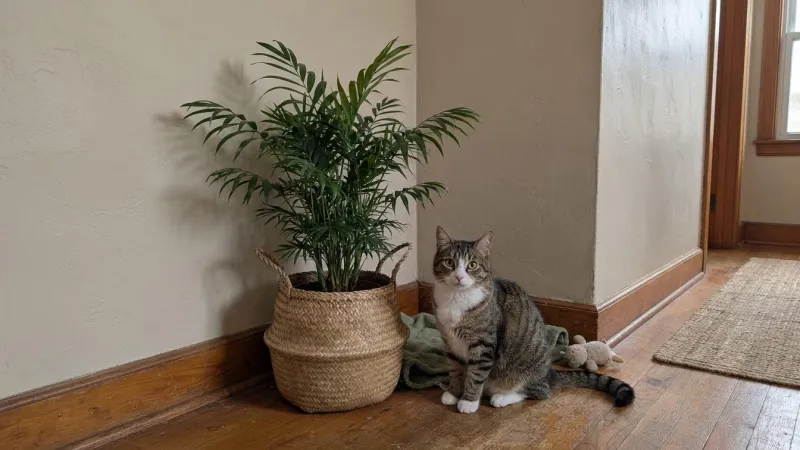
Light: Low to medium indirect · Habit: Upright feathery fronds · Toxicity: Non-toxic to cats and dogs If you need a low-light decoy for shaded corners, the parlor palm thrives where standard cereal grasses quickly yellow and collapse. Its soft, divided fronds sway with the slightest air current, inviting gentle batting and safe grazing without sharp leaf edges. Slow-growing and compact, a parlor palm adds lush tropical height to your plant stand while giving your cat an accessible lower canopy to explore. Water lightly whenever the top two inches of potting mix feel dry.
3Boston Fern
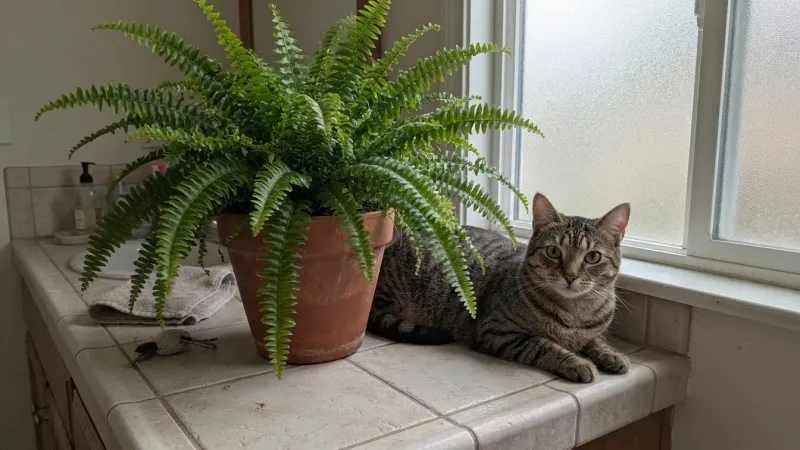
Light: Medium indirect · Habit: Dense cascading fronds · Toxicity: Non-toxic to cats and dogs Boston ferns bring rich texture to plant collections while offering dozens of delicate, bite-sized leaflets for cats who love to graze. Because these ferns recover quickly from light pruning, an occasional nibble from your cat will not ruin the plant's full shape. Place your fern on a low plant stand in a humid room like a bathroom or bright kitchen, and mist the fronds regularly so they stay crisp, green, and appealing to your pet.
4Ponytail Palm
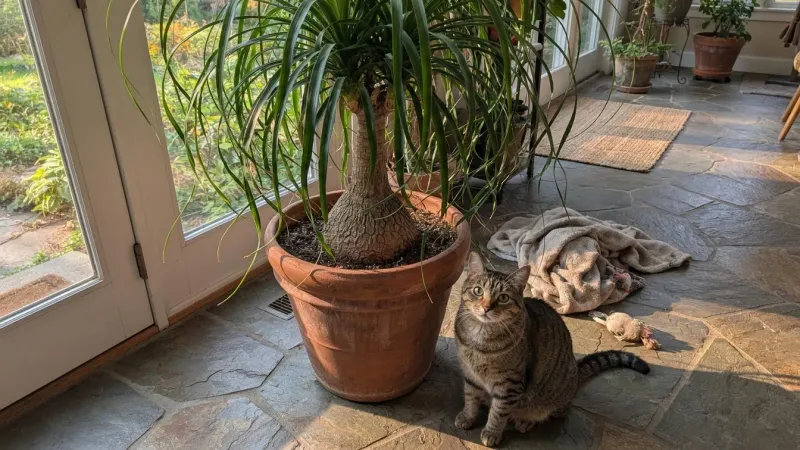
Light: Bright indirect to direct · Habit: Thick trunk with curly leaves · Toxicity: Non-toxic to cats and dogs Despite its name, the ponytail palm is a desert succulent whose long, fountain-like leaves resemble thick blades of grass. The cascading foliage acts like a built-in feline toy, encouraging cats to swat and chew the ends instead of bothering nearby dracaenas or snake plants. Its bulbous trunk stores water, making it remarkably forgiving if you miss a watering day, and its sturdy base resists tipping when a playful cat paws at the leaves.
5Calathea Rattlesnake
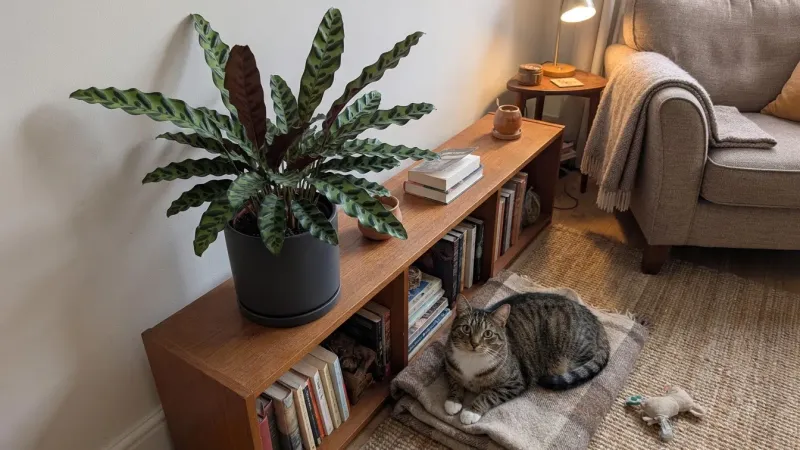
Light: Low to medium indirect · Habit: Upright wavy patterned leaves · Toxicity: Non-toxic to cats and dogs Plant collectors who prize bold foliage can rely on the rattlesnake calathea as a safe, eye-catching buffer plant. Its long, lance-shaped leaves feature dark green markings and purple undersides that move slightly throughout the day, catching your cat's eye without putting them at risk. Keep this pet-safe plant in a low-light living room spot with consistent moisture and filtered water, placing it in front of more delicate or toxic specimen plants.
6Blue Oat Grass
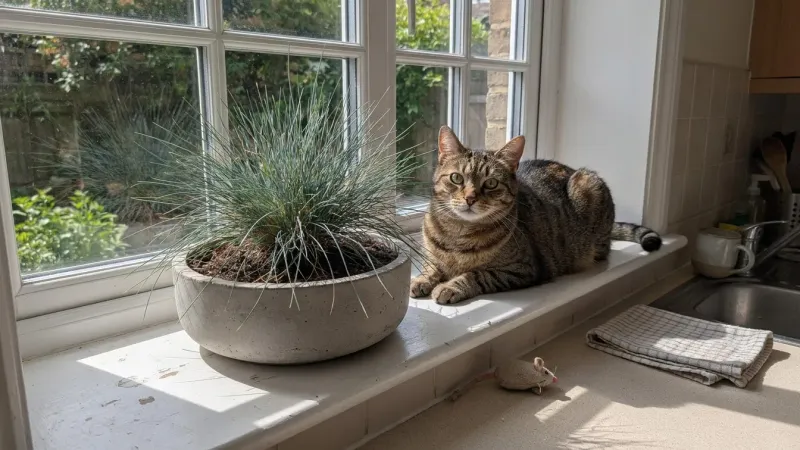
Light: Bright direct window light · Habit: Clumping silver-blue blades · Toxicity: Non-toxic to cats and dogs For plant lovers who prefer true ornamental grasses over leafy foliage, blue oat grass (Helictotrichon sempervirens) brings striking silver-blue color to a sunny windowsill. Unlike traditional wheatgrass that turns brown within two weeks, it holds its neat, spiky mound longer in bright sun and well-draining soil, though it is primarily an outdoor perennial that struggles indoors long-term without a cold winter dormancy period. Set a pot right beside your cat's favorite window perch so they can graze while birdwatching.
7Catnip
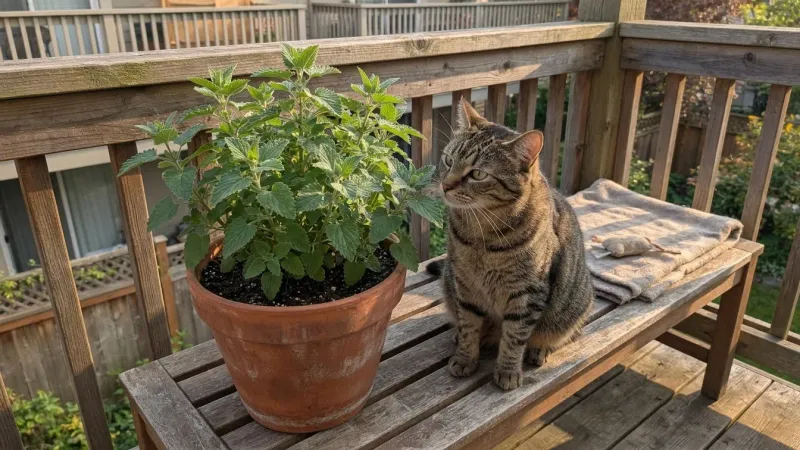
Light: Bright indirect to direct · Habit: Bushy stems with scalloped leaves · Toxicity: Non-toxic to cats and dogs Growing fresh catnip in a decorative terracotta pot gives your new cat an irresistible herbal target that outshines every other plant in the room. While cats usually sniff and rub against the leaves rather than eating large quantities, having a dedicated pot satisfies their sensory curiosity. You can read more about cat grass vs catnip effects and uses to see how pairing a pot of catnip with a spider plant redirects even the most determined plant chewer.
How to Place Decoy Plants to Protect Toxic Houseplants
Even with safe indoor cat grass alternatives available, cats remain curious about every pot in the room. Move toxic species—especially true lilies, sago palms, dieffenbachia, and monstera—onto high wall shelves, ceiling hooks, or inside closed rooms where your cat cannot jump.
Set your chewable decoy plants directly along your cat's favorite walking paths, near sunny window perches, or beside their scratching post. If you want to understand how cat grass affects your cat and why felines seek out fibrous greens, offering a dedicated floor-level plant station makes redirection effortless. Keep decoy pots in heavy ceramic planters or explore creative cat grass planter ideas that prevent tipping during enthusiastic nibbling sessions.
Safe Chewing Limits and When to Call Your Vet
Non-toxic does not mean unlimited. Eating large amounts of any fibrous plant material can irritate a cat's stomach and trigger vomiting or loose stools. Kittens with sensitive stomachs and adult cats prone to gulping greens should only have supervised access to chewable plants for ten to fifteen minutes at a time until you know how their digestion responds.
Always check soil ingredients before bringing a plant within reach, as chemical fertilizers and systemic insecticides can harm pets, and even non-toxic perlite can cause mild digestive irritation if eaten in large amounts. If your cat chews an unknown plant, develops persistent vomiting, drools excessively, or becomes lethargic, contact your veterinarian or an animal poison control center immediately.
Replacing standard grain trays with permanent, cat-safe houseplants protects both your new pet and the indoor garden you worked hard to grow. Start with two or three easy-care decoys like a spider plant and a parlor palm at floor level, move toxic plants out of reach, and observe which textures your cat prefers.
Sources: ASPCA · Cornell Feline Health Center · International Cat Care
Frequently asked questions
What is a good permanent substitute for cat grass?
Spider plants, parlor palms, and ponytail palms are the best long-lasting substitutes for cat grass. Unlike wheatgrass or annual cereal oat grass (Avena sativa), which die back after a few weeks—and unlike perennial blue oat grass (Helictotrichon sempervirens), which needs cold outdoor dormancy to thrive year after year—these non-toxic houseplants live for years indoors and tolerate occasional nibbling from curious cats.
What indoor plants are safe for cats in low light?
Parlor palms and rattlesnake calatheas thrive in low to medium indirect light and are completely non-toxic to cats. Place them in shaded living room corners or hallways as safe decoy plants so your cat leaves nearby low-light toxic plants like pothos and peace lilies alone.
Why does my cat chew my houseplants even with cat grass nearby?
Cats chew plants out of boredom, curiosity, or attraction to dangling leaves that mimic prey. If your cat ignores their grass, move the safe decoy plant closer to their favorite window perch, elevate toxic plants onto high shelves, and add daily interactive play sessions.
Can kittens chew on cat-safe houseplants?
Kittens can safely nibble non-toxic plants like spider plants and Boston ferns once weaned, though their sensitive stomachs may react to eating large amounts of fiber. Supervise short grazing sessions and ensure potting soil contains no chemical fertilizers, and keep large quantities of perlite out of reach so kittens do not ingest it.
Nathan Brooks
Nathan Brooks runs Farmingzoom to help loving pet owners create safe, enriching homes for their animals. He cares deeply about responsible pet care and focuses on making everyday decisions simpler for fellow owners.…