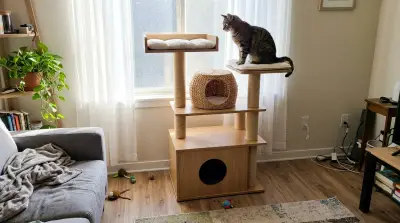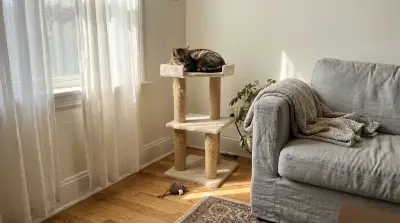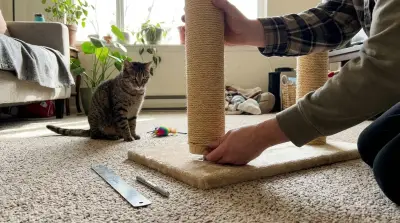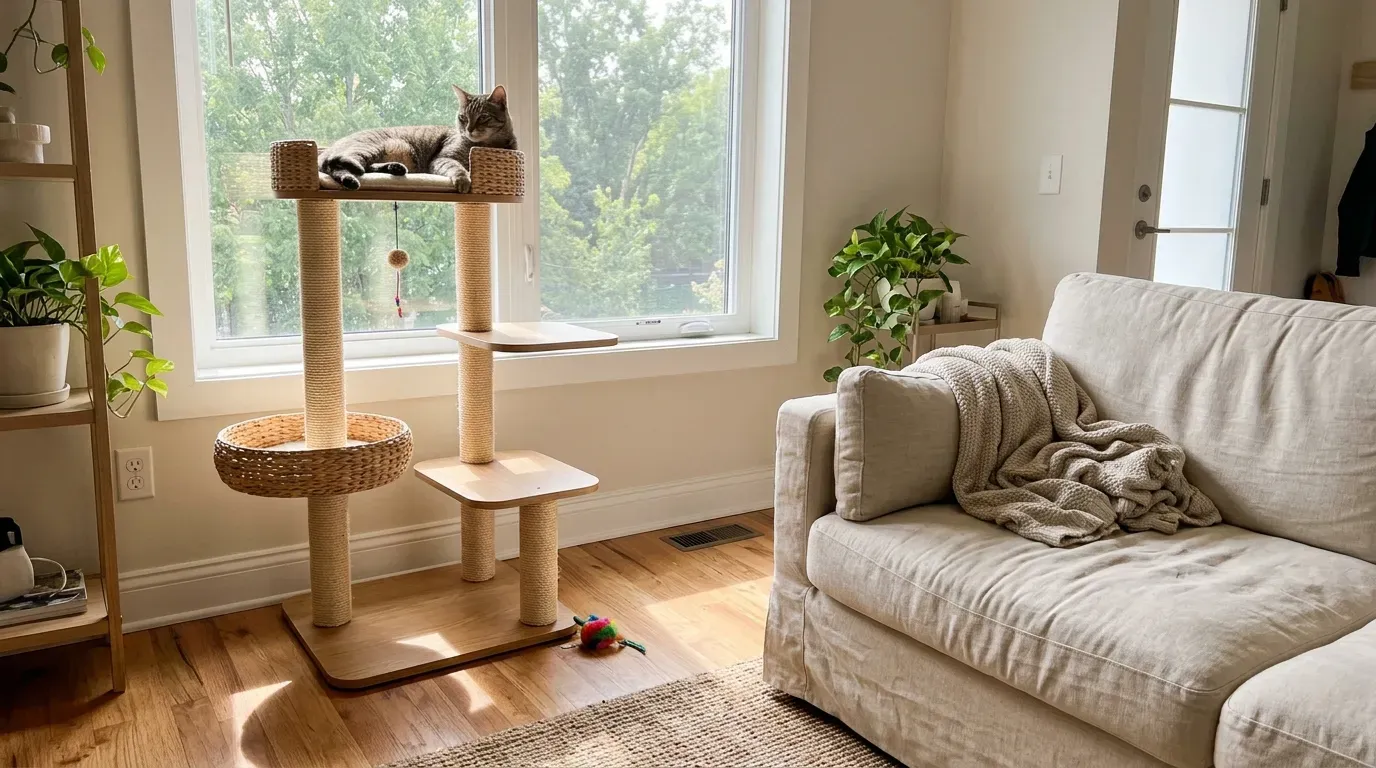
You do not have to sacrifice your living room style to give your indoor cat high perches, sturdy scratching posts, and cozy hideaways. Modern cat tree ideas replace bulky, beige carpeted towers with clean wood lines, woven baskets, and dual-purpose furniture that blend right into your existing decor.
Whether you live in a compact studio apartment or have an active multi-cat household, choosing the right vertical setup keeps your pet physically active and mentally sharp. Below, you will find 19 practical, stylish options ranging from wall-mounted walkways to clever storage hybrids, plus clear guidance on picking a safe structure for your cat's size and age.
1Floor-to-Ceiling Tension Rod Tower
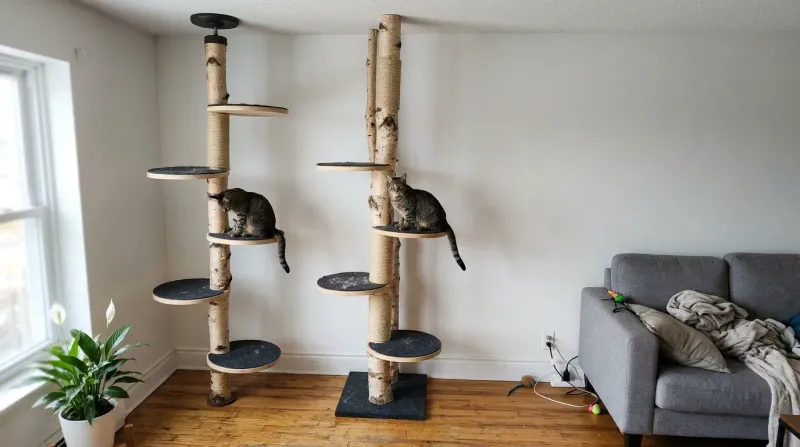
Floor-to-ceiling tension cat trees use a spring-loaded central post that presses firmly between your floor and ceiling, eliminating the need for a massive, room-hogging base. Wrap the central column in thick natural sisal rope and attach staggered birch wood platforms spiraling upward. This vertical footprint takes up less than two square feet of floor space while letting energetic climbers sprint straight up to ceiling height. Avoid installing tension-rod towers on popcorn or textured ceilings, sloped ceilings, or unreinforced drywall between joists where the cap can slip, and always check the tension spring monthly to ensure daily leaps have not loosened the top cap.
2Ladder-Style Leaning Bookshelf Hybrid
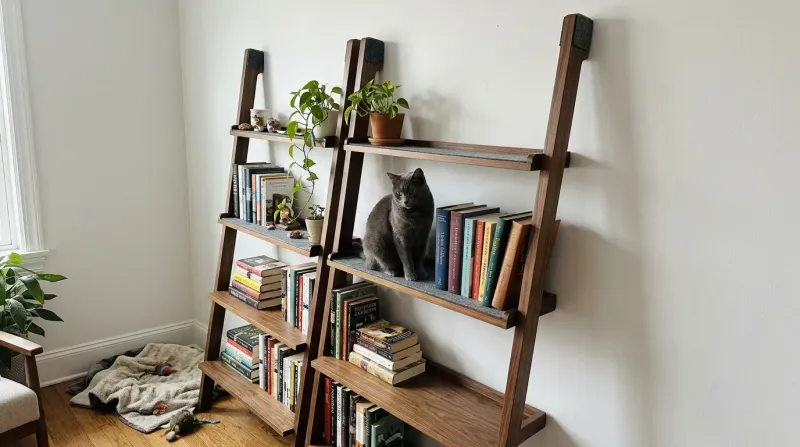
A leaning ladder bookshelf doubles as a sleek climbing frame when you leave open side clearances and add non-slip felt pads to each shelf. Position the unit next to a sofa or low console so your cat has an easy launchpad to the lower rungs. You can display books and framed photos on the inner sections while reserving the top two shelves as dedicated lookout lounges. Anchor the top rail to a wall stud so the frame never shifts when your cat bounds off.
3Floating Wall-Mounted Perch Steps
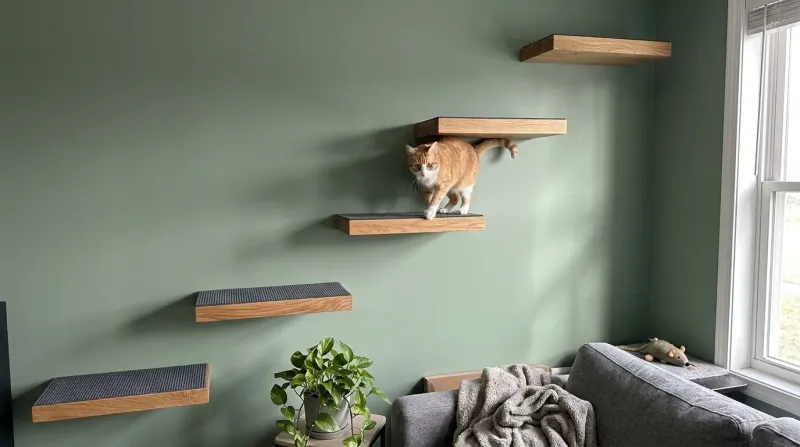
Wall-mounted floating shelves turn blank drywall into an aerial obstacle course without touching your floor at all. Install solid wood brackets into wall studs in a staggered staircase pattern leading toward a high hammock or window perch. Cover the top of each plank with low-pile carpet tiles or ribbed felt so your cat gets reliable claw traction during fast climbs. Space steps 12 to 16 inches apart horizontally and vertically to suit average adult cats comfortably.
4Real Driftwood Branch Sculpture Tree
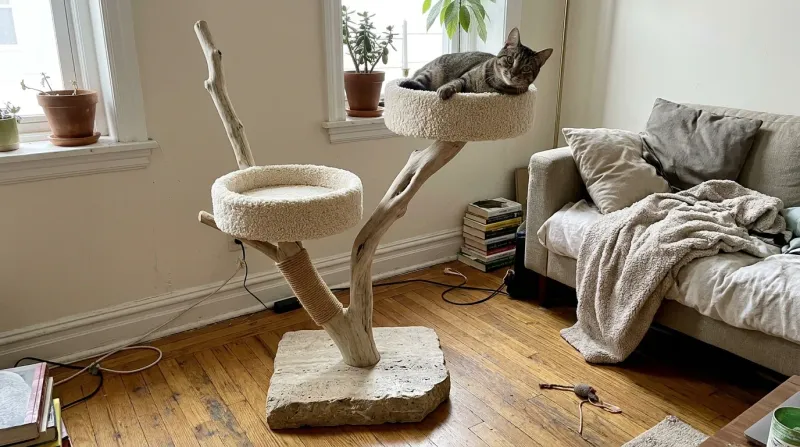
Using a sanitized, kiln-dried hardwood branch mounted onto a heavy stone or thick timber base creates an organic sculptural centerpiece. Attach round upholstered perches to the natural forks of the trunk and wrap one lower limb in jute or sisal rope for scratching. Because every branch grows differently, this design looks like curated natural art in minimalist or bohemian living rooms. Avoid softwoods like cedar or freshly cut outdoor branches that may harbor pests or toxic sap.
5Mid-Century Modern Credenza Condo
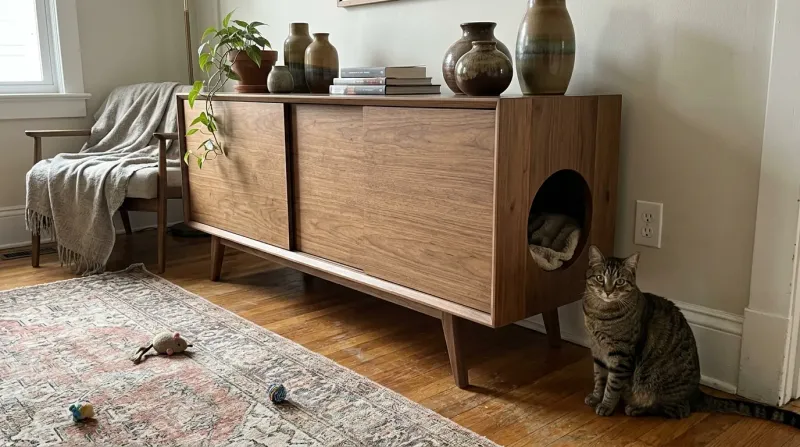
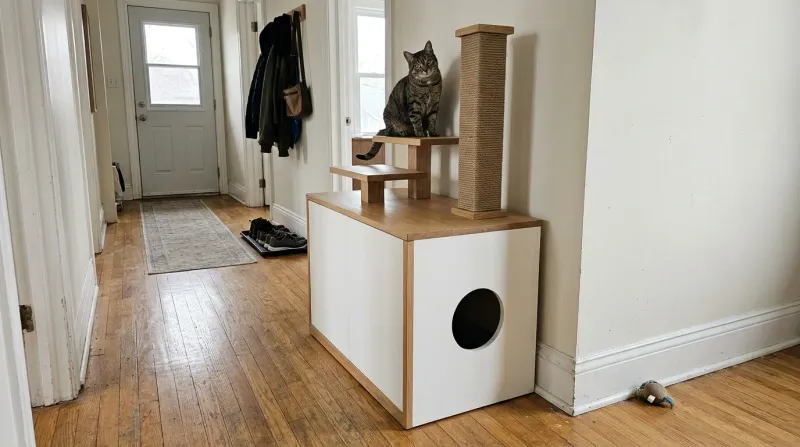
A mid-century walnut credenza with a built-in side cubby gives shy cats a dark, enclosed den while functioning as your media console or entryway table. Look for designs with tapered wooden legs, a side circular entry cutout, and a removable washable cushion inside. Adding a low scratching pad on the flat top turns the cabinet into a multi-level station without looking like pet gear. Keep heavy electronics secured so playful jumps do not knock items loose.
6Woven Rattan Basket Tiered Tower
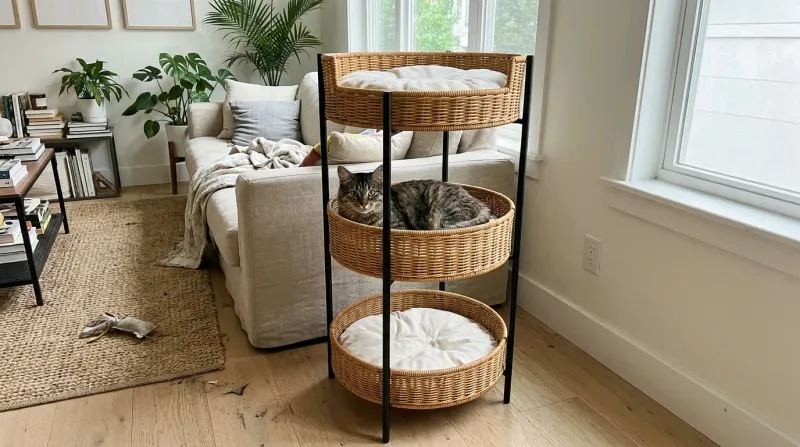
Swap plush synthetic fleece bowls for handwoven rattan or seagrass baskets mounted onto a slim powder-coated steel or wood frame. Rattan naturally resists static hair buildup, blends effortlessly with coastal or Scandinavian decor, and gives cats rigid curved walls to curl against. Line the bottom of each basket with a round faux-sheepskin or cotton pad that you can toss in the washing machine. Choose tightly woven natural fibers free from sharp wire ends or chemical varnishes.
7Cube Storage Unit Climbing Grid
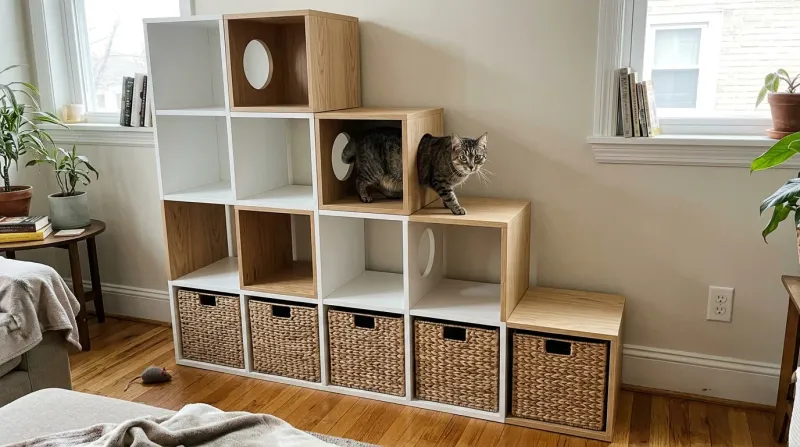
Modular cube shelving units can be arranged in a stair-step pyramid to create both household storage and an instant climbing grid. Leave several upper cubes empty and cut circular pass-through holes in the interior dividers so your cat can tunnel between compartments. Use fabric storage bins in the bottom row to weigh down the unit and store pet toys out of sight. Secure the back frame to the wall so vigorous play never tips the cubes.
8Window-Suction Sunbeam Hammock Shelves
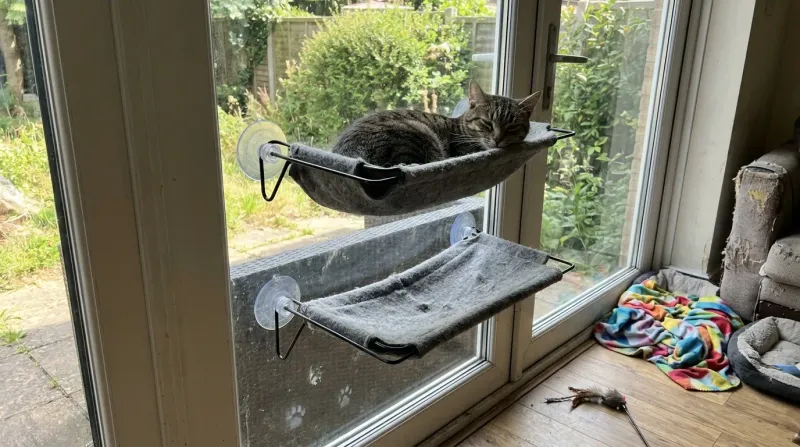
Industrial-grade suction cup window shelves mount directly onto large glass panes, giving sun-loving cats a front-row seat to outdoor birds without cluttering your floor. Stack two or three hammocks vertically on a tall patio door or picture window so your cat can hop upward as the afternoon sun shifts. Wash both the glass and suction cups with warm soapy water and dry them completely before mounting, then test the frame with firm downward pressure to confirm it holds at least 30 pounds. Because temperature fluctuations and condensation can break the suction seal over time, check the cups weekly and reserve suction shelves for lighter cats rather than heavy breeds.
9Over-the-Door Hanging Canvas Climber
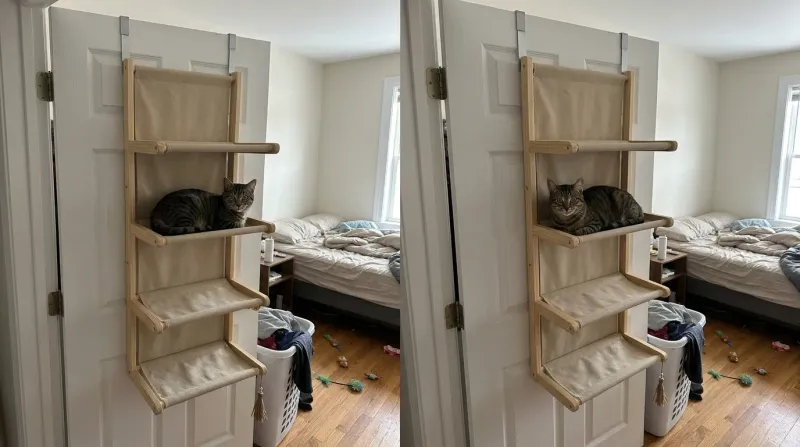
Ideal for renters who cannot drill into walls, an over-the-door cat tree hooks securely onto the top of a standard interior door with padded metal brackets. Multiple canvas and reinforced board shelves hang vertically down the door panel, connected by interior jump holes. Position it on a bedroom or hallway door that stays open or latched firmly so the structure does not swing mid-jump. This compact setup folds completely flat whenever you need to move or store it.
10Corner Triangular Space-Saver Tower
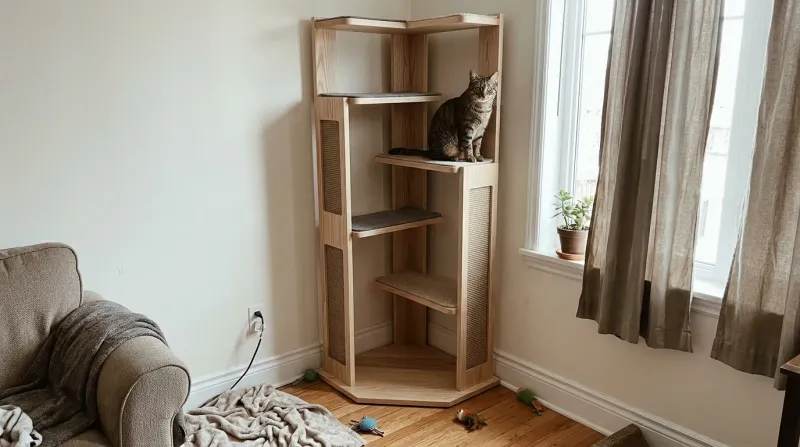
Standard square bases waste valuable walkway space, whereas a 90-degree triangular base tucks snugly into unused room corners. Look for five-tier corner models crafted from light ash veneer with recessed scratching panels along the front edges. Placing a tall corner unit near a window lets your cat monitor two adjoining rooms from one elevated vantage point. Verify that the rear edges sit flush against both walls to maximize side-to-side stability.
12Bent Plywood Arch and Lounge Tower
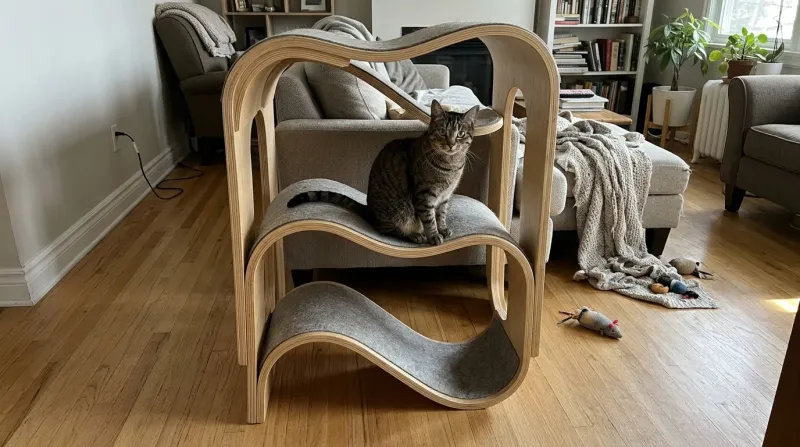
Molded bent-plywood cat trees feature smooth, continuous S-curves that echo iconic modernist furniture silhouettes. Instead of bulky carpeted boxes, these towers use sleek curved ramps lined with replaceable wool felt strips for grip and scratching. The open architectural lines allow natural light to pass right through the structure, keeping small living rooms feeling airy. Wipe the smooth wood veneers clean with a damp microfiber cloth to remove fur in seconds.
13Tall Bookshelf With Integrated Bridge
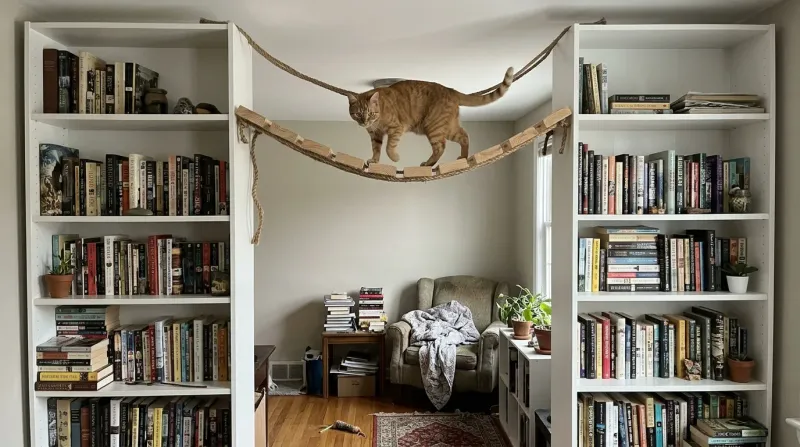
Connect two standard tall bookcases with a suspended rope-and-plank cat bridge mounted near the ceiling to create an elevated highway. Your cat can climb up one bookcase via staggered open shelves, cross the overhead bridge, and descend on the opposite side. This layout keeps floor walkways completely clear while giving indoor cats a rewarding full-room circuit. See more ways to combine reading nooks and climbing paths in our cat tree bookshelf ideas that blend feline fun with home storage.
14Minimalist A-Frame Tent and Post
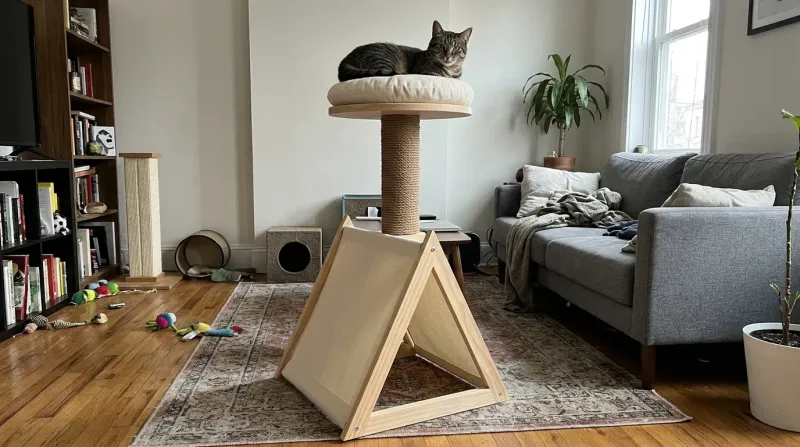
An A-frame wooden cat house pairs a cozy canvas or felt teepee hideaway at floor level with a sturdy vertical sisal scratching column rising from the apex. The triangular geometry distributes weight evenly across the floor, making it virtually impossible for energetic cats to knock over. Top the central post with a round cushioned perch so your pet has both a hidden ground-level nap spot and an open lookout tower in one compact footprint.
15Planter-Topped Faux Foliage Tree
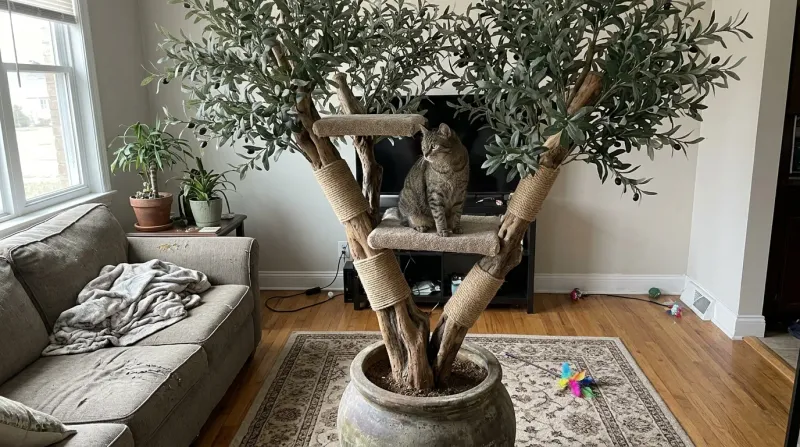
Designed to look like an indoor ficus or olive tree, these decorative towers house a weighted ceramic-style planter base supporting sturdy wooden branches and leaf-shaped fabric platforms. Cats can climb up the rope-wrapped trunk and lounge beneath silk canopy leaves that offer gentle visual cover. Always choose artificial greenery made with non-toxic, chew-resistant fabric rather than real toxic houseplants. Add a separate tray of real cat grass in a heavy non-tip planter nearby if your cat likes nibbling greens.
16Wall-Mounted Rope Bridge and Hammock
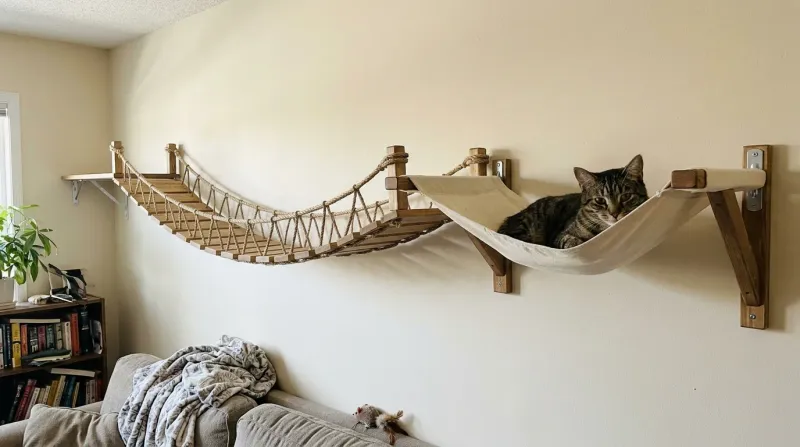
A suspended wooden slat bridge strung between two wall-mounted shelves introduces gentle movement that challenges your cat's balance and core strength. Pair the bridge with a washable cotton canvas hammock anchored into adjacent wall studs at least 4 feet off the ground. The neutral canvas and warm pine tones look clean against white or painted accent walls, turning plain drywall into an engaging vertical playground for multi-cat homes.
17Industrial Pipe and Wood Plank Tower
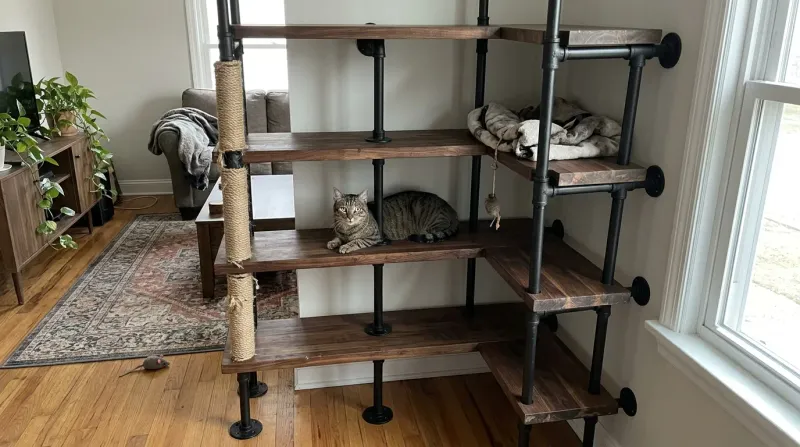
Black iron plumbing pipes and stained butcher-block planks bring urban loft style to a heavy-duty cat tree that will never wobble. Flanges bolt the vertical pipes directly into thick wood tiers, creating an open frame you can customize to fit beneath sloped ceilings or around radiators. Wrap two of the vertical metal pipes tightly with natural hemp or sisal rope so your cat still has dedicated vertical scratching surfaces.
18Upholstered Ottoman Step and Perch
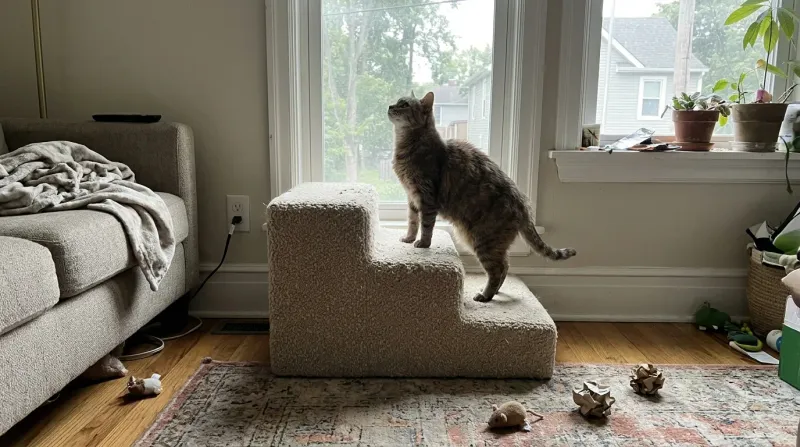
For senior cats, kittens still mastering their balance, or cats recovering from injury, a tiered upholstered ottoman serves as a safe, low-profile cat tree. Two cushioned steps wrapped in durable boucle or performance tweed lead up to a bolstered window-height lounger. The internal hollow frame can double as hidden storage for extra blankets or pet supplies, while the soft fabric edges prevent bruising if an older cat misjudges a step.
19Geometric Hexagon Wall Condo Grid
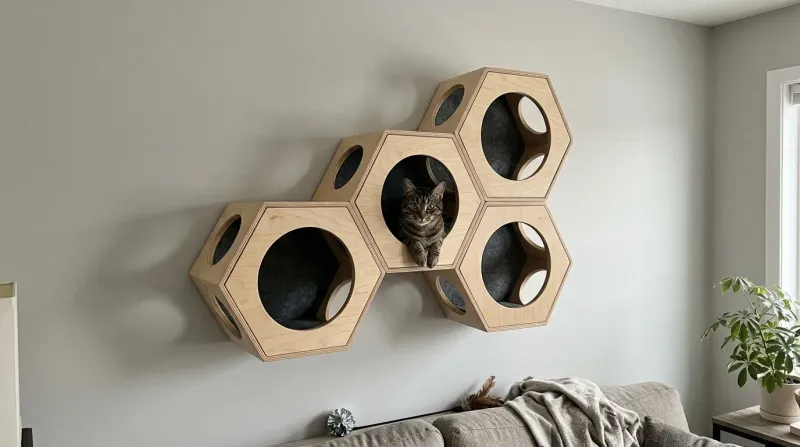
Arrange three to five wooden hexagon boxes in a honeycomb cluster on your living room wall, cutting side portals between adjacent pods. Cats love hopping from one enclosed cubby to the next, poking their heads out of front circular openings to watch household activity. Line each interior flat base with self-adhesive felt pads for warmth and traction, and mount every hexagon directly into wall studs to support full-grown adult cats safely.
How to Choose a Safe and Practical Cat Tree
A stylish design only works if your cat actually feels secure using it. Cats instinctively seek high vantage points to survey their territory, so look for structures with at least one perch positioned near eye level or higher, ideally beside a sunny window.
- Check base weight and stability: Heavy breeds like Maine Coons or Ragdolls generate significant momentum when jumping. Choose a tower with a wide, weighted hardwood base—or anchor tall units directly into wall studs—to prevent dangerous tipping. For more heavy-duty setups, explore our guide on cat trees for large cats that stay sturdy and safe.
- Adjust for age and mobility: Kittens and senior cats with arthritis struggle with wide vertical gaps. Select stepped designs with platforms spaced 10 to 14 inches apart and cushioned, non-slip surfaces so older joints are protected during descent.
- Verify non-toxic materials: Ensure natural wood branches or DIY frames are built from pet-safe hardwoods like oak, birch, or kiln-dried pine (kiln-drying removes the aromatic oils and resins found in raw pine that can irritate cats). Avoid cedar or pressure-treated lumber, and keep real foliage out of reach unless you verify it is safe—lilies, pothos, and philodendrons are toxic to cats if chewed.
DIY vs. Buying: Cost and Space Considerations
Deciding between building your own cat tower and purchasing a designer piece comes down to budget, tools, and floor space. Ready-made modern cat trees crafted from bent plywood, solid oak, and replaceable wool felt pads typically cost between $150 and $500, offering polished finishes with minimal assembly time.
Building your own structure usually cuts material costs to $60–$150 using plywood boards, thick sisal rope, and heavy-duty brackets. A custom build lets you tailor platform heights to awkward corners or high ceilings. If you want to build a custom piece from scratch, follow our step-by-step tutorial on how to build a sturdy DIY cat tree on a budget.
The best cat tree blends cleanly into your home while honoring your cat's daily need to climb, scratch, and observe from above. Start by measuring your available floor or wall space, anchor tall structures securely into studs, and place the highest perch beside a sunny window so your pet enjoys the view right away.
Frequently asked questions
Is it cheaper to build or buy a modern cat tree?
Building your own cat tree is usually cheaper, costing $60 to $150 for plywood, sisal rope, and hardware compared to $150 to $500 for designer retail towers. However, buying ready-made saves hours of cutting and sanding while offering refined bent-wood finishes.
What can I use instead of a traditional cat tree?
You can use wall-mounted floating shelves, a sturdy leaning ladder bookshelf, window suction hammocks, or a cleared top shelf on an anchored bookcase. Adding non-slip felt pads and a separate vertical sisal scratching post gives your cat the same vertical enrichment.
What kind of cat tree do cats like the most?
Most cats prefer tall, rock-solid structures positioned near a window where they can watch birds and outdoor movement. They favor wide top perches with raised edges for security, thick natural sisal posts for full-body stretching, and enclosed cubbies for quiet daytime naps.
How tall should a cat tree be for an indoor cat?
An ideal cat tree for healthy adult cats is at least 4 to 6 feet tall, placing the top perch near or above human eye level. For kittens or senior cats with joint stiffness, choose stepped designs under 3 to 4 feet with closely spaced platforms.

Nathan Brooks
Nathan Brooks runs Farmingzoom to help loving pet owners create safe, enriching homes for their animals. He cares deeply about responsible pet care and focuses on making everyday decisions simpler for fellow owners.…