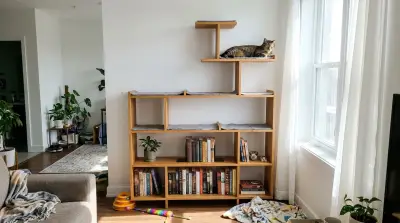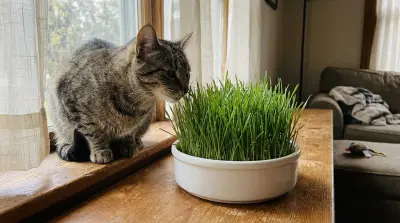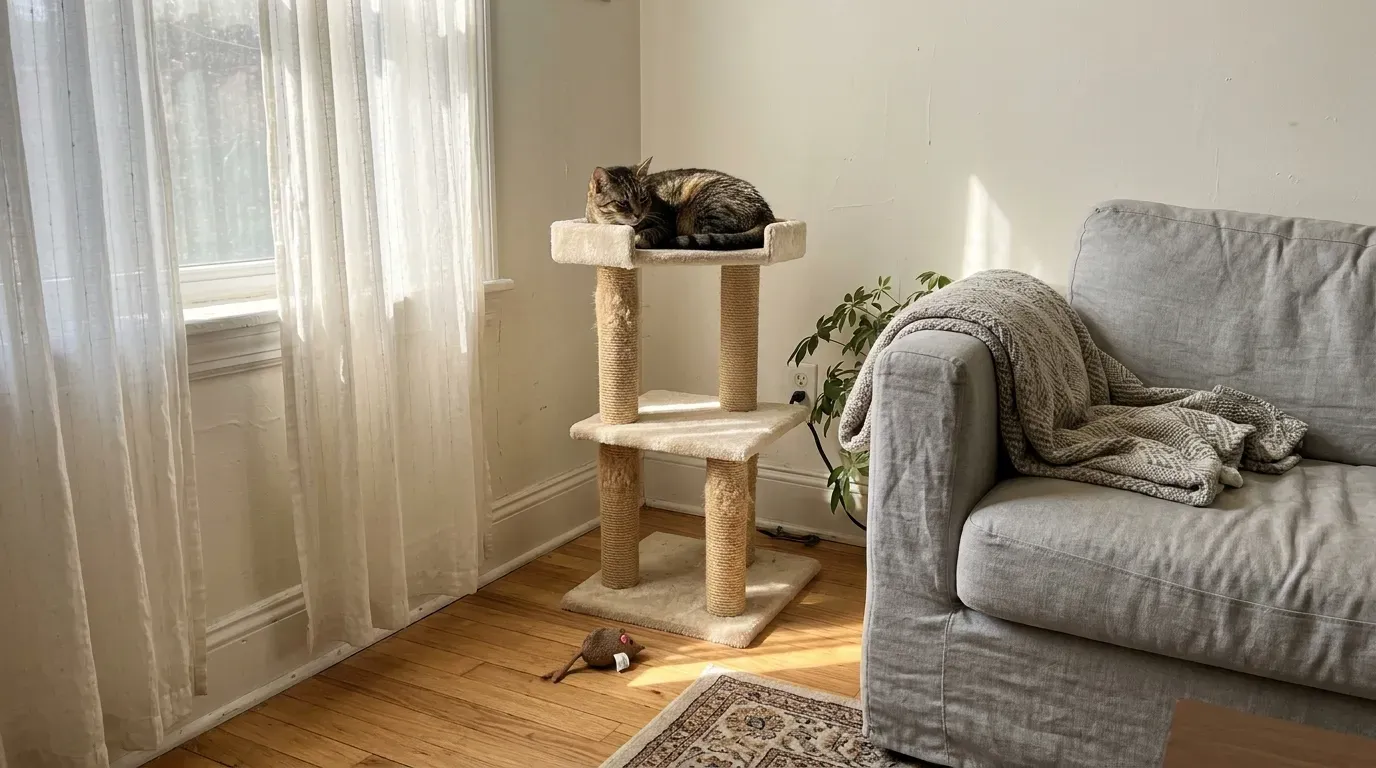
Small cat trees for apartments give indoor cats essential vertical territory, scratching surfaces, and cozy napping spots without taking over limited living room floor space. By choosing designs with base footprints generally under 20 inches wide (and up to 24 inches for litter-box enclosures) alongside weighted bottoms, renters can keep narrow hallways, studio corners, and bedroom nooks clutter-free while preventing dangerous tipping.
Whether you share a studio with an energetic kitten or a senior cat who needs low, accessible steps, matching the tower style to your floor plan matters. The styles below highlight compact builds, stability features, and best room placements so you can compare your options at a glance.
| Cat Tree Style | Typical Base Width | Best Placement | Ideal Cat Profile |
|---|---|---|---|
| Corner Triangular Tower | 15–19 in | 90-degree room corners | Active adult cats |
| Single-Post Perch Tower | 14–16 in | Beside sofas or desks | Small to medium cats |
| Under-30-Inch Low Condo | 16–19 in | Under windowsills | Senior or disabled cats |
| Compact Multi-Perch Mini Tree | 14–18 in | Narrow wall gaps | Agile climbers and kittens |
| End-Table Cubby Hybrid | 16–18 in | Next to beds or couches | Shy cats seeking hideaways |
| Slim Tiered Sisal Pillar | 15–18 in | Entryways and hallways | Heavy daily scratchers |
| Radiator-Height Window Tree | 16–19 in | In front of sunny windows | Bird-watching sunbathers |
| Two-Tier Hammock Stand | 17–19 in | Bedroom corners | Curled-up sleepers |
| Barrel-Style Scratching Condo | 15–18 in | Living room nooks | Cats who love enclosed caves |
| Low-Step Ramp Tower | 18–20 in | Beside low beds | Kittens and arthritic seniors |
| Slim Wood-Frame Modern Tree | 16–19 in | Open studio layouts | Style-conscious renters |
| Basket-Top Compact Tower | 15–17 in | Desk corners | Cats who prefer rimmed beds |
| Dual-Post Mini Bridge | 18–20 in | Along blank walls | Two-cat apartment households |
| Freestanding Narrow Ladder Tree | 14–16 in | Tight closet-side gaps | High-energy jumpers |
| Litter-Hideaway Mini Tower | 20–24 in | Bathroom or laundry nooks | Studio apartments |
1Corner Triangular Tower
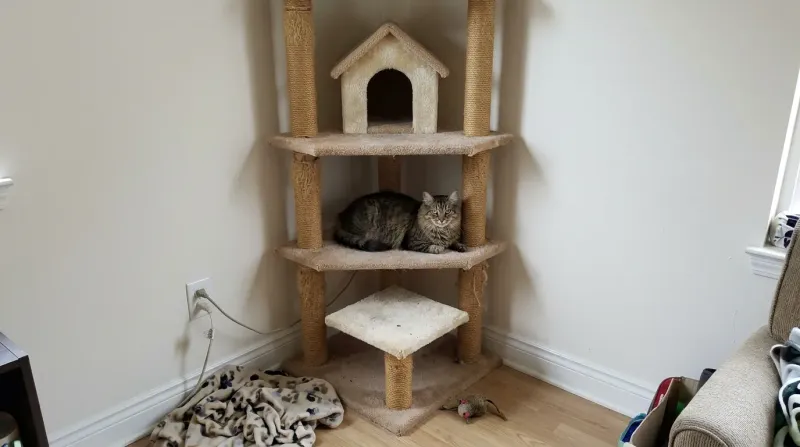
Typical Base Width: 15–19 in · Best Placement: 90-degree room corners · Ideal Cat Profile: Active adult cats Built with a right-angled base board, this tower tucks flush against two intersecting walls where standard square bases waste floor space. While the two walls block backward and sideways tipping, you still need a heavy weighted base or an anti-tip wall strap to keep the exposed front corner from pitching forward into the room when your cat leaps off. Choose a model with full-length sisal-wrapped front posts so your cat can stretch their back muscles while sharpening claws.
2Single-Post Perch Tower
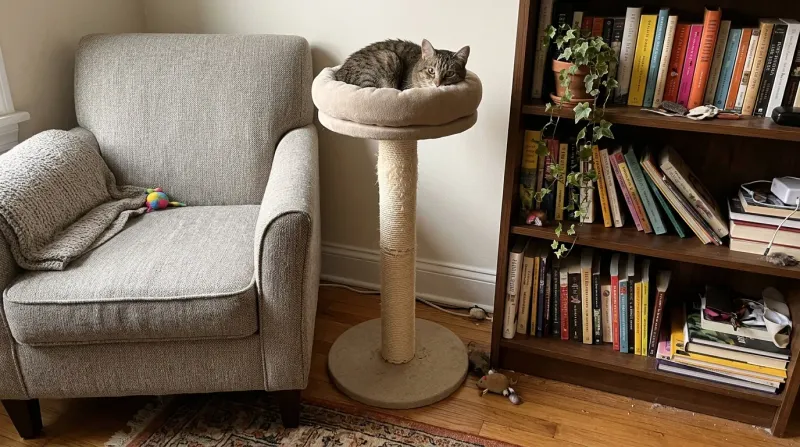
Typical Base Width: 14–16 in · Best Placement: Beside sofas or desks · Ideal Cat Profile: Small to medium cats Featuring one thick central scratching column topped with a padded bolster bed, this streamlined design slips easily between a couch arm and a bookcase. Because all weight sits directly over the center of a heavy circular or square base, it resists wobbling during routine scratching. Keep total height around 24 to 30 inches so a single column stays balanced without wall anchors.
3Under-30-Inch Low Condo
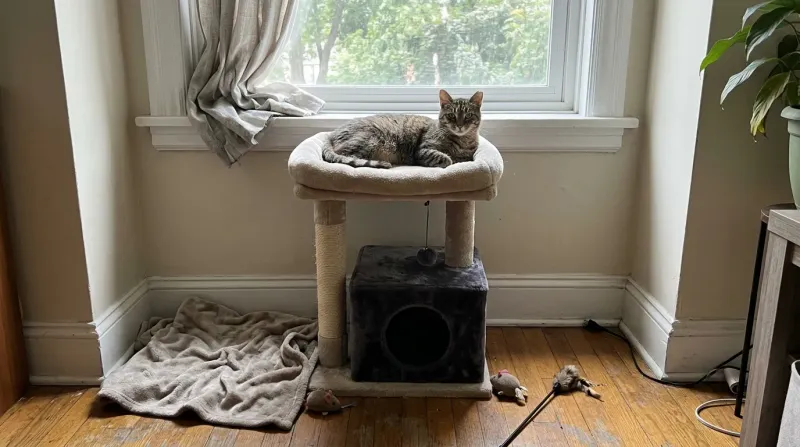
Typical Base Width: 16–19 in · Best Placement: Under windowsills · Ideal Cat Profile: Senior or disabled cats Standing 30 inches tall or less, this low-profile unit combines a ground-level enclosed cave with a shallow rooftop lounge pad. Senior cats, arthritic pets, and tripod cats gain an elevated vantage point without risking painful jumps onto hardwood or tile floors. Place it directly beneath a living room window so older pets can watch outdoor birds safely from a supportive cushion.
4Compact Multi-Perch Mini Tree
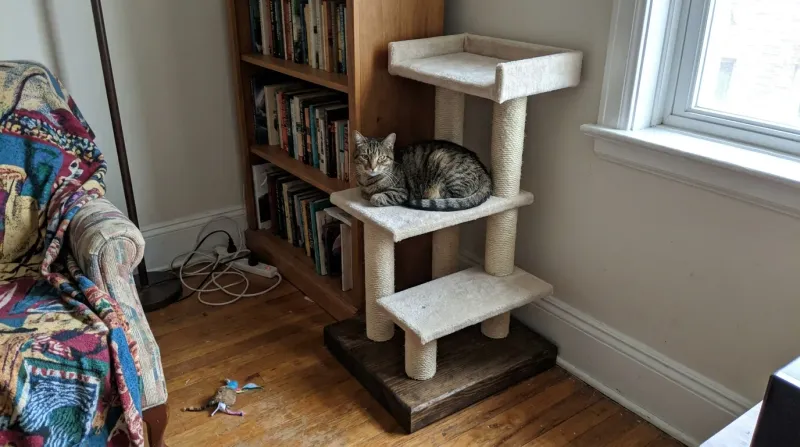
Typical Base Width: 14–18 in · Best Placement: Narrow wall gaps · Ideal Cat Profile: Agile climbers and kittens Standing 24 to 36 inches tall, this compact mini tree stacks three closely staggered ledges above a thick, heavy base board to stay well within a narrow under-20-inch footprint. Small staggered platforms spiral upward, giving energetic apartment cats an engaging climbing route without the ceiling height limits or top-heavy sway of full-height towers. Choose a model with at least two sisal-wrapped support posts so the upper perches stay rigid during fast leaps.
5End-Table Cubby Hybrid
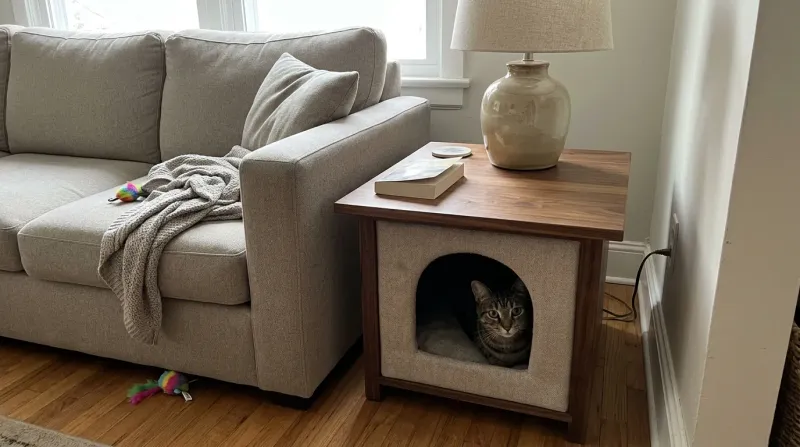
Typical Base Width: 16–18 in · Best Placement: Next to beds or couches · Ideal Cat Profile: Shy cats seeking hideaways Shaped like a compact nightstand with a flat wooden tabletop, this dual-purpose piece holds your lamp or coffee mug while hiding a plush cat cave underneath. A side-mounted sisal scratching panel protects nearby upholstery from claw marks. For more dual-use layouts that disguise pet gear in small rooms, explore cat tree ideas for modern homes.
6Slim Tiered Sisal Pillar
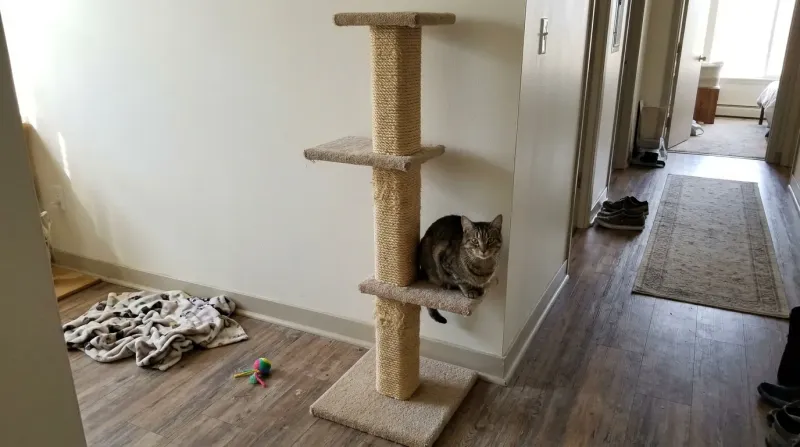
Typical Base Width: 15–18 in · Best Placement: Entryways and hallways · Ideal Cat Profile: Heavy daily scratchers Designed primarily around thick, uninterrupted sisal rope columns, this narrow tower lets cats dig their claws in at full body extension. Two small side ledges offer quick rest stops without jutting far into narrow apartment walkways. Natural woven sisal outlasts soft carpet coverings and prevents cats from confusing their tower with your living room rug.
7Radiator-Height Window Tree
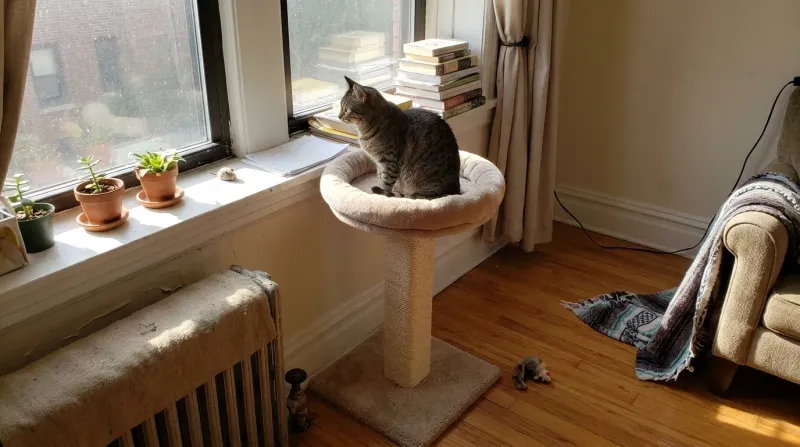
Typical Base Width: 16–19 in · Best Placement: In front of sunny windows · Ideal Cat Profile: Bird-watching sunbathers Sized specifically to match standard 28-to-32-inch apartment windowsill heights, this compact tree extends the window ledge into a cushioned sunbathing deck. Your cat gets warm afternoon light and street-level entertainment without precariously balancing on narrow plaster sills. Position the tree beside the radiator or at least 12 to 18 inches away from active heating elements, and avoid placing carpeted or particleboard trees directly against hot radiators where heat can cause burns, warping, or adhesive off-gassing.
8Two-Tier Hammock Stand
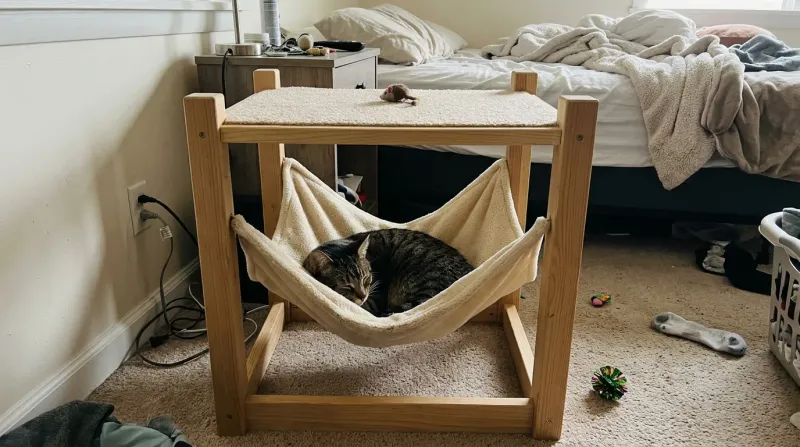
Typical Base Width: 17–19 in · Best Placement: Bedroom corners · Ideal Cat Profile: Curled-up sleepers Replacing bulky boxed condos with a suspended fabric hammock and a low upper perch keeps this frame visually airy in cramped bedrooms. Cats who love burrowing into soft blankets sink comfortably into the cradled sling, which distributes their weight low to the floor for better stability. Look for removable, machine-washable fleece covers to keep fur and dander manageable.
9Barrel-Style Scratching Condo
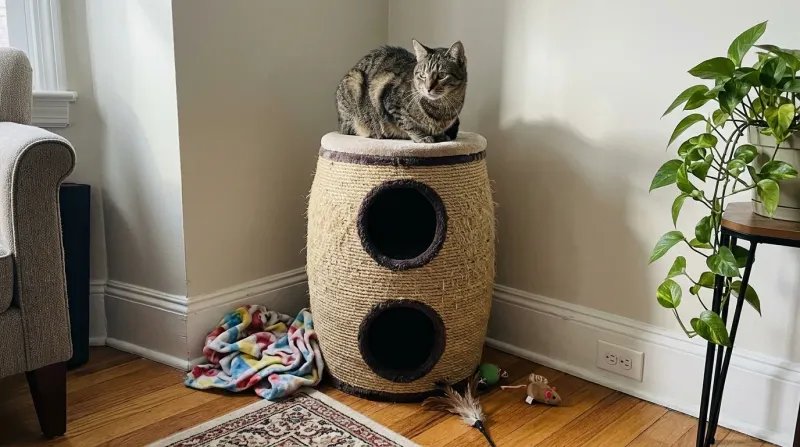
Typical Base Width: 15–18 in · Best Placement: Living room nooks · Ideal Cat Profile: Cats who love enclosed caves Wrapped entirely in woven sisal around a rigid cylindrical body, a scratching barrel turns the whole exterior into a 360-degree scratching surface. Inside, stacked cushioned cubbies give nervous cats a dark, den-like retreat away from apartment hallway noises, while the flat top serves as a lookout perch. Its compact round footprint eliminates sharp corners in tight walkways.
10Low-Step Ramp Tower
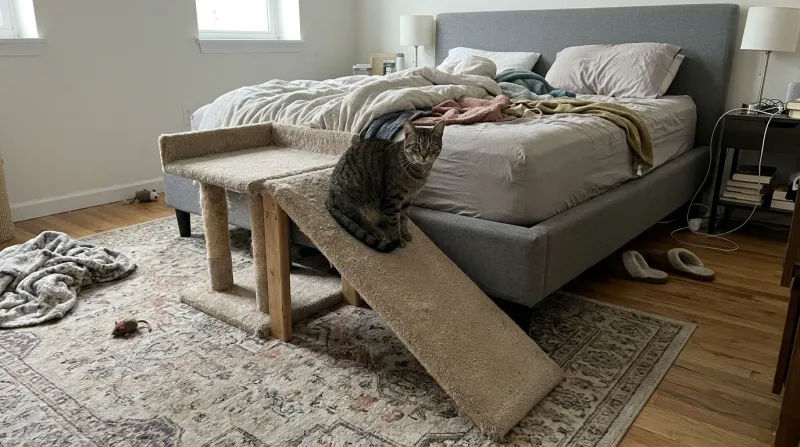
Typical Base Width: 18–20 in · Best Placement: Beside low beds · Ideal Cat Profile: Kittens and arthritic seniors Equipped with a slanted carpeted or sisal ramp leading to a mid-level platform, this design removes the impact of jumping up and down. Young kittens building coordination and older cats with stiff hips climb smoothly at their own pace. Keep the ramp angle gentle and verify that the bottom edge rests firmly against the base board so it cannot slide.
11Slim Wood-Frame Modern Tree
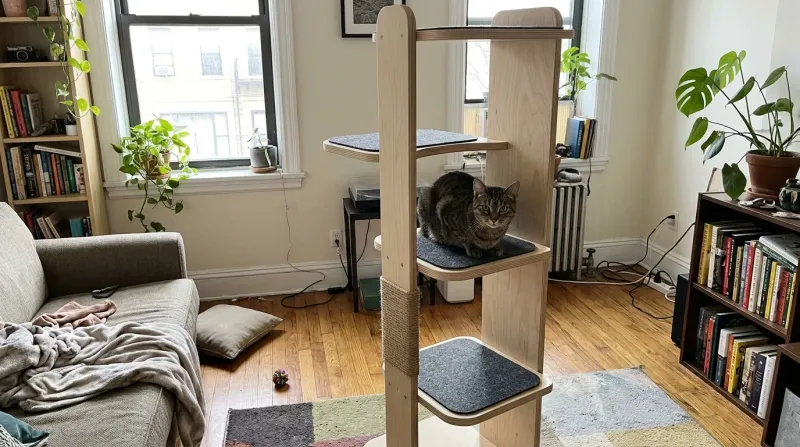
Typical Base Width: 16–19 in · Best Placement: Open studio layouts · Ideal Cat Profile: Style-conscious renters Crafted from laminated birch or rubberwood with washable felt pads, this slender tower avoids the bulky carpeted look that can crowd a studio apartment. Smooth wooden surfaces wipe clean quickly with a damp cloth, and replaceable Velcro cushions simplify hair removal. Because smooth wood is slippery during fast leaps, make sure every platform includes a non-slip mat.
12Basket-Top Compact Tower
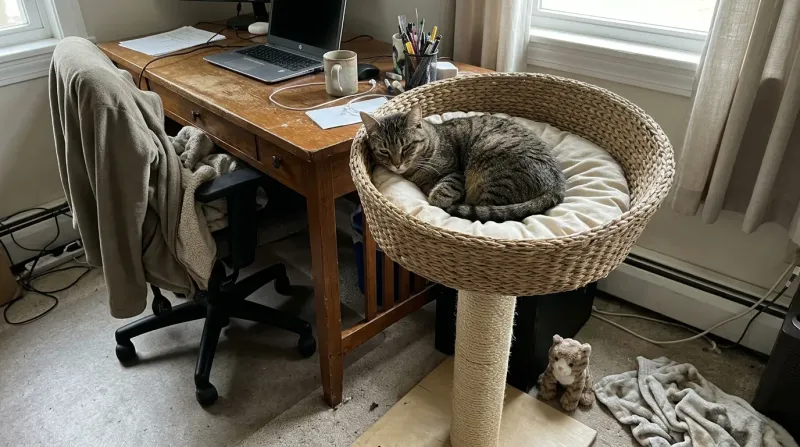
Typical Base Width: 15–17 in · Best Placement: Desk corners · Ideal Cat Profile: Cats who prefer rimmed beds Ideal for work-from-home renters, a narrow tower topped with a deep woven or plush basket keeps your cat happily curled up beside your desk instead of walking across your keyboard. The high curved rim supports your cat's head and prevents rolling during deep sleep. Keep dangling toy strings short or remove them entirely to eliminate any entanglement hazard while you are away.
13Dual-Post Mini Bridge
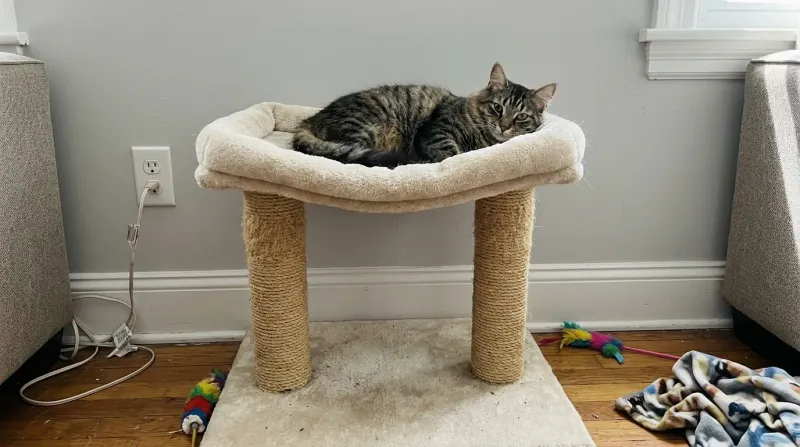
Typical Base Width: 18–20 in · Best Placement: Along blank walls · Ideal Cat Profile: Two-cat apartment households Supporting a single shared top perch on two parallel scratching posts doubles structural rigidity while keeping depth under 14 inches. Two small-to-medium cats can scratch side by side or share the upper lounge without the top-heavy sway common in single-post towers. Check that the combined weight of both cats stays below the manufacturer's load limit.
14Freestanding Narrow Ladder Tree
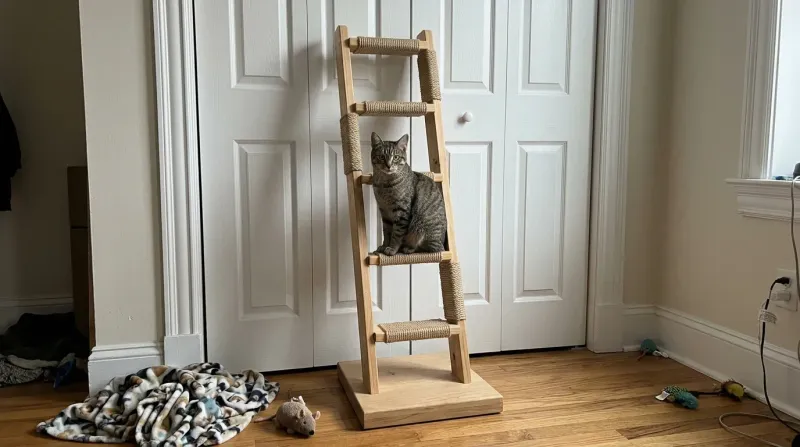
Typical Base Width: 14–16 in · Best Placement: Tight closet-side gaps · Ideal Cat Profile: High-energy jumpers Built with an angled A-frame or vertical ladder profile anchored to a thick, weighted floor base, this freestanding tree slips into narrow wall gaps without requiring lease-violating screws or wall brackets. Staggered wooden or sisal-wrapped steps let active cats climb rapidly to a compact top lookout while keeping the base footprint slim. Space the steps vertically so your cat can climb cleanly without hitting their head.
15Litter-Hideaway Mini Tower
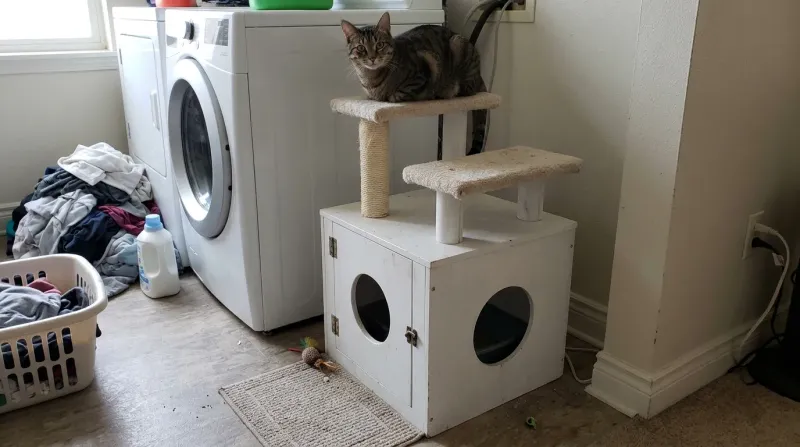
Typical Base Width: 20–24 in · Best Placement: Bathroom or laundry nooks · Ideal Cat Profile: Studio apartments Combining an enclosed ground cabinet for a litter pan with two compact upper perches, this vertical unit consolidates two bulky pet necessities into one footprint. A 20-to-24-inch exterior width accounts for wall thickness and the interior litter-trapping divider so a standard pan fits inside, though narrower models require a compact pan under 16 inches wide. Review additional cat trees with litter box enclosures to confirm interior dimensions fit your litter pan comfortably.
How to Test Stability Before Letting Your Cat Climb
A narrow base under 20 inches wide naturally has a higher center of gravity, so testing stability before your cat leaps onto the top perch prevents injuries and broken furniture. Press firmly downward and sideways on the highest platform with one hand to mimic the force of a running jump. The base should stay flat on the floor without lifting at the opposite edge.
- Check base thickness: Look for base boards at least 1 inch thick made of dense particleboard or solid wood rather than hollow plastic.
- Place against solid walls: Positioning a compact tree flush against two corner walls blocks tipping in two directions immediately.
- Compare alternatives carefully: If your cat weighs over 15 pounds, browse cat trees built for large cats or consider suction-cup window perches and renter-friendly tension rods instead of freestanding mini towers.
- Inspect hardware monthly: Tighten recessed bolts regularly, as daily scratching gradually loosens single-post joints.
Matching Platform Height to Your Cat's Age and Health
Veterinarians routinely emphasize vertical enrichment to reduce indoor stress, yet vertical height must match your pet's physical mobility. Kittens and healthy young adults easily navigate 14-to-18-inch gaps between platforms, whereas senior cats or pets recovering from orthopedic injuries struggle with wide vertical leaps.
For older cats or pets with joint stiffness, choose models under 30 inches tall with steps spaced no more than 8 to 10 inches apart, or add carpeted ramps so they never have to jump down onto hard apartment floors. If your cat suddenly stops jumping onto favorite perches, limps, or cries when picked up, schedule a veterinary exam to check for arthritis or soft-tissue pain rather than assuming they simply lost interest in climbing.
Choosing small cat trees for apartments comes down to measuring your tightest corner first, checking that the base stays within a compact 14-to-20-inch footprint (or up to 24 inches for litter-box cabinets), and testing top-perch stability before your cat climbs. Pair sturdy sisal scratching posts with platform heights suited to your cat's age so every square inch works hard for both of you.
Frequently asked questions
What is the best cat tree size for a small apartment?
Look for a base footprint between 14 and 20 inches wide and a height of 24 to 36 inches for freestanding small cat trees. This compact footprint fits neatly beside sofas or in corners while providing a weighted base that resists tipping during daily play.
How do I keep a small cat tree from tipping over?
Place the tree flush against two corner walls, choose models with thick wooden base boards at least 1 inch thick, and keep heavy condos near the bottom. If your cat is an energetic jumper, select a floor-to-ceiling tension pole or secure the frame with a wall strap.
What can I use instead of a cat tree in a tiny studio?
Suction-cup window hammocks, over-the-door hanging climbers, and wall-mounted shelves give indoor cats vertical height with zero floor footprint. Always check weight ratings on suction mounts and keep hazardous houseplants like lilies far away from newly reachable windowsills.
Are short cat trees better for senior cats?
Yes, cat trees under 30 inches tall with closely spaced platforms or carpeted ramps are much safer for older cats. Short spacing reduces joint strain from high jumps, though you should consult a veterinarian if your senior cat suddenly avoids climbing.

Nathan Brooks
Nathan Brooks runs Farmingzoom to help loving pet owners create safe, enriching homes for their animals. He cares deeply about responsible pet care and focuses on making everyday decisions simpler for fellow owners.…