Time needed
1 h
What you need
- Spring-loaded window cat door insert
- Self-adhesive closed-cell foam weatherstripping
- Cylindrical foam window draft blocker
- Two aluminum sliding window track locks
- Exterior-grade cedar or PVC trim boards (for tunnel collar)
- Exterior wood screws
- Painter's tape
Tools
- Tape measure
- Utility knife or scissors
- Cordless drill and driver bits
- Hand saw or miter saw
- Small torpedo level
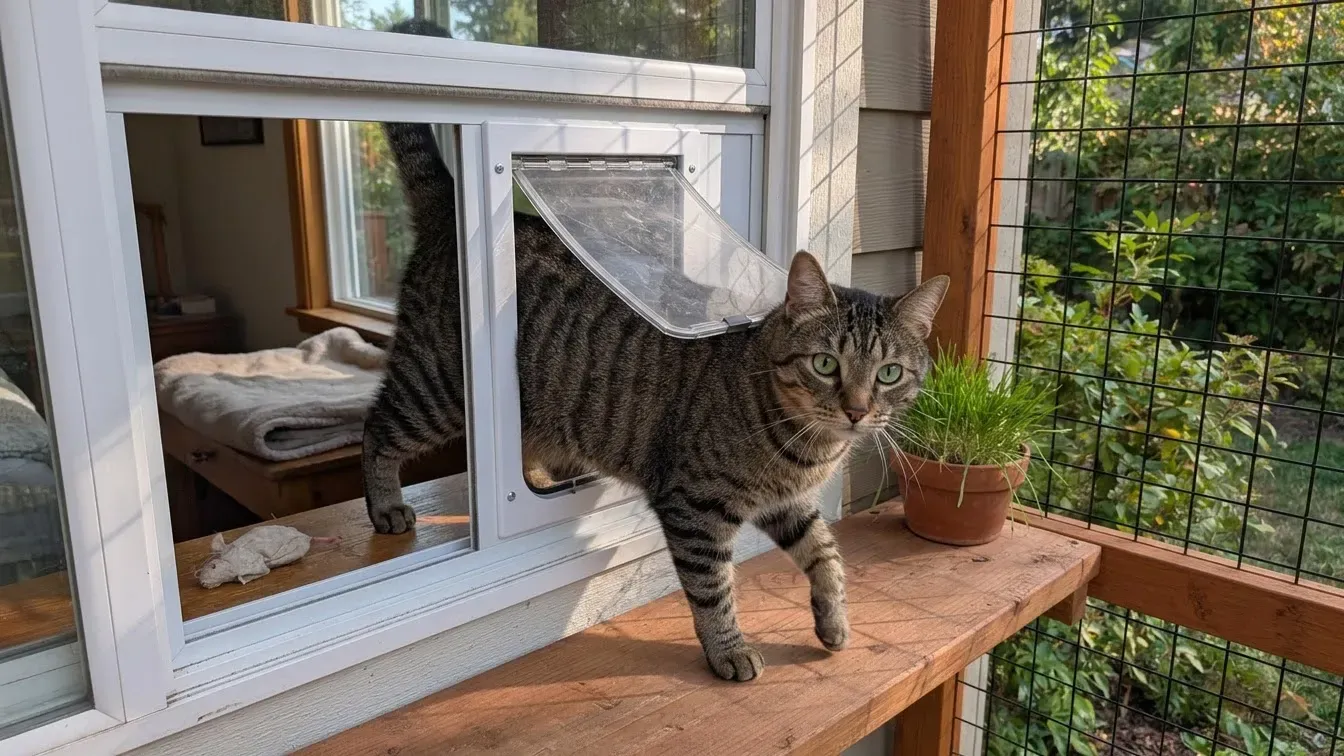
Installing a removable window cat door insert lets you connect a bedroom window directly to an outdoor catio without cutting into walls or replacing glass panes. By pairing a spring-loaded aluminum or vinyl panel with weatherstripping and a rigid tunnel collar, you create a secure, draft-free passage for strictly indoor cats.
Because an indoor cat relies entirely on physical barriers to stay out of danger, every gap between the window track, sash, and patio enclosure must be sealed tight. The steps below walk through measuring your sash, locking the insert in place, and bridging the exterior gap to your catio frame.
- 1
Measure Your Window Track and Cat
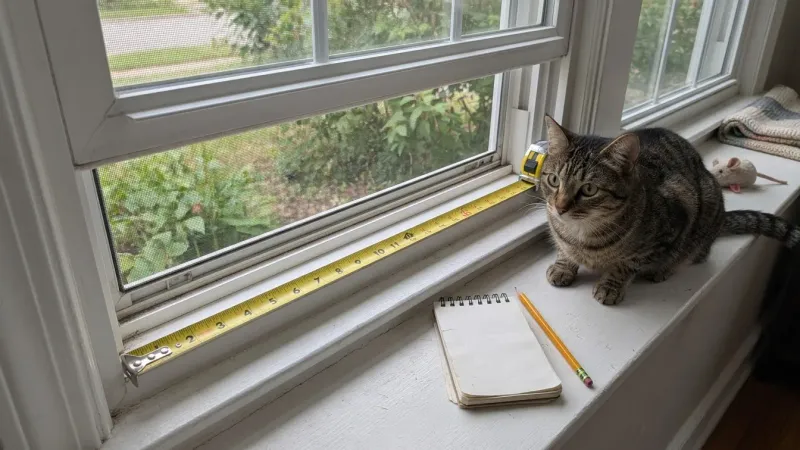
Raise the lower bedroom window sash and measure both the exact inside width of the window track from left to right and the available vertical opening height so the insert panel matches the sash travel without leaving an unsealable gap. Check that your cat's shoulder height and chest width fit comfortably through the flap opening using our guide on cat door dimensions. Senior cats or larger breeds like Maine Coons need a low step-over threshold and a wider opening so they do not strain their hips.
- 2
Remove the Existing Window Screen
Release the spring pins or tension clips holding the exterior window screen frame in place and lift it out of the window track. Store the screen flat in a closet or garage so you can reinstall it later if you move. Never leave loose fiberglass mesh hanging across the catio opening, as indoor cats can push past unframed edges.
- 3
Align Catio Height With the Sill
Position your freestanding or wall-mounted catio against the exterior wall so its entry opening lines up directly with the bedroom window sill. If the catio floor sits lower than the sill, attach a carpeted ramp or non-slip wooden shelf inside the enclosure right below the window. Ensure the catio frame sits flush against the exterior siding or trim before fastening it down.
- 4
Apply Foam Weatherstripping to the Track
Wipe dust and grit out of the bottom window sill channel and side tracks using a damp cloth and let them dry completely. Press self-adhesive closed-cell foam weatherstripping along the bottom edge and both side channels of the window cat door insert. Adding this compressible layer stops cold air leaks and prevents aluminum frames from rattling in the wind.
- 5
Seat the Cat Door Insert
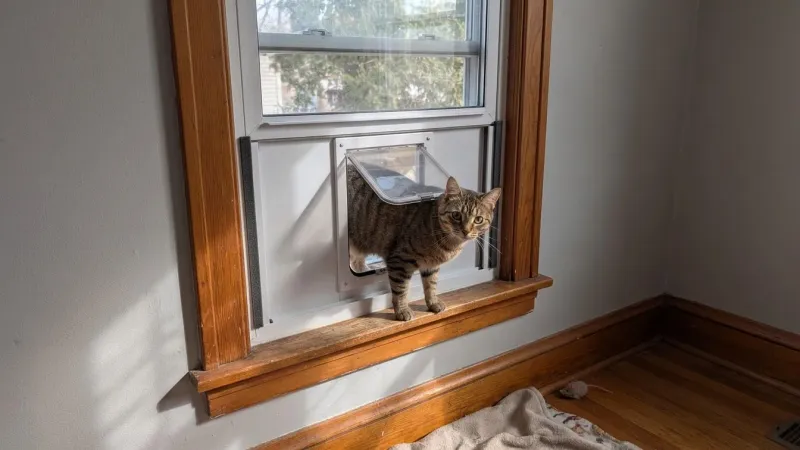
Place the fixed end of the window insert firmly into one side of the window track, then compress the spring-loaded end to slide the opposite side into place. Check with a level to confirm the panel sits straight and rests flat on the bottom sill. Lower the bedroom window sash gently until the bottom rail seats squarely into the top U-channel of the insert.
- 6
Lock Both Window Sashes Securely
Raising the lower sash disengages the standard window latch, leaving both sashes vulnerable to sliding. Because upper and lower sashes travel in separate offset tracks on standard double-hung windows, clamp one heavy-duty aluminum track lock in the lower sash's track directly above the raised lower sash so it cannot be lifted higher. Insert a second lock or track pin in the upper sash's track to prevent the upper sash from being pulled down from outside.
- 7
Seal the Center Sash Gap
Inspect the horizontal seam at the meeting rail between the raised lower sash and the upper sash glass or frame. Cut compressible foam weatherstripping or a flexible draft snake to the exact width of the glass, sizing it so it seals the gap without forcing the sashes apart or damaging existing weatherstripping. For extra cold-weather protection, follow our tips to seal an insulated window cat door against drafts.
- 8
Bridge and Seal the Exterior Tunnel
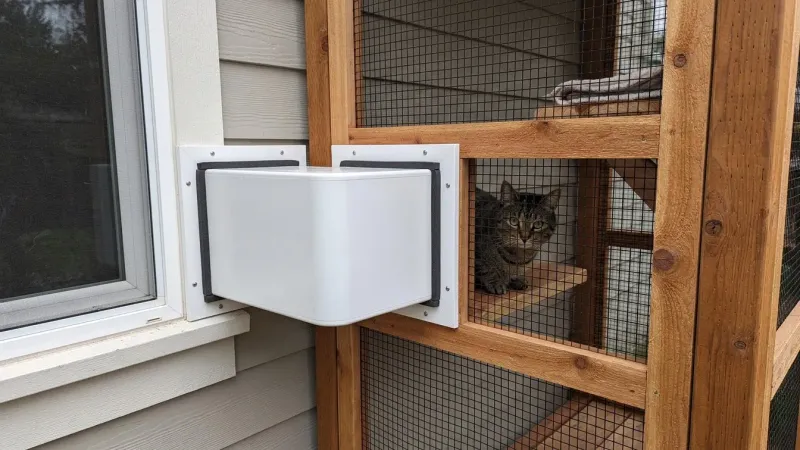
If you are using a freestanding catio, anchor it securely to the exterior wall or ground first so shifting will not break the seal or trap moisture against your siding. Measure the depth between the outside of the window insert and the catio entry frame, then build a short rectangular collar out of exterior-grade cedar or PVC trim boards with a slight drainage bevel or flashing at the top so rainwater sheds away from the house. Secure the collar to the catio frame with wood screws and press foam gasket tape between the collar and the window casing so bugs, rain, and curious paws cannot slip through.
- 9
Train Your Cat to Use the Flap
Tape the cat flap open for the first two or three days so your cat can see straight into the catio and walk through without resistance. Place favorite treats, catnip, or a familiar blanket just inside the enclosure to encourage calm exploration. Once your cat walks through confidently, lower the flap halfway, then let it hang closed while staying nearby to supervise.
Choosing the Right Window Insert and Flap Style
Standard window inserts come in two main orientations: horizontal panels built for vertical double-hung windows and vertical panels built for horizontal sliding windows. If you have a standard vertical window, inserts made for vertical double-hung sash windows sit across the bottom track and hold the lower sash up.
For a bedroom setup, pay close attention to flap noise and locking options:
- Four-way manual locks: Let you set the flap to open both ways, in-only, out-only, or fully locked at night so your cat stays inside while you sleep.
- Brush seals and magnetic catches: Keep the flap from swinging in the wind and reduce drafts around the frame.
- Quiet soft-vinyl flaps: Prevent loud plastic clattering right next to your bed during early morning patrol hours.
Common Mistakes That Compromise Safety or Comfort
Even a sturdy catio cannot protect an indoor cat if the transition point at the window shifts or leaves gaps. Watch for these three frequent issues during installation:
- Leaving the upper sash unpinned: Raising the lower sash disables your window's built-in center latch, meaning an intruder or a strong push could slide either sash open unless you add secondary track locks.
- Ignoring the glass overlap gap: When a double-hung window sits partially open, a horizontal air gap forms where the top rail of the lower sash meets the glass of the upper sash. Always stuff a foam draft blocker into this seam.
- Leaving screen mesh in the tunnel path: Do not simply cut a loose slit in a standard fiberglass window screen; cats can tear through soft mesh or snag their claws. Remove the screen or frame the opening with rigid wood or PVC trim.
Taking an extra twenty minutes to lock both sashes and gasket the exterior tunnel turns a simple window insert into a secure, weather-tight gateway for your cat. Check the foam seals and track locks every season to make sure nothing has shifted, and keep the flap locked overnight so your cat rests safely indoors.
Sources: International Cat Care · ASPCA
Frequently asked questions
Can you put a cat door in a window without permanent damage?
Yes. Spring-loaded window cat door inserts fit directly inside vertical or horizontal window tracks without cutting walls, drilling into vinyl frames, or altering glass panes. You simply remove the screen, seat the panel in the track, and lower the sash onto the top channel.
How do you keep a window with a cat door secure from intruders?
Raising a sash disables the built-in center latch, so you must install mechanical track locks on both the upper and lower window tracks. Choose heavy-duty aluminum clamps tightened with a thumbscrew or hex key so neither sash can be forced open from outside.
How do I stop drafts around a window cat door insert?
Line the bottom and side channels of the insert with closed-cell foam weatherstripping before seating it in the track. Then press a foam draft tube into the horizontal gap between the raised lower sash and the upper window glass.
What size window cat door does an indoor cat need?
Most adult cats under 15 pounds use a flap opening around 6 to 7 inches wide by 7 to 8 inches tall. Larger breeds or senior cats with stiff joints need an opening at least 8 inches wide with a low step-over height.

Nathan Brooks
Nathan Brooks runs Farmingzoom to help loving pet owners create safe, enriching homes for their animals. He cares deeply about responsible pet care and focuses on making everyday decisions simpler for fellow owners.…