You can buy individual cat tree replacement parts—including sisal scratching posts, perches, hammocks, and cushioned beds—to restore a worn tower for a fraction of the price of a brand-new unit. Most multi-level cat furniture relies on standardized threaded bolts that allow you to unscrew shredded pillars and twist fresh ones into place in minutes.
Before ordering spare components online, you need to check whether your tower requires brand-specific pieces or universal hardware, and measure your existing screw threads accurately. Knowing how to spot dangerous structural damage versus routine wear also ensures your cat stays safe while climbing and leaping.
Which Cat Tree Parts Can You Actually Replace?
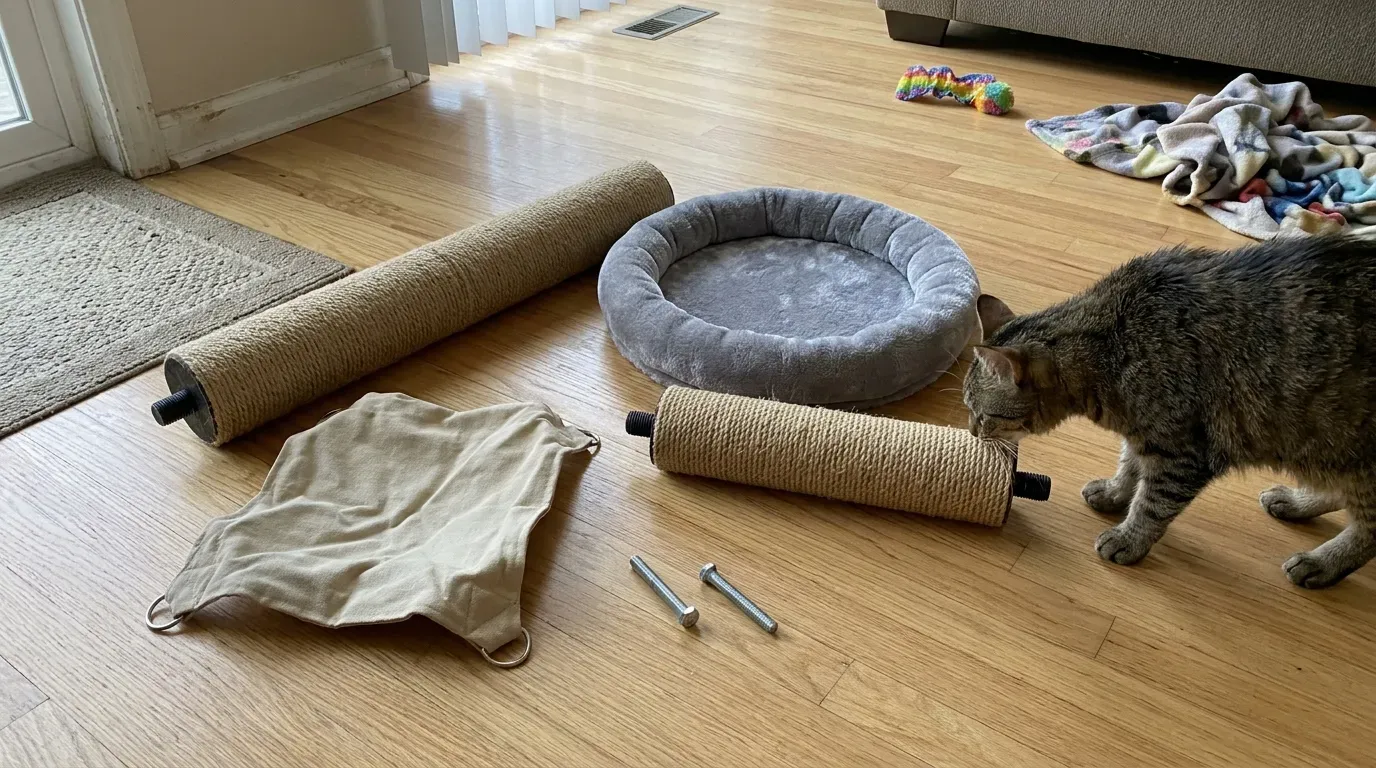
Almost every modular component above the bottom base plate can be swapped out when it wears down. Scratching posts wrapped in sisal rope or carpet take the heaviest daily abuse and are the easiest pieces to replace, often starting around $12 to $20 per post depending on length and diameter.
Beyond vertical pillars, most manufacturers and specialty repair shops stock a wide range of upper-level components:
- Top perches and platforms: Flat or bolstered ledges that mount onto a single central bolt.
- Hammocks and cradles: Fabric slings supported by metal rings that sandwich between two post sections.
- Cushions and removable covers: Washable fleece or plush pads held onto condos and beds with hook-and-loop strips or elastic bands.
- Hanging toys and play ropes: Dangling pom-poms or thick sisal ropes attached via small eye hooks or washers.
If your household includes large cat breeds like Maine Coons or Ragdolls, prioritize solid wood core posts over hollow cardboard tubes when shopping for spares. Heavy cats put immense torque on upper perches, so upgrading worn hollow pillars to solid timber extensions adds stability during fast leaps.
Brand-Specific vs. Universal Cat Tree Replacement Parts
When shopping for spare components, your options fall into two distinct categories: original manufacturer parts and third-party universal replacements.
| Feature | Brand-Specific Parts | Universal Replacement Parts |
|---|---|---|
| Best For | Known brands with model tags (e.g., Armarkat, PetPals, Cat Tree King, Majestic Pet) | Unbranded online towers, thrifted trees, or discontinued models |
| Color & Fabric Match | Exact match to original faux fur, plush, or wood stain | Neutral tones (beige, gray, brown) that blend in closely |
| Ordering Method | Ordered by exact model number or SKU | Ordered by post length, diameter, and metric bolt size |
| Build Quality | Identical to original factory materials | Often upgraded with thicker sisal rope or solid wood cores |
Check the underside of your cat tree's base board for a white manufacturer sticker listing a model number. Ordering directly from the maker guarantees exact alignment for multi-bolt platforms. If your tower has no label—common with generic marketplace purchases—universal spare parts are your best route, provided you match the hardware thread size first.
How to Measure Cat Tree Bolt and Screw Sizes Accurately
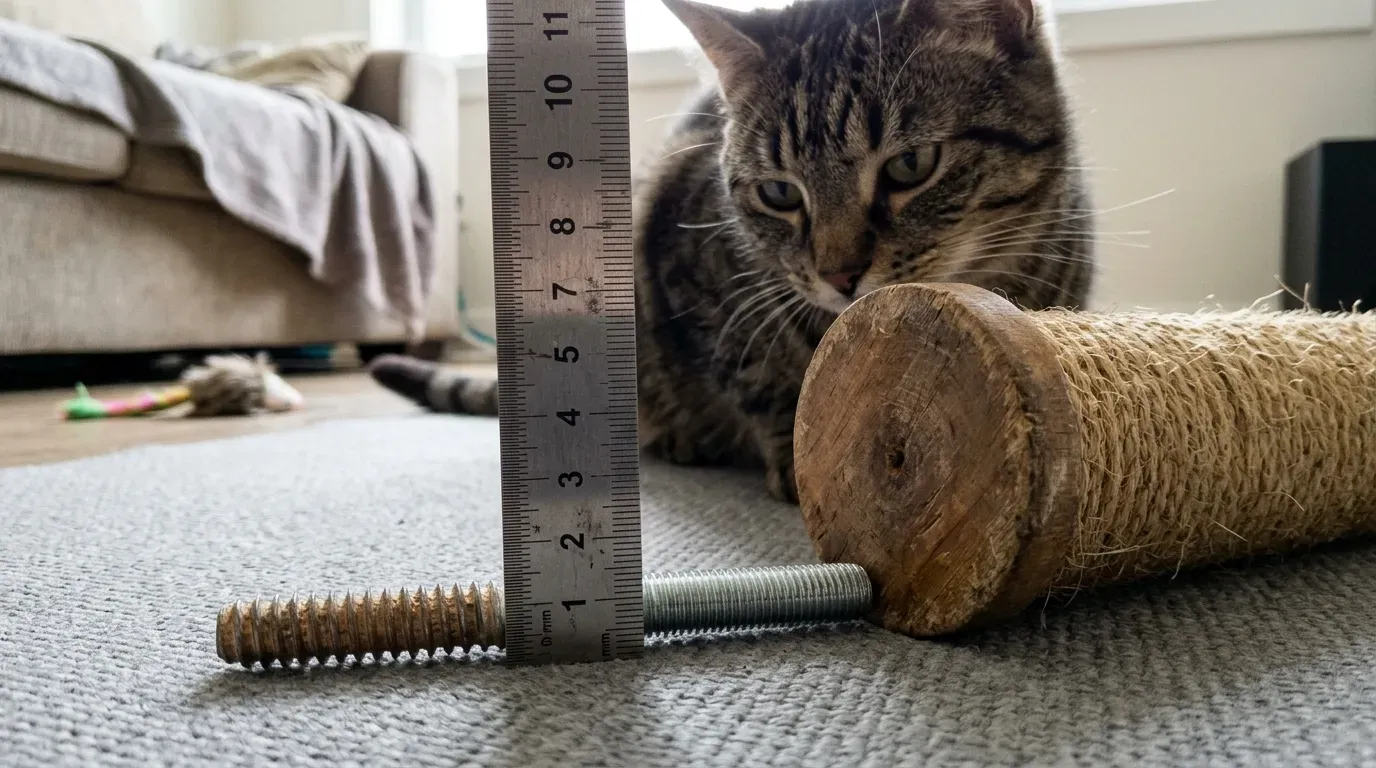
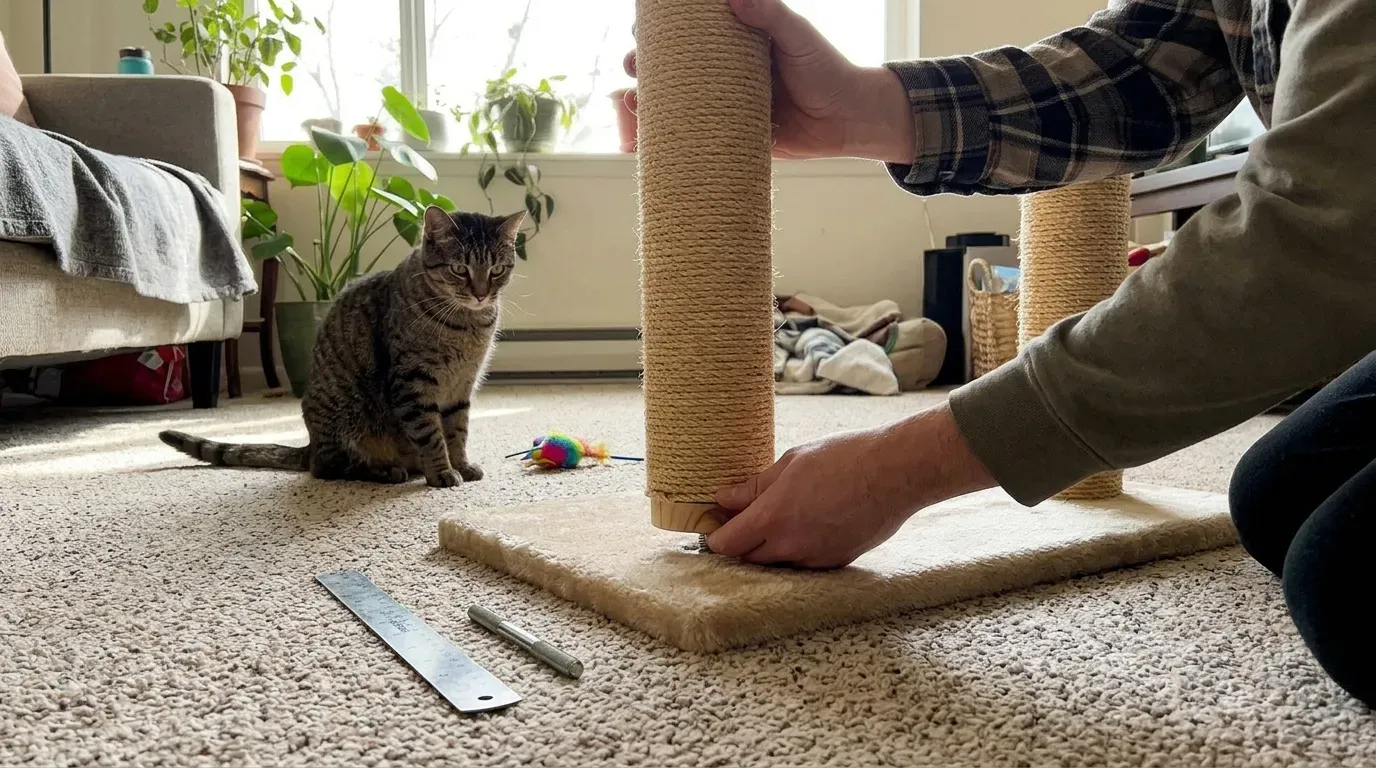
Ordering a replacement post with the wrong thread diameter is the most common mistake cat owners make. Almost all modern cat trees use metric double-ended hanger bolts or headless threaded studs, with M8 (8mm) and M10 (10mm) being the two dominant standards.
- Unscrew the worn post: Twist the damaged pillar counterclockwise until it separates from the platform below it.
- Measure the metal shaft width: Place a metric ruler or caliper across the widest part of the threaded metal rod (not the hole inside the post). An 8mm width indicates an M8 bolt; a 10mm width indicates an M10 bolt.
- Test at a local hardware store: If you do not own a metric caliper, take the loose bolt to any hardware store and test it on their thread-checker board to confirm whether it is M8 or M10.
- Measure post length and diameter: Measure the cylinder from flat end to flat end in inches or centimeters, then measure across the circular top to match the width of adjacent pillars so the next level sits flat.
Keep the original double-ended screw if it is straight and unstripped. Many replacement posts ship with new M8 or M10 bolts included, but having your original hardware on hand prevents installation delays.
Where to Buy Replacement Posts, Perches, and Hardware
Once you have your measurements or model number ready, several reliable sources supply individual cat furniture components:
- Official manufacturer websites: Brands such as Armarkat, PetPals Group, Cat Tree King, and Majestic Pet maintain dedicated spare-parts catalogs where you can filter by tower model for exact-fit cushions, ladders, and posts.
- Specialty cat tree repair shops: Independent workshops like Cat Tree Parts build heavy-duty, universal replacement pillars designed to fit across major commercial brands without needing exact model numbers.
- Online marketplaces: Searching for "M8 sisal replacement post" or "M10 cat tree pillar" on major retail sites yields dozens of generic posts in lengths ranging from 8 to 20 inches.
- Local hardware stores: For missing double-ended hanger bolts, flat washers, or hex nuts, standard hardware aisles carry metric fasteners for under a couple of dollars.
If your current tower uses thin, stapled plush fabric that tears easily, consider swapping in sturdy wood-and-sisal pieces inspired by modern cat tree designs, which hold up far better to daily clawing and wipe clean easily.
How to Remove Stuck Posts and Rewrap Sisal Yourself
Sometimes a pillar refuses to budge because the internal metal insert has rusted or the wood around the bolt has swollen. Wrap a rubber strap wrench or an old leather belt around the middle of the post to gain extra grip without crushing the tube, then turn firmly counterclockwise.
If the metal stud spins freely inside the cardboard core without unscrewing, use a handsaw to cut carefully through the cardboard tube near the base, then grip the exposed metal shaft with locking pliers to twist it out of the platform below.
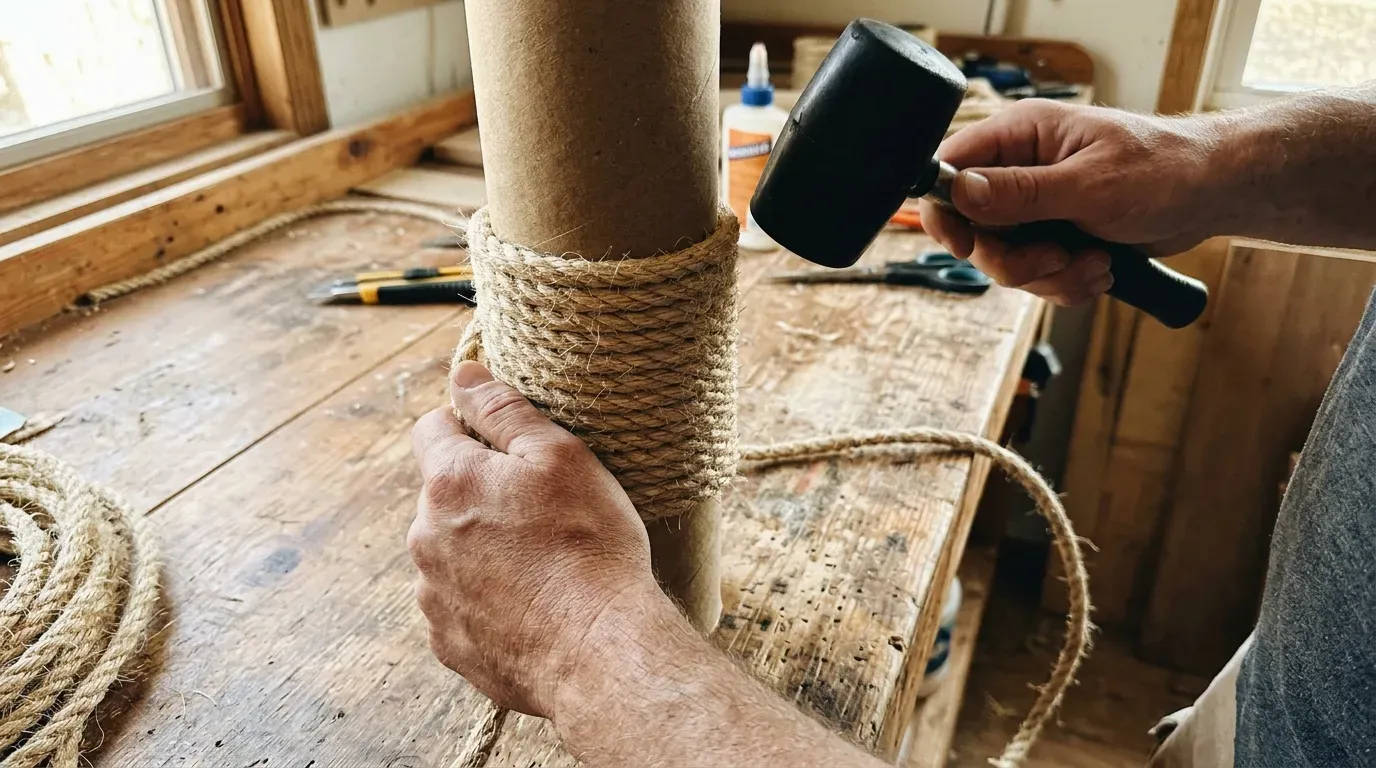
When a replacement post is unavailable in an odd length, you can rewrap the existing core yourself using untreated, natural 6mm or 8mm sisal rope:
- Strip away all shredded rope and pull out every single staple with needle-nose pliers so no sharp metal points remain exposed.
- Secure the starting end of the new rope at the bottom rim using only non-toxic hot glue or by threading and knotting the rope end through a small drilled hole in the core so no metal fasteners are embedded in the scratching surface.
- Wind the rope tightly upward, tapping every few rows downward with a rubber mallet to eliminate gaps, and glue the final coil firmly at the top edge.
Never use chemically treated or oiled sisal rope from agricultural supply aisles, as industrial oils and synthetic scents can irritate your cat's paws or cause stomach upset if ingested during grooming. If you enjoy hands-on builds, our guide on building a sturdy DIY cat tree on a budget covers safe wood and adhesive choices in detail.
When to Repair vs. Replace the Entire Cat Tree
Swapping out a frayed post or flattened cushion makes financial sense when the underlying frame remains solid, but certain types of wear create genuine safety hazards for your pet.
- Cracked or warped base plates: Particleboard bases that have absorbed moisture or split around bolt holes cannot anchor tall towers safely, increasing tip-over risk when an energetic cat launches off the top perch.
- Wobbling that returns after tightening: If you tighten every bolt and the tower still sways heavily, the internal T-nuts embedded inside the platforms have likely stripped out of the particleboard.
- Exposed staples or splintered wood: Broken cardboard tubes or splintering pressed wood can injure paw pads or tear claws during vigorous scratching sessions.
- Multiple failing tiers: Once you need more than three replacement posts plus new platforms, the combined cost and shipping often exceed the price of a new tower.
If you decide to retire an unstable tower—especially in a multi-cat household or a home with heavy jumpers—look into cat trees built specifically for large cats, which feature wider base footprints and thicker support columns. Should a cat ever catch a claw on a damaged post and show persistent limping, bleeding, or swelling around the toe, contact your veterinarian promptly to prevent infection.
Replacing worn cat tree parts takes less than half an hour once you confirm whether your tower uses M8 or M10 metric bolts. Check your base plate for a model tag first, measure your existing posts carefully, and inspect the bottom board for cracks so your cat enjoys a sturdy, safe perch for years to come.
Frequently asked questions
Are cat tree replacement posts universal?
Not all replacement posts fit every tower, though most modern cat trees use either M8 (8mm) or M10 (10mm) metric threaded bolts. As long as you match the bolt diameter, post length, and cylinder width, universal replacement pillars will fit most unbranded or major-brand cat trees.
How do I know if my cat tree uses M8 or M10 screws?
Unscrew one of your existing scratching posts and measure the width of the threaded metal rod in millimeters. An 8mm shaft is an M8 bolt, while a 10mm shaft is an M10 bolt. You can also test the loose bolt on a thread-checker gauge at any hardware store.
Can I rewrap a cat tree scratching post instead of buying a new one?
Yes, you can rewrap an intact core using untreated, natural 6mm or 8mm sisal rope and non-toxic hot glue. Remove all old staples with pliers first, wind the new rope tightly without gaps, and avoid oiled agricultural rope that could irritate your cat's paws or stomach.
How much do cat tree replacement parts usually cost?
Individual replacement scratching posts and small cushions typically start between $12 and $20 each, while larger plush perches, hammocks, and multi-post bundles cost more depending on materials and brand. Ordering two or three individual parts is usually much cheaper than replacing a tall tower.

Nathan Brooks
Nathan Brooks runs Farmingzoom to help loving pet owners create safe, enriching homes for their animals. He cares deeply about responsible pet care and focuses on making everyday decisions simpler for fellow owners.…